
Close
Back


From now on you can download videos from our website
If you would also like to subscribe to the newsletter and receive our latest updates, click on the button below.
Enter the email address you registered with and we will send you a code to reset your password.
The password must be at least 12 characters long, no spaces, include upper/lowercase letters, numbers and symbols.
Click the button to return to the page you were on and log in with your new password.
08 March 2010
1 MIN READ
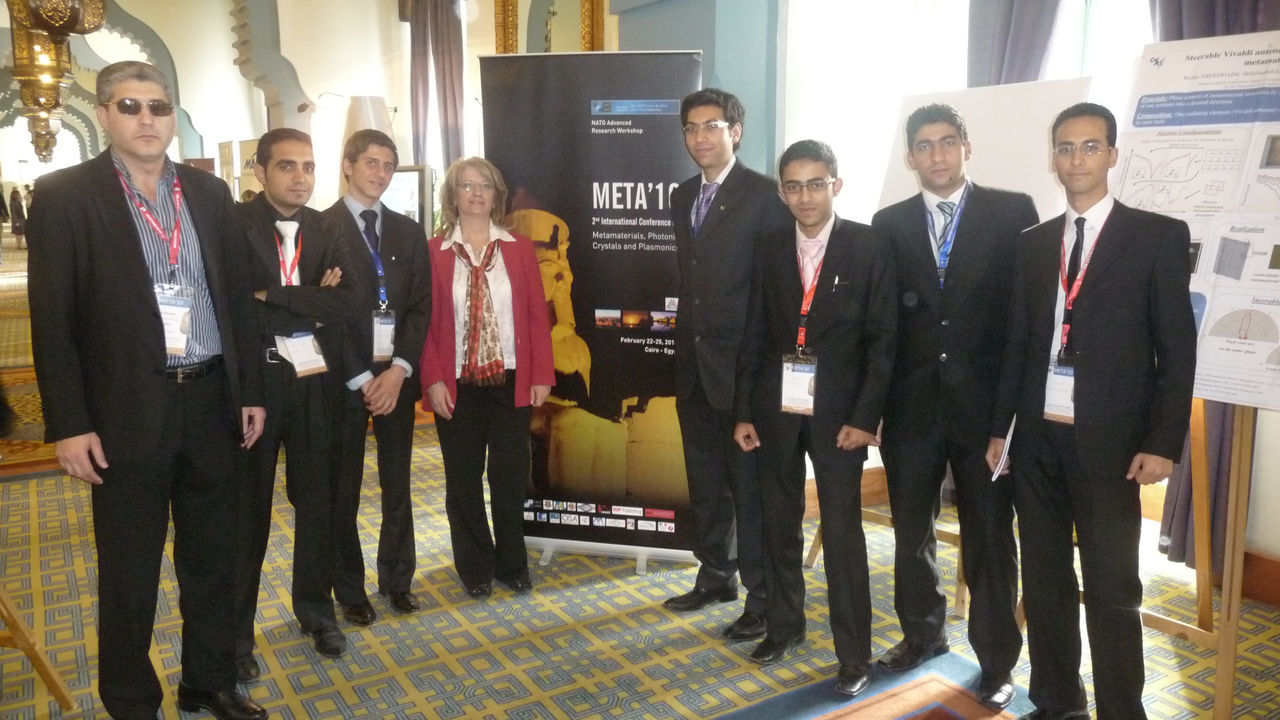
From 22 to 25 February, some 300 scientists, experts and engineers from 41 countries gathered in Cairo, Egypt, at the conference “META’10” to examine how newly synthesized materials can benefit environmental sensing and information security, both in the civilian and military areas.
Participants in the workshop focused on the unusual characteristics and potential applications of “metamaterials” for addressing the challenges and demands of the modern world. Metamaterials are complex and exotic electromagnetic materials that do not exist in nature.
The event attracted top international researchers as well as their younger peers to strengthen connections among specialists in the area of metamaterial research. In addition to the mix of scientists and engineers, participants included theoreticians, computational and analytical modelling experts, experimentalists, application-oriented engineers, and administrators responsible for research funding.
Dr Deniz Yuksel-Beten, Head of NATO’s Science for Peace and Security (SPS) Section, talked about the opportunities for scientific and environmental cooperation in Mediterranean Dialogue countries. META’10 is a solid example of how NATO is promoting cooperation among scientists in Allied and partner states.
The conference follows two previous events in Marrakesh, Morocco: Bianisotropics’02 and META’08.