
Close
Back


From now on you can download videos from our website
If you would also like to subscribe to the newsletter and receive our latest updates, click on the button below.
Enter the email address you registered with and we will send you a code to reset your password.
The password must be at least 12 characters long, no spaces, include upper/lowercase letters, numbers and symbols.
Click the button to return to the page you were on and log in with your new password.
24 February 2010
1 MIN READ
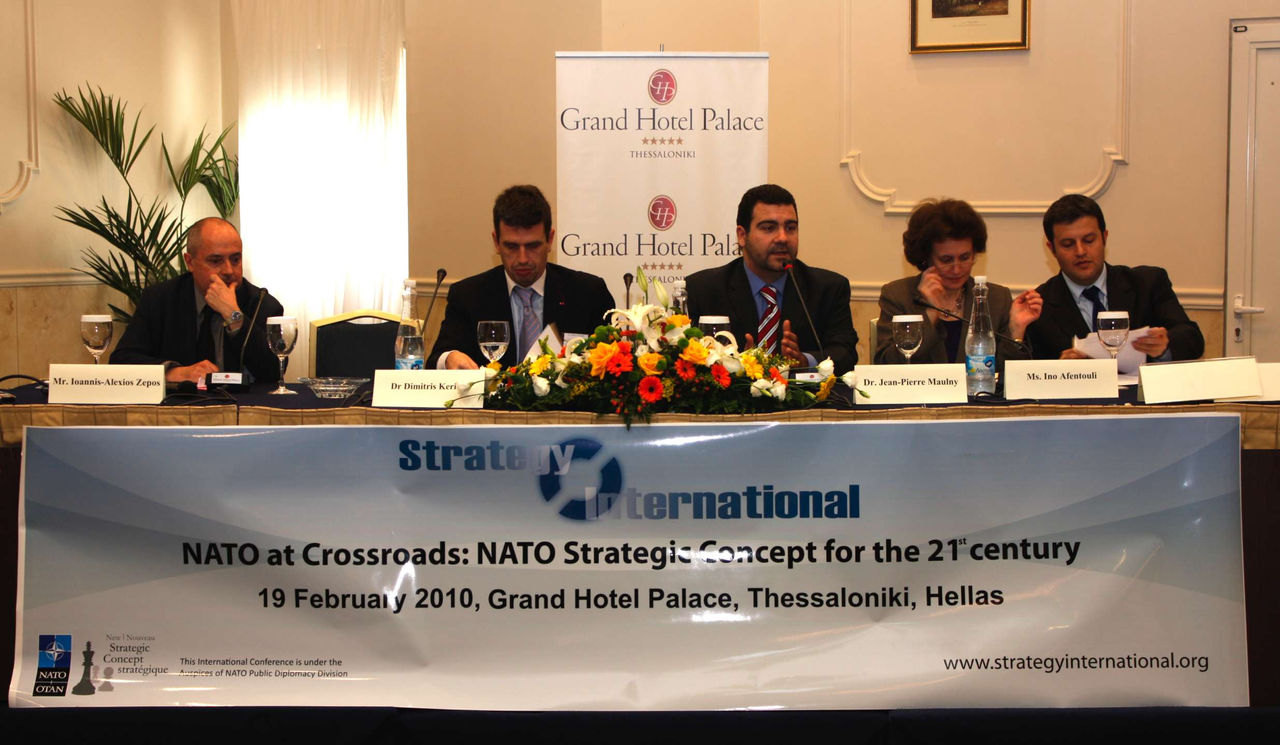
On 19 February, academics, diplomats and NATO experts gathered in Thessaloniki, Greece, to discuss NATO’s future role at an event organised by the Greek NGO Strategy International, supported by NATO’s Public Diplomacy Division.
Participants discussed a range of security issues, especially those most relevant to South-Eastern European countries, such as NATO-Russia relations, Euro-Atlantic integration, and the Alliance’s role in the broader Euro-Atlantic area. NATO’s strategic objectives, the new security environment, as well as operations and lessons learned were also discussed.
“NATO-Russia relations should be practically enhanced,” said Dr Marios Efthymiopoulos, General Director of Strategy International. “It is an opportunity with the new Strategic Concept to re-negotiate in practical terms NATO-Russia relations.” He added that, "Academics should be more involved in the policy-making field and not only at the consultation levels."
Speaking about challenges from newer means of communication, Director of Strategy International Josef Demergis said: "NATO partners and members of the Alliance may seek to become a security provider for the Internet, […] e.g. by creating preventive ‘blocking actions’ against imminent cyber threats."
The event’s participants will offer their conclusions to the Group of Experts tasked to prepare recommendations for the Alliance’s new Strategic Concept, a document that will shape NATO’s future “mission statement”. They agreed that the new Concept should be as clear as possible – short and to the point.