
Close
Back


From now on you can download videos from our website
If you would also like to subscribe to the newsletter and receive our latest updates, click on the button below.
Enter the email address you registered with and we will send you a code to reset your password.
The password must be at least 12 characters long, no spaces, include upper/lowercase letters, numbers and symbols.
Click the button to return to the page you were on and log in with your new password.
23 February 2010
1 MIN READ
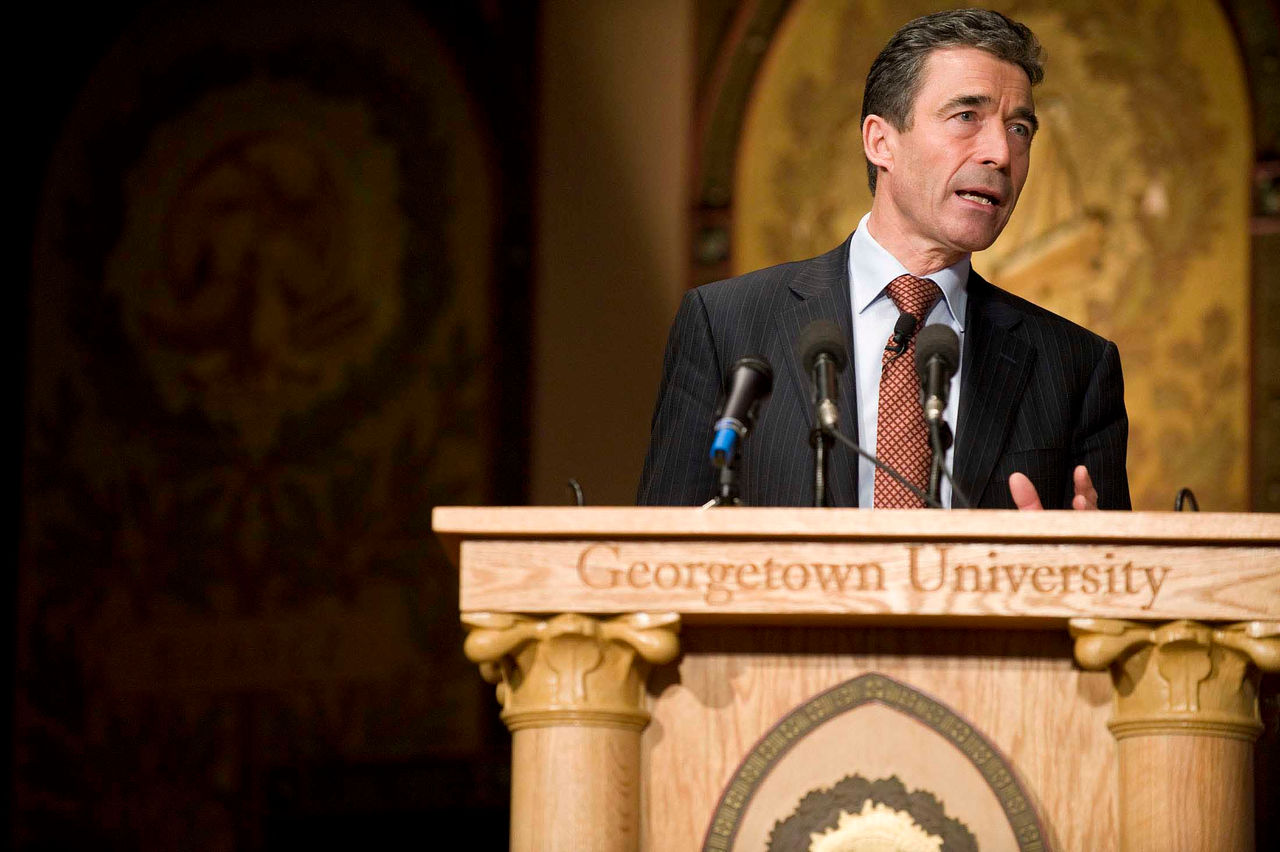
On 22 February, NATO Secretary General Anders Fogh Rasmussen addressed a crowd of students at Georgetown University in Washington, DC, presenting his views on NATO’s role in tackling today’s and tomorrow’s security challenges.
Mr Rasmussen told the students that although NATO doesn’t get the visibility it should in the US, the Alliance will, and should, play an essential role in the country’s security for the long term. He explained that today’s threats and challenges need the cooperation of likeminded and democratic nations.
“The problems of the 21st century can only be solved multilaterally,” he said. “And there is no stronger and more effective framework for that cooperation than NATO.”
To demonstrate the effectiveness of multilateral responses to new threats and challenges, the Secretary General called on the examples of terrorism, cyber defence, and nuclear proliferation and missile defence as areas where NATO activities have had a vital impact.
Mr Rasmussen also talked about the importance of partnerships with countries around the globe, and about the reasons why NATO is working on a new Strategic Concept, a document that will help the Alliance set the right priorities in addressing existing and future security challenges.
“In sum, the Atlantic Alliance squares the circle of multilateralism and effectiveness,” he said. “That is not easy to do. But today more than ever – when we are looking for security, in an age of uncertainty – it is precious. You can find it in NATO today, and you will be able to rely on NATO tomorrow as well.”