
Close
Back


From now on you can download videos from our website
If you would also like to subscribe to the newsletter and receive our latest updates, click on the button below.
Enter the email address you registered with and we will send you a code to reset your password.
The password must be at least 12 characters long, no spaces, include upper/lowercase letters, numbers and symbols.
Click the button to return to the page you were on and log in with your new password.
15 February 2010
2 MIN READ
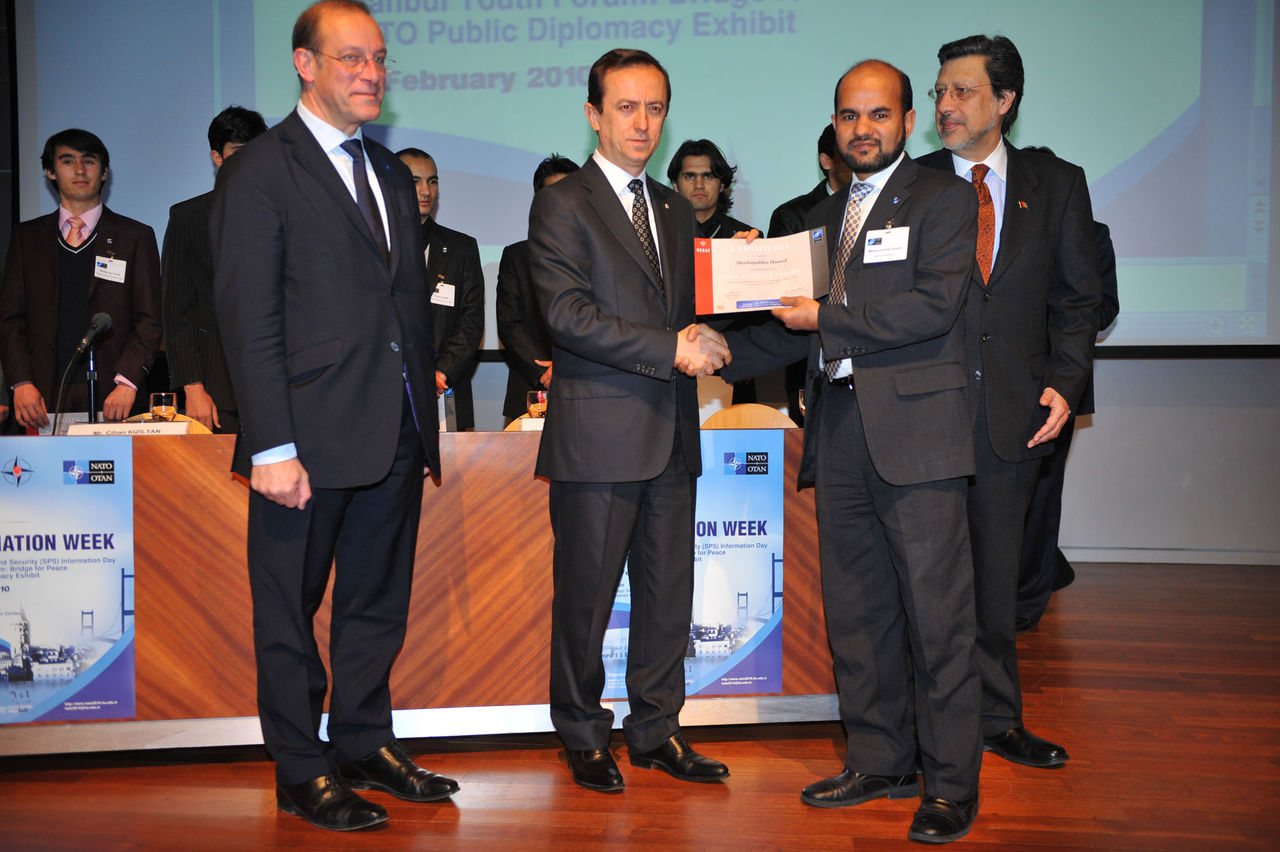
On the occasion of the NATO Defence Ministers meeting in Istanbul on 4 and 5 February 2010, an Information Day on NATO’s Science for Peace and Security (SPS) Programme took place on 4 February at the Suleyman Demirel Cultural Centre, Istanbul Technical University.
The event, which brought together high-level officials, academics and students from NATO, Partner and Mediterranean Dialogue countries, focused on the opportunities offered by the SPS Programme and its major achievements in the wider region. SPS projects in environmental security, cyber defence, combating terrorism, and new challenges were on the agenda.
NATO’s cooperation with other international organisations in the framework of the Environment and Security (ENVSEC) Initiative was presented by a representative of the Organization for Security and Co-operation in Europe.
The SPS Programme offers a wide range of joint cooperative research opportunities to NATO’s partners in the field of security-related civil science and technology – from hard engineering to cultural studies.
“Science that enhances the security of vulnerable populations – whether they are vulnerable to natural disasters or to the threat of a terrorist attack – must also transcend borders to deepen cultural and social understanding,” said Assistant Secretary General for Public Diplomacy, Jean-François Bureau.
“Social sciences also contribute to effective communication and coordination with those outside their field. Indeed, it is not technology or machines that terrorize; but it is human and social factors that will, given the right conditions, produce terror and fear, the two pillars of terrorism.”
On the event’s sidelines, Mr. Bureau awarded certificates to Afghan Information Technology Managers who attended a cyber-security training at the Scientific and Technological Research Council of Turkey (TUBITAK), sponsored by the SPS Programme.
As part of the Afghan Cooperation Programme, since 2006 NATO’s SPS Programme has been implementing the ‘Virtual Silk Highway Project’ to expand satellite-based Internet connectivity in nine South Caucasus and Central Asian countries, including Afghanistan. A new project called ‘SILK-Afghanistan Programme’ was launched in October 2009 to support both the set-up of faculty and campus networks and training courses, as well as provide distance learning material.
In addition to disseminating information on NATO’s SPS Programme to academics, researchers and students, the event aimed to create networks of experts and enhance partnerships to address new threats and challenges.