
Close
Back


From now on you can download videos from our website
If you would also like to subscribe to the newsletter and receive our latest updates, click on the button below.
Enter the email address you registered with and we will send you a code to reset your password.
The password must be at least 12 characters long, no spaces, include upper/lowercase letters, numbers and symbols.
Click the button to return to the page you were on and log in with your new password.
11 February 2010
1 MIN READ
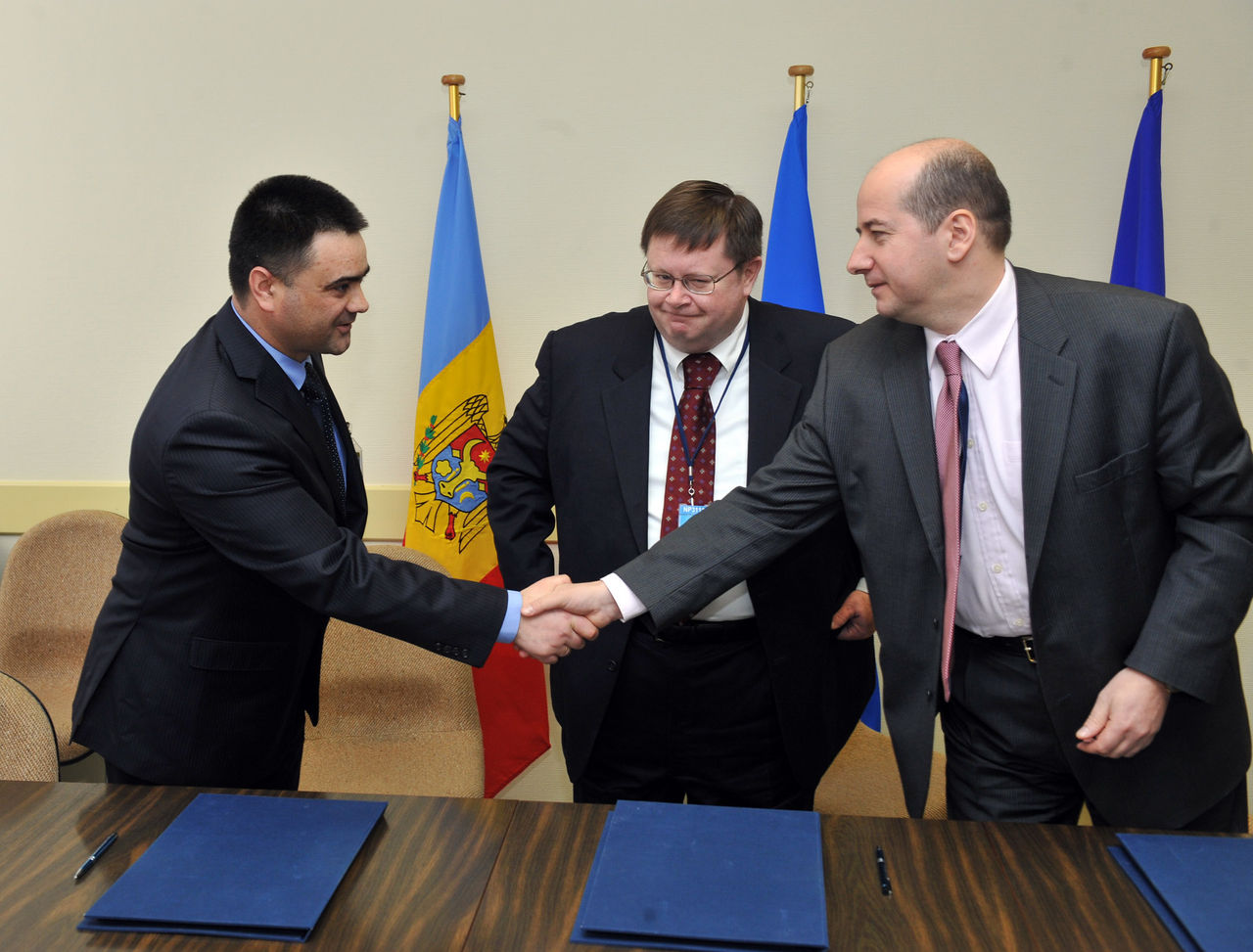
On 10 February, NATO marked the launch of the third phase of a NATO Partnership for Peace Trust Fund project to destroy pesticides and dangerous chemicals in the Republic of Moldova with a ceremony at NATO Headquarters. In this third phase, the project aims to eliminate some 1 300 tonnes of the previously repacked pesticides and dangerous chemicals.
Launched in September 2005, the project originally focused on repacking, centralising and safely storing a part of the Republic of Moldova’s identified stockpiles of pesticides and dangerous chemicals that were in poor condition, were scattered over several locations and posed a serious health and environmental hazard.
The initial phase was done in close cooperation with the Organization for Security and Co-operation in Europe and the Dutch NGO Milieucontact. NATO’s Science for Peace and Security Programme oversaw the second phase of the project, which implemented a systematic analysis of the repacked chemicals. A NATO-funded laboratory was established for this purpose, and local personnel were trained in standard sampling, analysis and data management techniques.
NATO’s Acting Assistant Secretary General for Political Affairs and Security Policy, Robert F. Simmons Jr., presided over the ceremony, in the presence of Moldovan Minister of Defence H.E. Vitalie Marinuta, the Romanian Ambassador to NATO H.E. Sorin Ducaru and Dr. Frederic Peugeot from the NATO Maintenance and Supply Agency (NAMSA).
Romania is the lead nation for the Trust Fund project whereas NAMSA is in charge of its overall implementation. The third phase is estimated to cost €2,1 million and should take at least 12 months.