
Close
Back


From now on you can download videos from our website
If you would also like to subscribe to the newsletter and receive our latest updates, click on the button below.
Enter the email address you registered with and we will send you a code to reset your password.
The password must be at least 12 characters long, no spaces, include upper/lowercase letters, numbers and symbols.
Click the button to return to the page you were on and log in with your new password.
03 February 2010
1 MIN READ
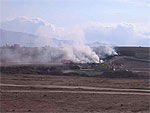
Germany and the Netherlands organized a workshop on “Environmental future outlooks and their military implications” at the NBC School of the German Armed Forces in Sonthofen, Germany, from 9 -11 February. The event was held under the umbrella of the NATO Science for Peace and Security Committee and with the participation of Allied Command Transformation (ACT).
For three days NATO experts as well as participants from Defence Ministries and other institutions discussed future environmental developments and trends and their direct implications for strategic military planning. They also looked at the findings of the “Multiple Futures Project 2030” conducted by Allied Command Transformation in 2009. The project aimed to enhance the Alliance’s understanding of the complex new security challenges and its capacity to deal with threats across the full spectrum of conflicts.
While the consequences and implications of environmental changes for the tasks of the armed forces are currently being studied by individual nations, there has been little exchange of this knowledge among NATO Member and Partner countries until now.
Some of the objectives of the workshop were to establish a repository of available studies on the future environmental situation, compare the contents of the national studies, establish similarities and differences and create a network of experts and organizations.
The discussion’s outcomes will serve as a basis for future long-term defence planning. They will also help to evaluate existing long term defence plans, influence concept and strategy development, and improve training and threat analysis efforts, both on a national level as well as in the NATO context.
As a result of the workshop, participants agreed on the following “scoping” statement:
"The environmental dimension of security addresses risks driven by the physical environment and the ability of societies to adapt to natural or manmade changes. It covers a spectrum from evolving standards of environmental stewardship through physical change and its scope has the potential to affect both immediate and long-term aspects of Allianceoperations and strategy."