
Close
Back


From now on you can download videos from our website
If you would also like to subscribe to the newsletter and receive our latest updates, click on the button below.
Enter the email address you registered with and we will send you a code to reset your password.
The password must be at least 12 characters long, no spaces, include upper/lowercase letters, numbers and symbols.
Click the button to return to the page you were on and log in with your new password.
29 January 2010
1 MIN READ
Surveys on public perceptions towards the Alliance show a significant gender gap: women tend to know and understand less about NATO.
Reaching out to female audiences and taking into account their perspectives on security issues has therefore become an increasingly crucial part and challenge of NATO’s public diplomacy efforts, especially within the framework of NATO’s work towards implementing UN Security Council Resolution 1325 on Women, Peace and Security.
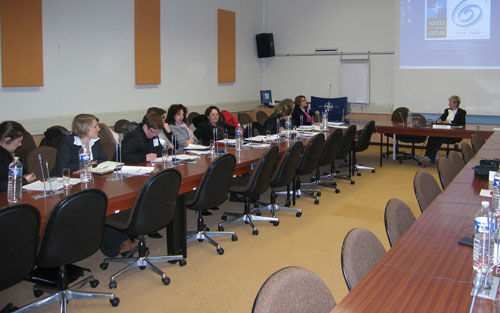
On this basis, a broad group of female opinion leaders highly engaged in politics, the media and academic research in their respective Allied countries visited NATO’s Headquarters from 25 to 27 January.
The participants were given first-hand insight into the work of the NATO Committee on Gender Perspectives, including the efforts of Allied member and partner states to asign more gender advisers to military commands and units serving in NATO-led operations, such as in Afghansitan.
While speaking to the group, Dr Stefanie Babst, Deputy Assistant Secretary General for Public Diplomacy Strategy, said: “There is a strong need to bring women to the forefront and empower them to engage in transatlantic issues.”
The group attended briefings and exchanged views with high-level NATO officials and experts from both the military and civilian staff. Discussions covered a range of topics, including NATO’s current political agenda and public diplomacy challenges, its operational engagement in Afghanistan and the development of its new Strategic Concept.