
Close
Back


From now on you can download videos from our website
If you would also like to subscribe to the newsletter and receive our latest updates, click on the button below.
Enter the email address you registered with and we will send you a code to reset your password.
The password must be at least 12 characters long, no spaces, include upper/lowercase letters, numbers and symbols.
Click the button to return to the page you were on and log in with your new password.
15 December 2009
1 MIN READ
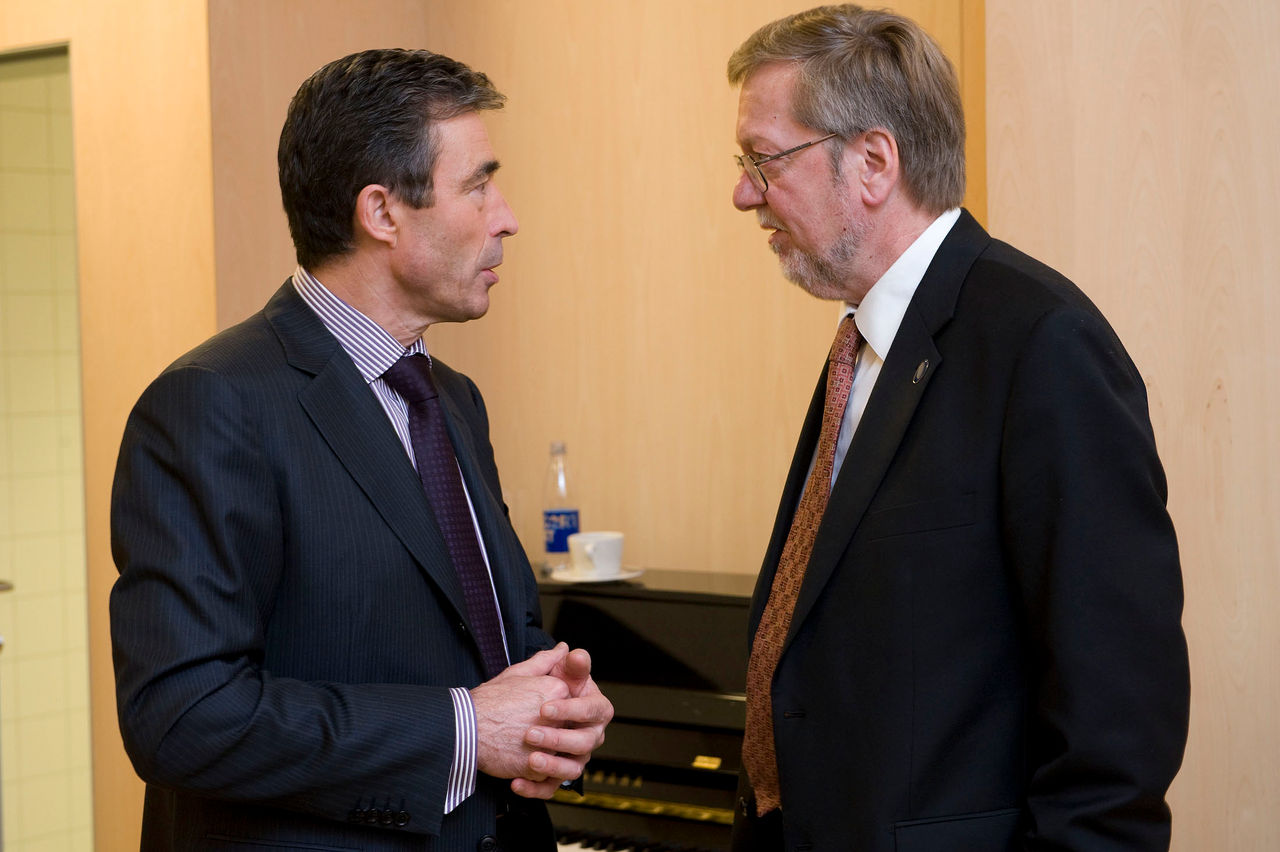
On 15 December 2009, NATO Secretary General Anders Fogh Rasmussen took part in a panel discussion on the international security challenges of climate change, part of the UN Climate Change Conference taking place in Copenhagen from 7-18 December.
The military is often the “first responder” to natural disasters, Mr Rasmussen said in his introductory remarks, pointing to the examples of the 2004 Tsunami in Asia and the 2005 earthquake in Pakistan. He said that the growing impact of climate change would only increase demands on our military forces.
The Secretary General stressed, however, that NATO was well positioned to help tackle the challenges.
“NATO has a real edge when it comes to orchestrating complex multinational military operations,” he said. “NATO also has a wealth of experience in deploying these capabilities together with other nations, and helping other international organizatons to develop their own knowledge and expertise to deal with disasters.”
NATO’s approach in dealing with the security implications of climate change, Mr Rasmussen said, could be summed up in three words – “consultation, adaptation and operation”.
The other participants of the Panel Debate on Climate Change and International Security were African Union Commission Chairperson Dr Jean Ping and Foreign Minister Carl Bildt of Sweden, which holds the EU Presidency.