
Close
Back


From now on you can download videos from our website
If you would also like to subscribe to the newsletter and receive our latest updates, click on the button below.
Enter the email address you registered with and we will send you a code to reset your password.
The password must be at least 12 characters long, no spaces, include upper/lowercase letters, numbers and symbols.
Click the button to return to the page you were on and log in with your new password.
11 December 2009
2 MIN READ
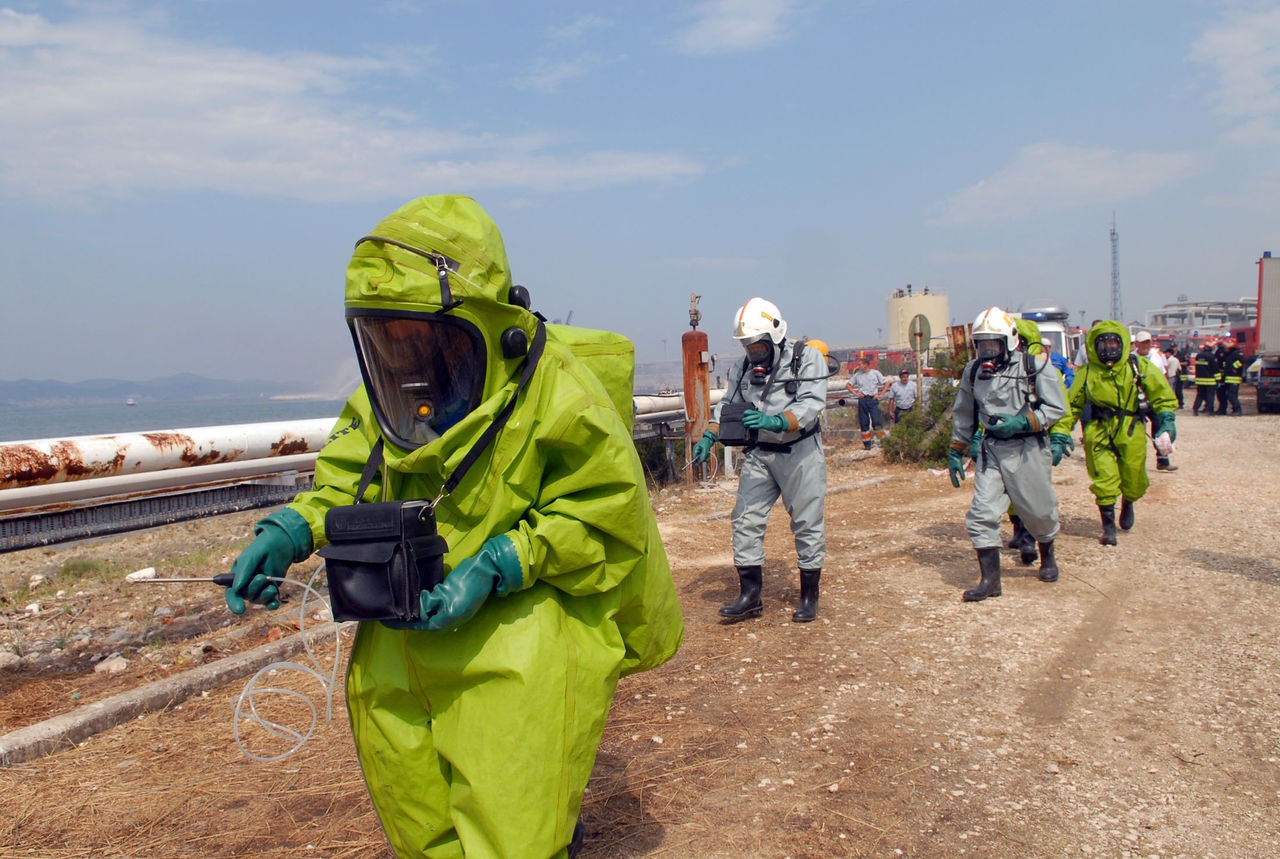
More than 160 senior officials representing countries from five continents as well as a number of international organizations and academic institutions met on 10 and 11 December in Warsaw, Poland, for the annual NATO Conference on Weapons of Mass Destruction (WMD) Arms Control, Disarmament and Non-Proliferation.
The Conference, hosted by the Polish Ministry of Foreign Affairs, gathered participants from NATO and partner nations, including countries from the Alliance's Mediterranean Dialogue and Istanbul Cooperation Initiative, the Gulf Cooperation Council and the Asia-Pacific region.
The Conference was launched by a video address by NATO Deputy Secretary General Ambassador Claudio Bisogniero who highlighted the importance of such outreach initiatives considering the threats posed by the proliferation of weapons of mass destruction and their means of delivery.
Further opening remarks were made by Mr. Radosław Sikorski, Minister of Foreign Affairs of the Republic of Poland, who reminded the participants that "the success of the Nuclear Security Summit and the 2010 Non-Proliferation Treaty Conference are in our hands". "We all agree that the three NPT pillars have to be addressed in a holistic manner. We hope that the ongoing successful US-Russia talks on the post-Strategic Arms Reduction Treaty agreement will revive disarmament efforts. This will contribute to the building of trust between not only the main negotiating parties, but also between nuclear-armed and non-nuclear armed States,” he added.
The Chairman of the International Commission on Nuclear Non-Proliferation and Disarmament, the US Under Secretary of State for Arms Control and International Security, the Executive Secretary of the Comprehensive Test-Ban Treaty Organisation, and high officials from a number of countries and organizations were among the speakers.
Presentations followed by panel discussions, allowed for in-depth debate on four general themes: the future of multilateral non-proliferation regimes and initiatives, current regional proliferation threats and challenges (with separate panels devoted to the Middle East and Asia), NATO’s contribution to international efforts in the area of arms control, disarmament and non-proliferation, as well as terrorism and WMD proliferation.
All aspects of WMD non-proliferation were covered, including the implementation of the United Nations Security Council Resolution 1540, the expectations for the 2010 Non-Proliferation Treaty Review Conference, export controls, NATO’s role in the area of arms control, disarmament and non-proliferation, as well as regional initiatives and national contributions to the non-proliferation efforts of the international community.
This was the first NATO event of its kind to be held since the Alliance adopted its new Comprehensive, Strategic-Level Policy for Preventing the Proliferation of Weapons of Mass Destruction (WMD) and Defending Against Chemical, Biological and Nuclear (CBRN) Threats. The Policy was endorsed by NATO Heads of State and Government at the Strasbourg/Kehl Summit in April 2009, then declassified and made public in September 2009.
Previous events on the challenges of WMD proliferation were held in Rome in 2004, in Sofia in 2005, in Vilnius in 2007, and in Berlin in 2008.