
Close
Back


From now on you can download videos from our website
If you would also like to subscribe to the newsletter and receive our latest updates, click on the button below.
Enter the email address you registered with and we will send you a code to reset your password.
The password must be at least 12 characters long, no spaces, include upper/lowercase letters, numbers and symbols.
Click the button to return to the page you were on and log in with your new password.
02 December 2009
1 MIN READ
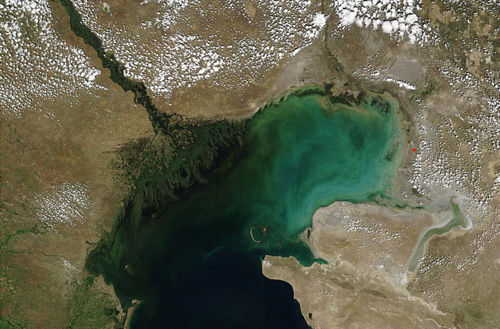
From 2 to 4 December, an advanced research workshop in Ferrara, Italy, aims to define a system for detecting and preventing soil erosion, sea level changes and pollution, and exploitation of fish stocks in the Caspian region.
Jointly organised by NATO’s Science for Peace and Security Programme, the workshop brings together speakers and participants from organizations such as UNESCO, the World Meteorology Organization, EuroGOOS and governments from countries in the Caspian region.
The event’s main goal is to address the infrastructural and environmental concerns of these countries, which include:
The initiative highlights science’s contribution to ocean monitoring and forecasting, reliable assessment, and international cooperation between states to forge a solution to meet these challenges.
As a major oil producer, the Caspian region is vulnerable to pollution from its many pipelines and platforms. International agreements governing the conduct of nations, and their effective management of both the marine environment and its resources, could be strengthened by an efficient and sustainable operational system.