
Close
Back


From now on you can download videos from our website
If you would also like to subscribe to the newsletter and receive our latest updates, click on the button below.
Enter the email address you registered with and we will send you a code to reset your password.
The password must be at least 12 characters long, no spaces, include upper/lowercase letters, numbers and symbols.
Click the button to return to the page you were on and log in with your new password.
30 November 2009
1 MIN READ
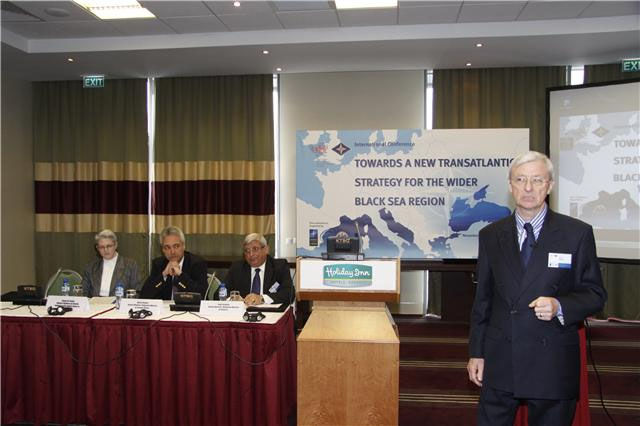
On 30 November and 1 December, the Centre for SouthEast European Studies in Sofia, Bulgaria, held a conference entitled “Towards a New Transatlantic Strategy for the Wider Black Sea Region” in conjunction with the country’s George C. Marshall Center Alumni Association.
The event, which looked at how NATO and its policies towards Partners are seen from inside the region, brought together more than 100 participants, including representatives from the Bulgarian government, the NATO family, as well as from countries and NGOs in the wider Black Sea region.
Marin Raykov, Deputy Minister of the Bulgarian Foreign Ministry, spoke about the region’s political sensitivity and reminded participants that NATO remains the main transatlantic forum for the area. He also stressed the importance of the region in view of the strategic energy routes that flow through it. The process towards a new Strategic Concept could help to foster closer relations between NATO member states and the Alliance’s Partners, he said.
In addition to energy security, Mr Raykov said that the fight against terrorism and non-proliferation of weapons of mass destruction would continue to dominate the agenda in the next 10 to 15 years.
Bulgarian Deputy Defence Minister Anyu Angelov said that it would be particularly important for the new Strategic Concept to include concrete, attainable and measurable goals to promote the vision of a closer and more active NATO commitment to developments in the region.
The conference, which was supported by NATO’s Public Diplomacy Division, was the first Bulgarian event aimed at contributing to the development of the Alliance’s new Strategic Concept.