
Close
Back


From now on you can download videos from our website
If you would also like to subscribe to the newsletter and receive our latest updates, click on the button below.
Enter the email address you registered with and we will send you a code to reset your password.
The password must be at least 12 characters long, no spaces, include upper/lowercase letters, numbers and symbols.
Click the button to return to the page you were on and log in with your new password.
25 November 2009
1 MIN READ
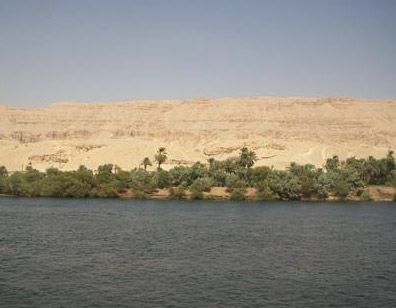
From 24 to 27 October in Luxor, Egypt, a NATO Science for Peace and Security (SPS) workshop assessed the potential of riverbank filtration to supply drinking water in areas adversely affected by climate change. A technique widely used in large and medium sized cities in Europe and the United States, riverbank filtration is seen as an answer to the many challenges Egypt faces in the area of water supply.
This event, located by the banks of the famous river Nile, pooled together scientists, representatives from UNESCO-IHE, local universities, think tanks and governmental bodies. They discussed various technical aspects affecting the production and quality of water resulting from riverbank filtration operations.
Riverbank filtration has the potential to become an important part of water supply for many cities located on riverbanks, especially in developing countries. Typically the surface waters in these countries are often polluted with microbes and chemical contaminants due to inadequate treatment facilities before any industrial and municipal effluents are discharged to rivers. The riverbank filtration method should be able to remove most of these contaminants.
The riverbank filtration method has been used extensively in many developed nations, and is now gaining popularity in recently industrialised countries such as Korea as well as developing countries such as India.