
Close
Back


From now on you can download videos from our website
If you would also like to subscribe to the newsletter and receive our latest updates, click on the button below.
Enter the email address you registered with and we will send you a code to reset your password.
The password must be at least 12 characters long, no spaces, include upper/lowercase letters, numbers and symbols.
Click the button to return to the page you were on and log in with your new password.
18 September 2009
1 MIN READ
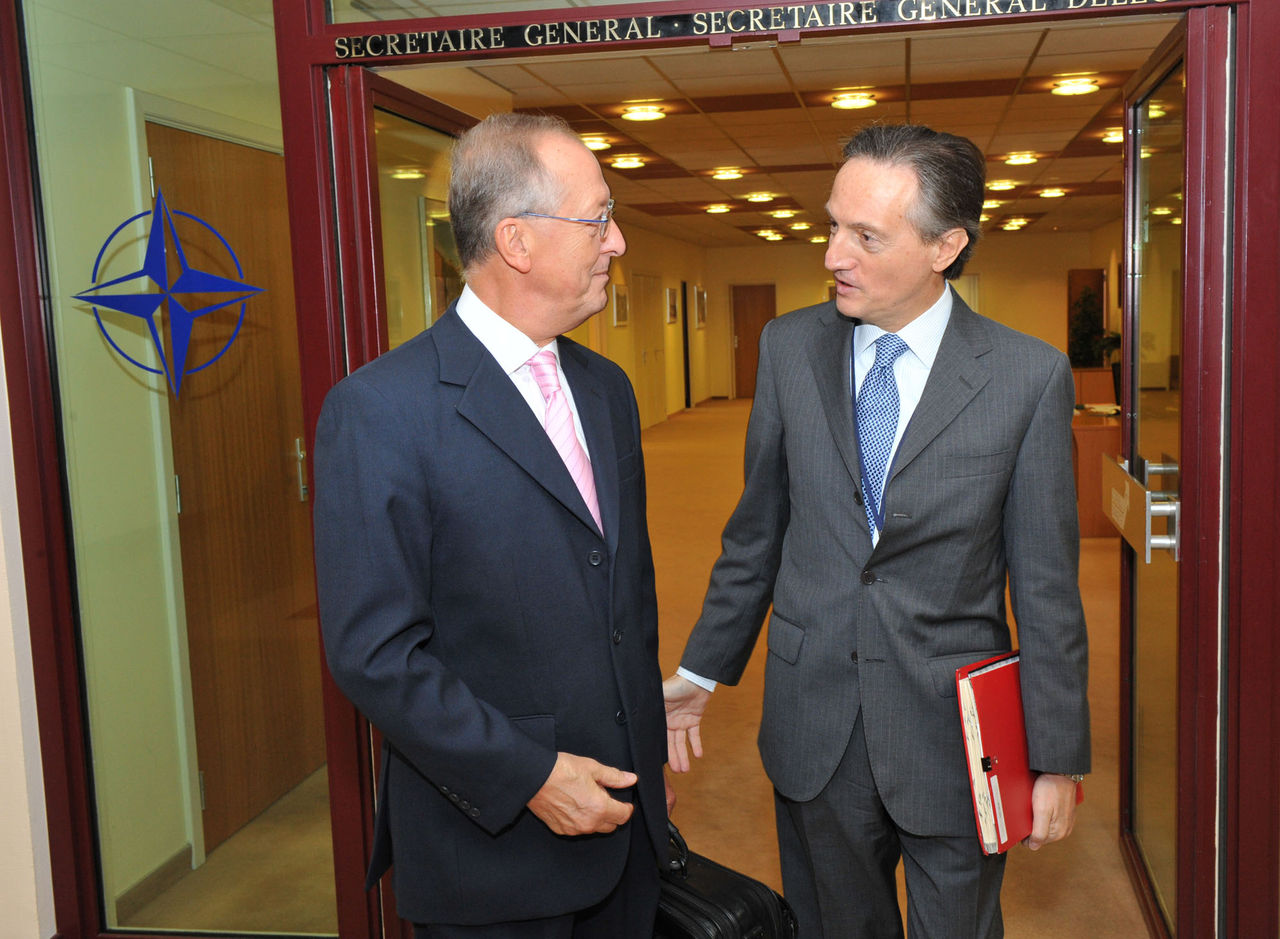
The Executive Director of the United Nation Office on Drugs and Crime (UNODC), Antonio Maria Costa, visited NATO HQ on 18 September. He addressed the subject of opium production in Afghanistan with the North Atlantic Council, NATO’s principal decision making body, and the Afghan Ambassador Zia Uddin Nezam.
Other representatives of the international community concerned by the opium flow in Afghanistan also attended the meeting, including members of the European Union and the World Bank, and representatives of Japan, Kazakhstan, the Kyrgyz Republic, Pakistan, Russia, Tajikistan, Turkmenistan, and Uzbekistan.
Mr. Costa met with the Deputy Secretary General, Ambassador Claudio Bisogniero, and presented the 2009 Afghan Opium Survey to the North Atlantic Council, which highlights some positive trends but underscores the seriousness of this issue.
Ambassador Bisogniero and NATO Ambassadors welcomed the survey, which once again draws a clear link between the narcotics trade and the insurgency in Afghanistan, adding that ISAF would continue to assist the Afghan Government and the UNODC in countering the drug flow.
Mr. Costa commended ISAF’s increased counter-narcotics efforts and said that more needed to be done, in particular in supporting the Afghan Government to build its fledgling counter-narcotics police.
In its 2009 survey, the UNODC reports that opium cultivation has decreased by 22%, production by 10%, and prices by 33%. The number of poppy-free provinces has increased from 18 to 20, and drug seizures continue to rise thanks to more robust counter-narcotics operations by Afghan and NATO forces.