
Close
Back


From now on you can download videos from our website
If you would also like to subscribe to the newsletter and receive our latest updates, click on the button below.
Enter the email address you registered with and we will send you a code to reset your password.
The password must be at least 12 characters long, no spaces, include upper/lowercase letters, numbers and symbols.
Click the button to return to the page you were on and log in with your new password.
29 June 2009
1 MIN READ
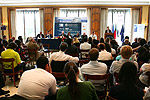
Some 200 political scientists and scholars of International Relations met in Estoril, Portugal, from 25 to 27 June to discuss key issues related to NATO’s future strategic direction.
“This is probably the most impressive gathering of top academics from Europe and North America that I have had the privilege to address lately,” said Dr Stephanie Babst, NATO’s Deputy Assistant Secretary General for Public Diplomacy. “NATO needs smart and critical minds that actively work on transatlantic security issues and help the Alliance moving forward.”
In her keynote address, Dr Babst underscored the need to discuss and ultimately agree on a new Strategic Concept for NATO. Since NATO published its current concept in 1999, the security landscape had altered considerably. By defining a forward-looking common vision, the new Strategic Concept must become a tool to re-commit NATO Allies to the core principles, roles and policies of the Alliance while ensuring that NATO is able to handle the 21st century security challenges effectively, in both the political and military domains.
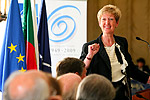
“We cannot afford to rest on our laurels,” said Dr Babst. “Keeping the Alliance’s status quo will not be sufficient to meet future challenges effectively.”
Conference participants also discussed NATO’s operation in Afghanistan; the Middle East; economy, energy and security, the Allies’ relations with Russia; the future of democracy; and the future of NATO.
This was the XVII International Meeting in Political Studies and International Summer School. It was hosted officially by the prestigious Institute of Political Studies of the Catholic University of Portugal and sponsored by NATO’s Public Diplomacy Division.
The event was organized in association with a large number of American and European prominent universities, including Boston College, Brown University, King’s College and the Royal Institute of Philosophy in London, the International Forum for Democratic Studies in Washington, EUROPAEUM, Oxford, Wyzsza Szkola Biznesu and the National Louis University, Nowy Sacz, Poland. The first day’s proceedings ended with a dinner attended by Portuguese Minister of Foreign Affairs Luis Filipe Marques Amado.