
Close
Back


From now on you can download videos from our website
If you would also like to subscribe to the newsletter and receive our latest updates, click on the button below.
Enter the email address you registered with and we will send you a code to reset your password.
The password must be at least 12 characters long, no spaces, include upper/lowercase letters, numbers and symbols.
Click the button to return to the page you were on and log in with your new password.
27 February 2009
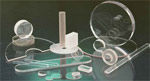
A demonstration of the new amoured glass windows that have been produced as part of a Science for Peace and Security project will take place on Tuesday next week, March 3, at the shooting range of Slavicin, Czech Republic.
Scientific teams from Czech Republic, Slovac Republic, Russia and Ukraine have worked together with the French glass manufacturing company St. Gobain Advanced Ceramics in developing a new saphire based material allowing amoured windows to be 30% thinner, lighter and - when eventually commercially produced - also cheaper than the currently used glass windows.
During the demonstration, bullets will be shot at samples of the prototype showing that the thinner material is as strong as the old thick glass. Besides the obvious advantages of lighter and cheaper windows, the reduced thickness also helps soldiers and security personnel to have a less distorted view.
The project is funded by the NATO Science for Peace and Security Programme. (www.nato.int/science)