
Close
Back


From now on you can download videos from our website
If you would also like to subscribe to the newsletter and receive our latest updates, click on the button below.
Enter the email address you registered with and we will send you a code to reset your password.
The password must be at least 12 characters long, no spaces, include upper/lowercase letters, numbers and symbols.
Click the button to return to the page you were on and log in with your new password.
03 December 2008
1 MIN READ
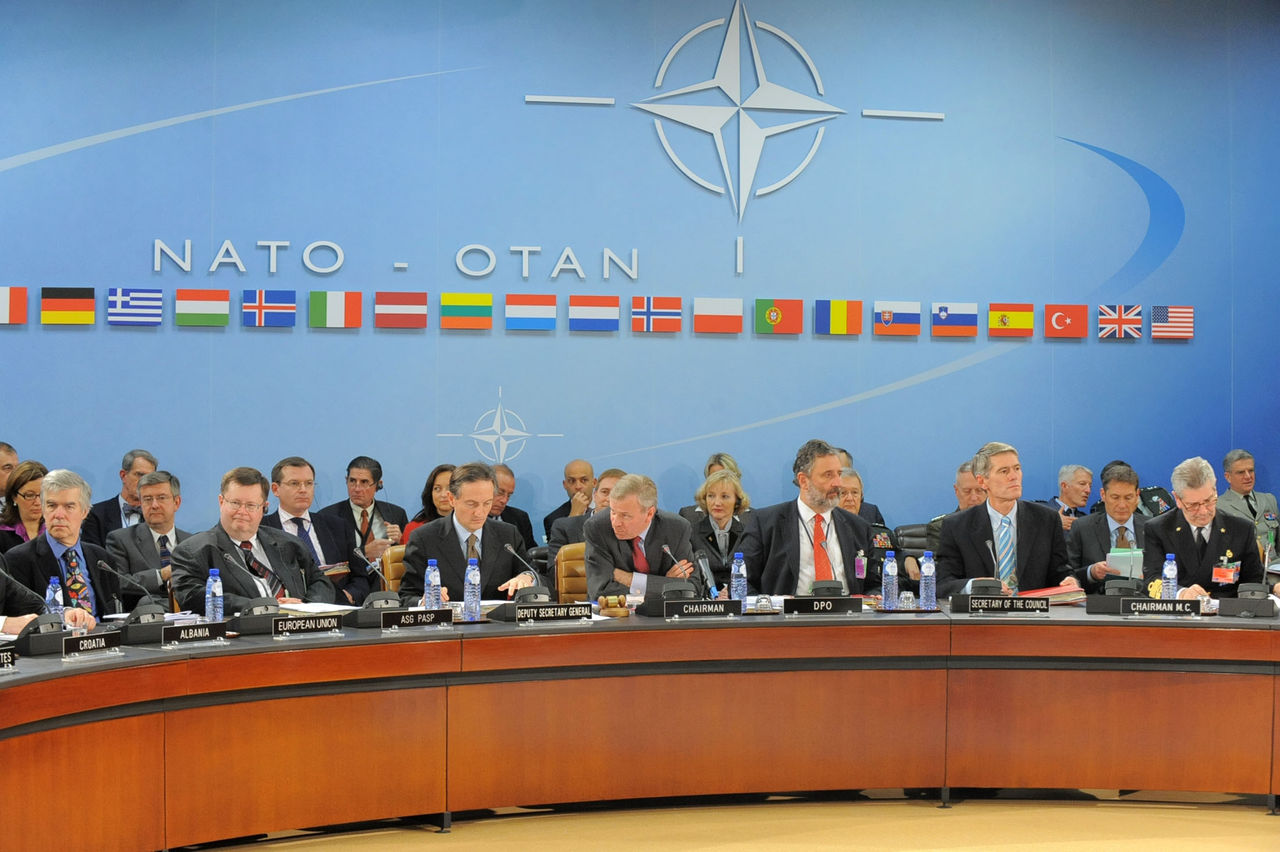
NATO Foreign Ministers held discussions on the Alliance’s engagement in Afghanistan during a meeting of the North Atlantic Council on 3 December 2008.
Allies reaffirmed NATO’s long-term commitment to supporting the Afghan Government in building a stable and democratic Afghanistan, respectful of human rights, capable of securing itself, and at peace with its neighbours.
The Ministers affirmed that the UN-mandated, NATO-led International Security Assistance Force (ISAF) is the key priority for NATO, and they remain determined to provide ISAF with the forces, resources, and flexibility to ensure the Mission’s success. NATO Ministers condemned the deliberate tactics and actions by insurgents in complete disregard for human life, declaring in the NATO Ministerial communiqué, “We deplore all Afghan civilian casualties.”
Recognizing that there is no purely military solution in Afghanistan, Ministers gave their support to Afghan-led efforts to achieve a political resolution to the conflict. The Presidential and Provincial elections scheduled for 2009 and the Parliamentary and District elections scheduled to follow in 2010 will be important milestones for the democratic development of Afghanistan.
Allies, acknowledging that regional cooperation is vitally important to success in Afghanistan, welcomed the improving ties between Pakistan and Afghanistan, pledging to open a closer military-to-military cooperation and an enhanced high-level political dialogue with Pakistan.
Regarding Kosovo, Allies welcomed the fact that the security situation remains stable and acknowledged that NATO and KFOR, bearing in mind its operational mandate, would continue to support the development of a stable, democratic, multi ethnic and peaceful Kosovo.
NATO foreign ministers also tackled concerns about the growing threat of piracy. "Ministers shared a view that we need a much more comprehensive approach, led by the U.N. Security Council, especially regarding the legal issues covering piracy," Mr. de Hoop Scheffer told the press. In addition to its counter piracy related assistance, NATO Allies committed to assist the African Union in other ways, such as capacity building and airlift support.