
Close
Back


From now on you can download videos from our website
If you would also like to subscribe to the newsletter and receive our latest updates, click on the button below.
Enter the email address you registered with and we will send you a code to reset your password.
The password must be at least 12 characters long, no spaces, include upper/lowercase letters, numbers and symbols.
Click the button to return to the page you were on and log in with your new password.
07 November 2007
1 MIN READ
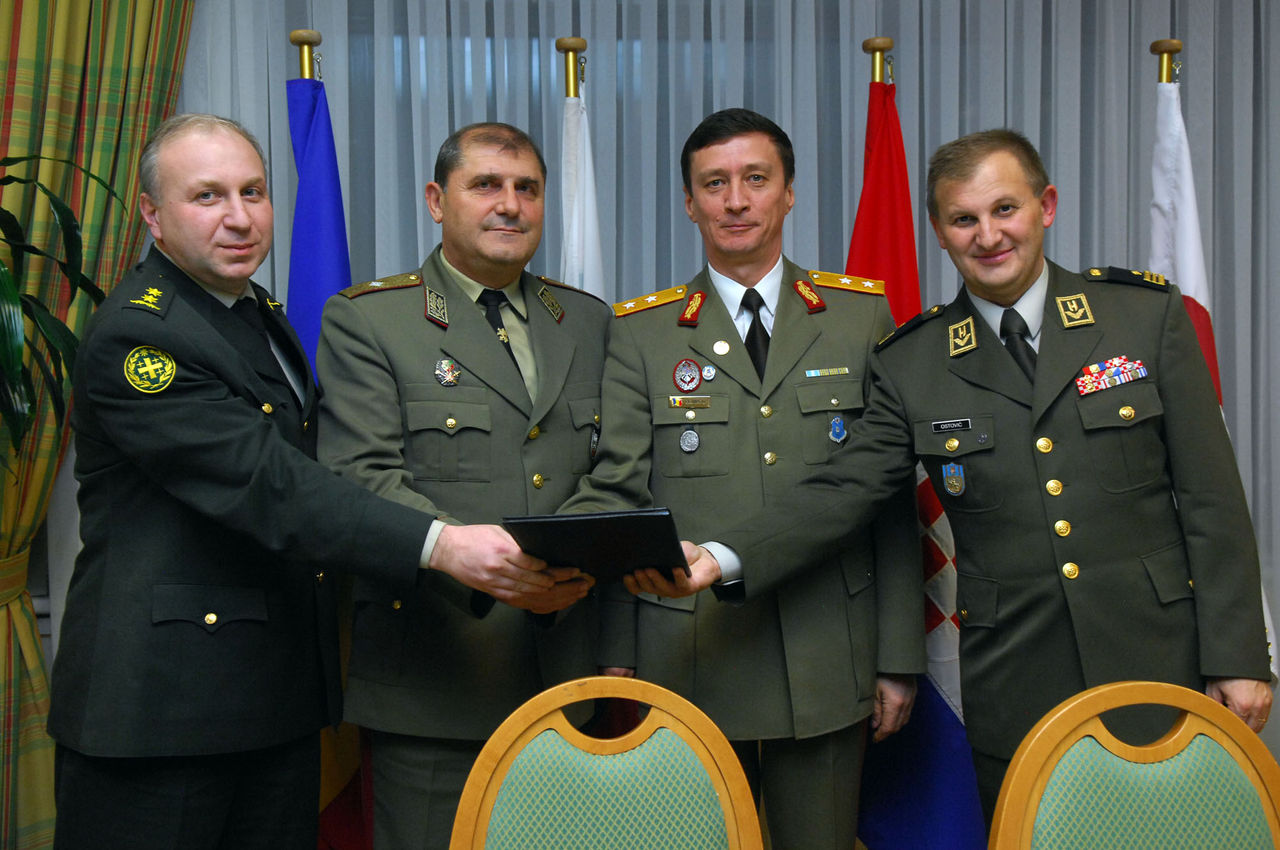
A ceremony to mark the formation of a deployable multinational engineering unit was held NATO HQ in conjunction with the meeting of the Senior NATO Logisticians Conference (SNLC) on 7 November 2007.
Led by Romania, the unit also includes contributions from Bulgaria, Croatia and Georgia.
The Romanian-led multinational engineering unit is only the second of its kind in the Alliance, as it follows in the footsteps of the Canadian-led multinational movements staff established in 2005. Work continues to enable these units to be employed in NATO operations and exercises, including for the NATO Response Force.
In his remarks, the Assistant Secretary General for Defence Policy and Planning Jirí Šedivý, stressed that the creation of this engineering unit supports the overall goal of NATO to promote innovation in multinational cooperation. As important as the additional capability for the Alliance in an area of need, is the experience gained in forming the multinational unit itself.