
Close
Back


From now on you can download videos from our website
If you would also like to subscribe to the newsletter and receive our latest updates, click on the button below.
Enter the email address you registered with and we will send you a code to reset your password.
The password must be at least 12 characters long, no spaces, include upper/lowercase letters, numbers and symbols.
Click the button to return to the page you were on and log in with your new password.
29 June 2007
2 MIN READ
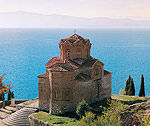
The need for a comprehensive approach to Afghanistan, a framework for energy security and the importance of integrating the Balkans into Euro-Atlantic structures was the focus of a special meeting in Ohrid, 28-29 June.
The Euro-Atlantic Partnership Council Security Forum brought together Ministers, senior officials, parliamentarians, academics, NGOs and journalists from 49 NATO and Partner countries for informal discussions on key security issues.
"The informality and mix of participants is deliberate. The aim is to use this time to generate ideas, hold frank and open discussions, and to understand one another better, " said NATO Secretary General Jaap de Hoop Scheffer in a speech on the first day.
Six panel sessions addressed Kosovo and the future of the Balkans, challenges in Afghanistan and issues related to energy security.
On Afghanistan, participants said a lot of progress had been made, but emphasized the need for a comprehensive approach, involving both civilian and military components, and the need to build the capacity of the Afghan authorities to deliver security, good governance and development.
The importance of Kosovo to peace and stability in Europe was stressed, with many panelists observing that the future of Kosovo and the entire Balkan region should be Euro-Atlantic integration.
Participants also discussed the role that NATO could play in the field of energy infrastructure security, with several suggesting that this could include protecting vital energy routes.
In his keynote address to the forum, the Secretary General also sketched out three possible roles for NATO in the area of energy security, stressing however that this was the beginning of discussions.
A complete audio record of the sessions is available on the NATO Web site.
The Forum location was historic, taking place in the building were accords were signed bringing a peaceful resolution to ethnic tensions in the former Yugoslav Republic of Macedonia1 in 2001.
The Forum in Ohrid follows the first event in this format, which took place in Are, Sweden, in May 2005.