
Close
Back


From now on you can download videos from our website
If you would also like to subscribe to the newsletter and receive our latest updates, click on the button below.
Enter the email address you registered with and we will send you a code to reset your password.
The password must be at least 12 characters long, no spaces, include upper/lowercase letters, numbers and symbols.
Click the button to return to the page you were on and log in with your new password.
24 May 2007
1 MIN READ
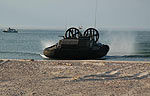
Under the cover of darkness and faced by stiff resistance from Swedish and Finnish forces, the NATO Response Force demonstrated its readiness in three major exercises in the Baltic, 19-24 May.
The exercises – Noble Mariner, Noble Award and Kindred Sword – tested the ability of some 10,000 troops from 19 countries to conduct joint missions ranging from disaster relief and evacuation operations to full-scale military intervention.
Over 150 ships, submarines and aircraft took part in the exercise and some 600 air missions were carried out.
“This sort of training opportunity is invaluable,” said Admiral Sir James Burnell-Nugent, Commander Allied Maritime Component Command Northwood in the UK.
“It enhances planning, co-ordination and teamwork skills and helps ensure NATO forces are at optimum readiness to respond to a range of crisis situations,” he said.
The NATO Response Force is a combined force of ships, aircraft and ground troops capable of responding to a range of crisis situations anywhere in the world at very short notice.
It is based on a system of rotations, with NATO member countries committing land, air, naval or special forces units to the NATO Response Force for a six-month period.
Training is therefore an essential and it is through such testing exercises that the NRF is continuously ready for any mission NATO decision-makers choose to use it for.