
Close
Back


From now on you can download videos from our website
If you would also like to subscribe to the newsletter and receive our latest updates, click on the button below.
Enter the email address you registered with and we will send you a code to reset your password.
The password must be at least 12 characters long, no spaces, include upper/lowercase letters, numbers and symbols.
Click the button to return to the page you were on and log in with your new password.
27 April 2007
1 MIN READ
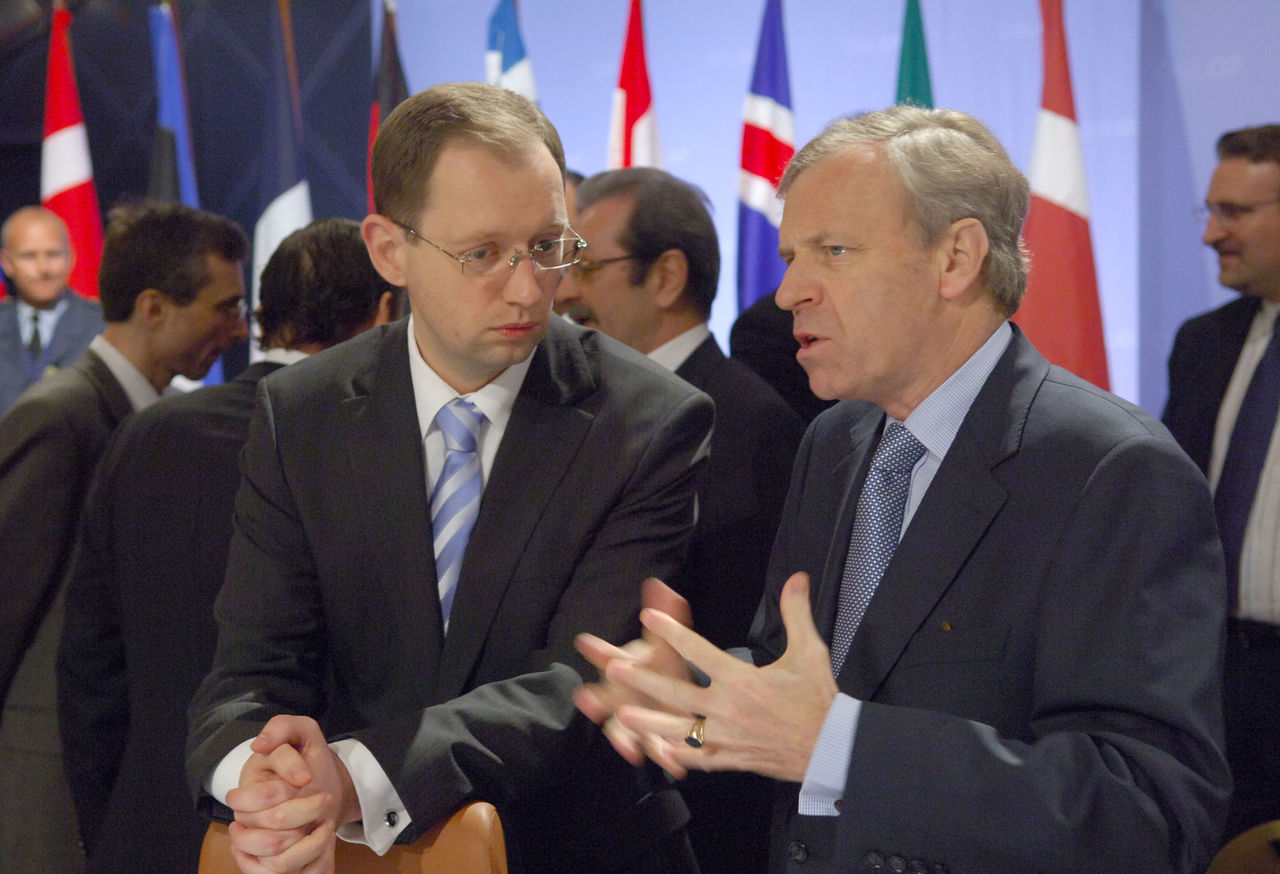
The recently appointed Ukrainian foreign minister, Arseniy Yatsenyuk, attended his first meeting of the NATO-Ukraine Commission in Oslo, Norway, on 27 April. The informal meeting provided an opportunity for Minister Yatsenyuk to brief his Allied counterparts on the political situation in Ukraine and for ministers to exchange views on key areas of cooperation.
Minister Yatsenyuk assured the Allies that Ukraine would definitely overcome its current political difficulties. He emphasised that Ukraine's course towards closer integration with Euro-Atlantic structures remained unchanged . He also pointed out that the Ukrainian government had dedicated funds to a comprehensive public information campaign to explain his country's relationship with NATO.
He stressed the need for continuous high-level political dialogue as well as the importance of the NATO-Ukraine Action Plan, which is providing Ukraine with "a roadmap" for key reforms. He highlighted, in particular, the concrete benefits being generated by the Trust Fund project for the destruction of stockpiles of small arms and light weapons as well as by various NATO-led resettlement and training initiatives for former military personnel.
NATO Secretary General Jaap de Hoop Scheffer expressed appreciation for Ukraine's ongoing contributions to NATO-led operations in Kosovo and the training mission in Iraq. He also pointed to the fact that arrangements are currently being finalised for Ukraine's support for NATO's maritime counter-terrorist operation in the Mediterranean and for participation of Ukrainian medical personnel in the Lithuanian-led Provincial Reconstruction Team in Afghanistan.
The Secretary General looked forward to the tenth anniversary of the NATO-Ukraine Distinctive Partnership, coming up in July, "which will give us an opportunity to take stock of our achievements, and look forward with hope to the future of this unique partnership." He also said that "NATO's doors, to an even closer relationship, remain open, but it is ultimately up to Ukraine's people, and their elected leaders, to determine the country's future path with NATO."