
Close
Back


From now on you can download videos from our website
If you would also like to subscribe to the newsletter and receive our latest updates, click on the button below.
Enter the email address you registered with and we will send you a code to reset your password.
The password must be at least 12 characters long, no spaces, include upper/lowercase letters, numbers and symbols.
Click the button to return to the page you were on and log in with your new password.
22 February 2007
1 MIN READ
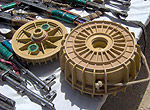
Experts from 43 nations and international organizations are discussing this week in Washington DC best practices for projects to retrain former military personnel and for the safe destruction of surplus weapons and munitions.
At a workshop organized by NATO and the United States Department of State, 22 to 23 February, experts will also discuss the specific requirements for states participating in NATO Partnership for Peace Trust Fund projects.
NATO Partnership for Peace Trust Fund projects provide practical support for defence reform. The projects focus primarily on the destruction of excess and ageing stockpiles of landmines, munitions, small arms and light weapons, and the retraining of military personnel no longer required as states reduce the size of their armed forces.
The Trust Fund was established in 1999 and seven Trust Fund projects have been successfully completed.
New projects are underway in Azerbaijan, Bosnia and Herzegovina, Kazakhstan, Moldova, Serbia and Ukraine.
All of these initiatives are part of NATO’s practical contribution to combating terrorism, supporting nations’ defence reforms, and safely destroying surplus conventional arms and munitions.