
Close
Back


From now on you can download videos from our website
If you would also like to subscribe to the newsletter and receive our latest updates, click on the button below.
Enter the email address you registered with and we will send you a code to reset your password.
The password must be at least 12 characters long, no spaces, include upper/lowercase letters, numbers and symbols.
Click the button to return to the page you were on and log in with your new password.
12 January 2007
1 MIN READ
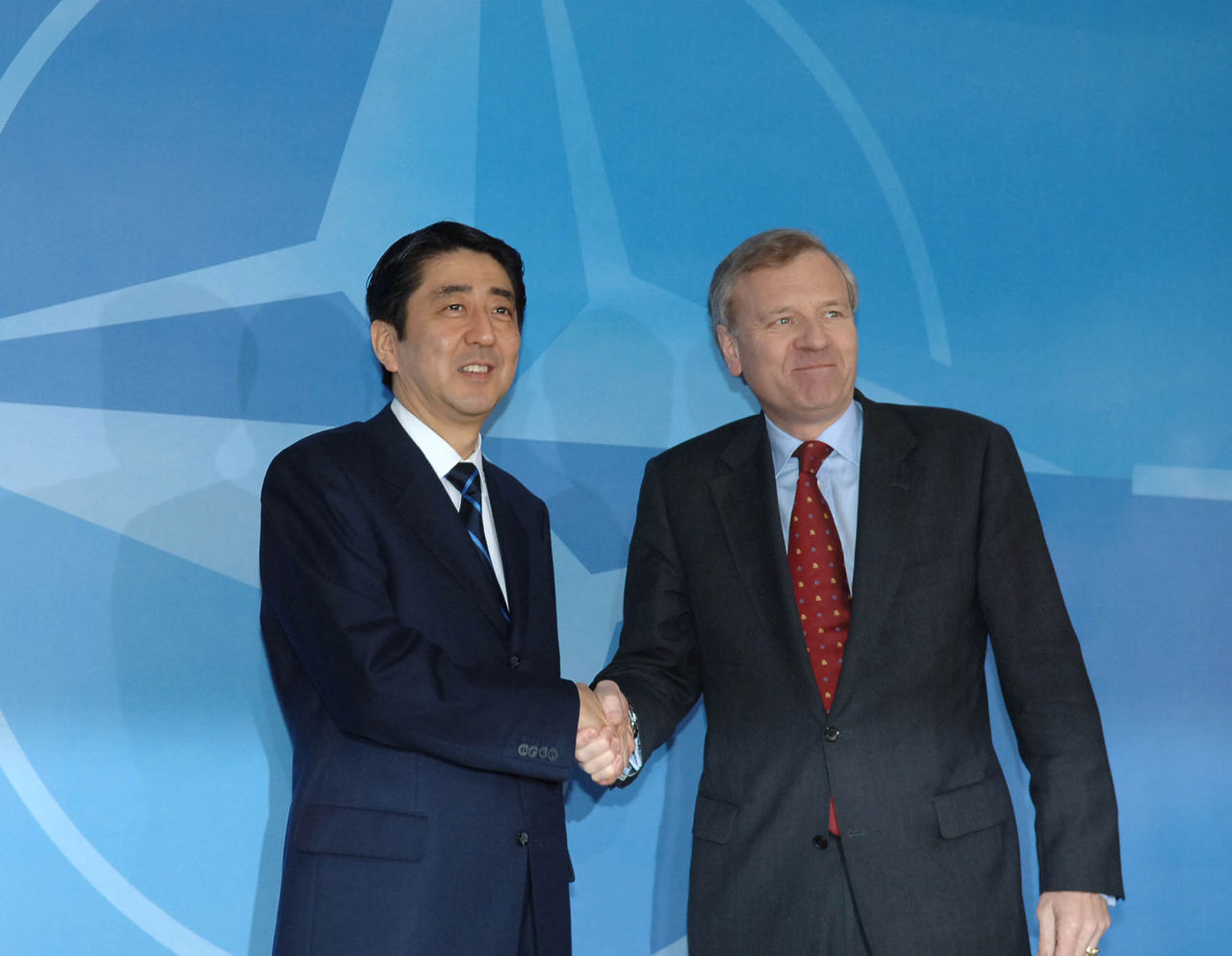
Today, Japanese Prime Minister Abe paid an historic visit to NATO Headquarters, the first ever by a Japanese Head of Government.
The Prime Minister first held a bilateral meeting with the Secretary General, and then met with the full North Atlantic Council. Prime Minister Abe expressed Japan's interest in building a stronger partnership with NATO, both politically and in practical terms -- an interest both echoed and welcomed by the Alliance.
NATO also welcomed Prime Minister Abe's announcement that Japan would enhance its already substantial role in Afghanistan by directly supporting NATO's Provincial Reconstruction Teams, for example in the areas of humanitarian assistance.
All parties agreed that NATO and Japan share an interest in more profound cooperation to defend shared values in a world where security threats -- such as the menace posed by North Korea's missile and nuclear programs -- are transnational in nature.