
Close
Back


From now on you can download videos from our website
If you would also like to subscribe to the newsletter and receive our latest updates, click on the button below.
Enter the email address you registered with and we will send you a code to reset your password.
The password must be at least 12 characters long, no spaces, include upper/lowercase letters, numbers and symbols.
Click the button to return to the page you were on and log in with your new password.
26 October 2006
2 MIN READ
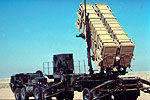
Armaments Directors from the 26 NATO countries moved forward on two key NATO capabilities initiatives, Alliance Ground Surveillance and Active Layered Theatre Ballistic Missile Defence.
Armaments Directors from the 26 NATO countries moved forward on two key NATO capabilities initiatives, Alliance Ground Surveillance and Active Layered Theatre Ballistic Missile Defence.
Decisions taken at the bi-annual meeting of the Conference of National Armaments Directors, 25-26 October, have particular significance in light of the upcoming Riga Summit.
The Armaments Directors were briefed on the significant progress made on missile defence. Regarding the Active Layered Theatre Ballistic Missile Defence (ALTBMD) Programme, NATO is moving toward signature of the first major contract, at the margins of the Riga Summit.
On the broader issue of territorial missile defence, the guidance of Heads of State and Government will be sought at Riga, on the way ahead for how to protect Alliance populations, territory and forces from the full range of missile threats.
The CNAD also agreed to enter into negotiations for the design and development of an Alliance Ground Surveillance system, on the basis of a proposal recently submitted by ASG Industries, while continuing to address a number of important issues in parallel.
The Defence Against Terrorism Programme of Work, launched by CNAD in 2004, emerged as a clear NATO success story in the lead up to the Riga Summit.
So far, the Programme has seen six prototype technologies developed, ranging from precision drop for special forces to innovative strap-on armour to better protect helicopters from rocket propelled grenades.
There have been five systems procured, including non-corrosive decontaminants for chemical, biological, radiological and nuclear (CBRN) agents As well, new systems of systems, doctrine, standards and centres of excellence have been produced.
The meeting was accompanied by an exhibition at NATO Headquarters, entitled “Special Operations Forces: A Strategic Enabler,” which focussed on technology to better support the unique needs of these forces.
Technology on display included precision-airdrop systems, unmanned aerial vehicles, night-vision equipment, and small arms.
Other topics were discussed by National Armaments Directors, including Maritime Domain Awareness and a Holistic Approach to Air Defence
Once a year, in autumn, the CNAD also holds a session with Partnership for Peace countries. This year Armaments Directors were joined by 11 of their Partner colleagues to discuss non-lethal weapons, strategic air lift and defence against terrorism, among other topics.
The CNAD is the senior NATO committee responsible for armaments co-operation, material standardisation and defence procurement matters. It meets twice a year at NATO Headquarters, bringing together senior officials responsible for armaments procurement from the 26 NATO countries.