
Close
Back


From now on you can download videos from our website
If you would also like to subscribe to the newsletter and receive our latest updates, click on the button below.
Enter the email address you registered with and we will send you a code to reset your password.
The password must be at least 12 characters long, no spaces, include upper/lowercase letters, numbers and symbols.
Click the button to return to the page you were on and log in with your new password.
08 August 2006
1 MIN READ
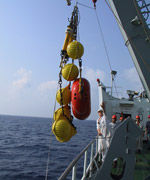
The NATO Undersea Research Centre has completed its latest campaign - Sirena06 - aimed at developing solutions for reducing the impact of man-made noise on marine mammal life, 8 August 2006.
This campaign is part of an ongoing research project by the NATO Undersea Research Centre, now entitled the Marine Mammal Risk Mitigation Project, which has been underway since 1999.
“The ultimate goal is to establish an integrated information system which will allow the development of an on-site monitoring, risk-prediction and mitigation framework,” states the NATO Undersea Research Centre.
The project has overseen the development of software packages and underwater equipment aimed at reducing the risks associated with the various noises generated during naval activity and exercises.
The results of this research will be available for NATO countries for use in drafting their own policies and procedures.
The project involves 181 researchers from 44 organisations and research institutions from 12 countries.