
Close
Back


From now on you can download videos from our website
If you would also like to subscribe to the newsletter and receive our latest updates, click on the button below.
Enter the email address you registered with and we will send you a code to reset your password.
The password must be at least 12 characters long, no spaces, include upper/lowercase letters, numbers and symbols.
Click the button to return to the page you were on and log in with your new password.
29 June 2006
1 MIN READ
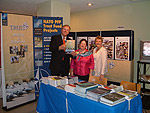
On 29 June, NATO's Assistant Secretary General for Political Affairs and Security Policy, Ambassador Martin Erdmann, presented the report of the Euro-Atlantic Partnership Council (EAPC) at the United Nations Conference to review the implementation of the 2001 Programme of Action to prevent, combat and eradicate the illicit trade in Small Arms and Light Weapons in All Its Aspects.
The EAPC –which brings together the 26 NATO and 20 Partner countries for dialogue and consultation - provided a detailed written report on its activities including practical support for the UN Programme of Action.
The day prior, an EAPC-sponsored side event highlighted the contribution of NATO's Partnership for Peace to the destruction of surplus munitions and small arms and light weapons.
The discussion included an overview of NATO's Trust Fund Policy, a review of the six completed and ten ongoing projects and the experiences of two lead nations (Canada and the United States) for current projects.
Thus far, Partnership for Peace Trust Fund projects have destroyed 2.8 million landmines, 530 high-altitude anti-aircraft missiles, 320 tonnes of rocket fuel, 28,000 small arms and light weapons and 3,000 tonnes of munitions.
The event highlighted two significant projects, particular the recently established Trust Fund project in Ukraine led by the United States. This is the largest demilitarisation project in the world and aims to destroy 1.5 million excess small arms and light weapons, including 1,000 Man Portable Air Defence Systems (MANPADS) and 133.000 tonnes of ammunitions. Two and a half million small arms and light weapons cartridges are destroyed weekly by the Canadian led project in Albania. When completed the project will destroy more than six thousand tons of surplus munitions.