
Close
Back


From now on you can download videos from our website
If you would also like to subscribe to the newsletter and receive our latest updates, click on the button below.
Enter the email address you registered with and we will send you a code to reset your password.
The password must be at least 12 characters long, no spaces, include upper/lowercase letters, numbers and symbols.
Click the button to return to the page you were on and log in with your new password.
22 February 2006
1 MIN READ
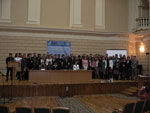
The National Ivan Franko University of Lviv organised its third yearly Winter Academy for students from 22 to 24 February 2006, with the support of the NATO Information and Documentation Centre in Ukraine. The event focused on the theme of "NATO, Securit
Participants included students from all regions of Ukraine , who are studying international relations and journalism and have a particular interest in global security issues. Students from Belarus, Estonia, Poland, Romania and Russia were also invited to take part in the three-day event
The Academy gave students the opportunity to exchange views with NATO officials and academics and experts on security issues. Topics of discussion included new global security issues; Ukraine’s Intensified Dialogue with NATO on its membership aspirations; NATO’s cooperation and relationships with Partner countries ; the transformation of NATO as demonstrated in current operations and efforts to address today’s security challenges; and the importance of public diplomacy efforts as well as the development of civil society.
Three more regional Academies are planned in 2006 for three respective target groups, with the support of the NATO Information and Documentation Centre.