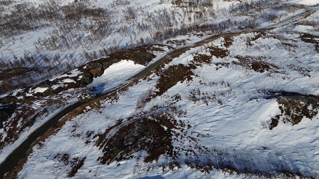
(00:00) VARIOUS AERIAL SHOTS (MUTE) – NORWEGIAN CV90 COMBAT VEHICLE MOVES THROUGH THE NORWEGIAN MOUNTAINS DURING EXERCISE COLD RESPONSE 2026
(00:26) VARIOUS SHOTS – NORWEGIAN CV90 COMBAT VEHICLE MANOEUVRES THROUGH THE NORWEGIAN LANDSCAPE DURING EXERCISE COLD RESPONSE 2026
(00:58) POV SHOT – NORWEGIAN INFANTRY SOLDIERS CLIMB INTO COMBAT VEHICLE
(01:05) VARIOUS SHOTS – NORWEGIAN MECHANISED INFANTRY DEPLOY FROM POSITION AT DUSK
(01:31) VARIOUS SHOTS – NORWEGIAN MECHANISED INFANTRY PLAN FURTHER MOVEMENTS AT NIGHT DURING EXERCISE COLD RESPONSE
(01:52) VARIOUS SHOTS – NORWEGIAN MECHANISED INFANTRY DISEMBARK FROM COMBAT VEHICLE AND ENTER THE WOODS AT NIGHT
(02:29) VARIOUS SHOTS – NORWEGIAN MECHANISED INFANTRY MOVE THROUGH THE NORWEGIAN WOODLAND IN HEAVY SNOW IN THE EARLY MORNING
(03:42) VARIOUS SHOTS – NORWEGIAN MECHANISED INFANTRY CROSS A BUSY ROAD TO IMPROVE RADIO COMMUNICATIONS DURING EXERCISE COLD RESPONSE
(04:02) VARIOUS SHOTS – NORWEGIAN MECHANISED INFANTRY CONDUCT A FORWARD ASSAULT DURING EXERCISE COLD RESPONSE
(05:04) VARIOUS SHOTS – GERMAN TRACKED ALL-TERRAIN VEHICLES MANOEUVRE DURING EXERCISE COLD RESPONSE 26 IN NORTHERN NORWAY
(05:28) MID SHOT – US MARINE CORPS AND NORWEGIAN COMMANDERS SHAKE HANDS
(05:33) VARIOUS SHOTS – US MARINES ESTABLISH A FIELD POSITION DURING EXERCISE COLD RESPONSE
(06:15) VARIOUS SHOTS – SPANISH TROOPS OPERATE AT A COMMAND POST DURING EXERCISE COLD RESPONSE
(07:25) SOUNDBITE (ENGLISH) – VICE ADMIRAL RUNE ANDERSEN, COMMANDER NORWEGIAN JOINT HEADQUARTERS
“So this exercise is taking elements of the regional plan Northwest, NATO's plans to defend this region. So we're taking elements of that and we're creating a realistic scenario for a joint exercise. So it's really mission rehearsal.”
(07:38) SOUNDBITE (ENGLISH) – VICE ADMIRAL RUNE ANDERSEN, COMMANDER NORWEGIAN JOINT HEADQUARTERS
“So we have Allies coming here to Norway every year to train here and to learn the basic skills of how to operate efficiently in the Arctic. We say that if you want to be able to operate here, you also need to train here. That goes for the personnel, but also for the equipment. So we are fortunate to be able to pass that knowledge on to close Allies. And then in exercises like this, we stage a realistic scenario to train as a joint force in a realistic multi-domain scenario.”
(07:38) SOUNDBITE (ENGLISH) – VICE ADMIRAL RUNE ANDERSEN, COMMANDER NORWEGIAN JOINT HEADQUARTERS
“In the High North, Russia has some of the largest military capabilities, has had so for many years. Given the security situation now, Allies again focus on this region in order to protect the Alliance and make sure that we have situational awareness throughout the year and in exercises like this also to train how to defend this region.”
(08:33) SOUNDBITE (ENGLISH) – LIEUTENANT COLONEL CHASE BRADFORD, BATTALION COMMANDER, UNITED STATES MARINE CORPS
“So we arrived on about January 19th. So we're almost 60 days in. We were able to execute about four weeks of cold-weather environmental training to get our marines ready to come out and execute this exercise, followed by a few weeks of our own training for the tactics, techniques and procedures that we normally use, but in this environment now. And then we had a couple days to prepare. And then we started the exercise out here in the mountains.”
(08:58) SOUNDBITE (ENGLISH) – LIEUTENANT COLONEL CHASE BRADFORD, BATTALION COMMANDER, UNITED STATES MARINE CORPS
“Sure, the most important thing that the marines are learning here is how to use their clothing and equipment properly for the temperature, the specific activity, and the duration of the activity as well. If it's minus 10 degrees Celsius, you use your clothing and equipment a little bit differently than you do when it's plus two Celsius. And knowing how to do that without having somebody over your shoulder telling you exactly what to do all the time is the way that we can operate, the way that we should, once we get out here on exercise.”
(09:24) SOUNDBITE (ENGLISH) – LIEUTENANT COLONEL CHASE BRADFORD, BATTALION COMMANDER, UNITED STATES MARINE CORPS
“For the United States marines that are operating here, the ability to do this with our Allies is the most critical element of the exercise for us. Northern Norway and the NATO Centre of Excellence and all of the Norwegians as well as the British that spend a lot of time here having their partnership within the Alliance to train us how to operate in this environment up front, takes us from amateurs in the Arctic to experts pretty quickly, so we'll be highly effective once we're employed here.”