Close
Back


From now on you can download videos from our website
If you would also like to subscribe to the newsletter and receive our latest updates, click on the button below.
Enter the email address you registered with and we will send you a code to reset your password.
The password must be at least 12 characters long, no spaces, include upper/lowercase letters, numbers and symbols.
Click the button to return to the page you were on and log in with your new password.
FROM THIS GALLERY

An Australian and Ukrainian drone pilot fly First Person View (FPV) drones side by side. At an undisclosed location in the United Kingdom, during training exercises as part of Operation Interflex, Ukrainian military personnel shared their experience in using FPV drones in combat operations, which has been in turn used to feed back into the training programme for Ukrainian soldiers. The way that the Ukrainians had to fight has changed rapidby over the years since Russia’s full scale invasion, meaning training programmes for Ukrainain soldiers had to be constantly updated to keep the pace with new threats in the battlefield.
An Australian drone pilot uses an First Person View (FPV) headset to fly a drone. At an undisclosed location in the United Kingdom, during training exercises as part of Operation Interflex, Ukrainian military personnel shared their experience in using FPV drones in combat operations, which has been in turn used to feed back into the training programme for Ukrainian soldiers. The way that the Ukrainians had to fight has changed rapidby over the years since Russia’s full scale invasion, meaning training programmes for Ukrainain soldiers had to be constantly updated to keep the pace with new threats in the battlefield.
Australian, Swedish and Ukrainian drone pilots fly side by side during a drone demonstration. At an undisclosed location in the United Kingdom, during training exercises as part of Operation Interflex, Ukrainian military personnel shared their experience in using First Person View (FPV) drones in combat operations, which has been in turn used to feed back into the training programme for Ukrainian soldiers. The way that the Ukrainians had to fight has changed rapidby over the years since Russia’s full scale invasion, meaning training programmes for Ukrainain soldiers had to be constantly updated to keep the pace with new threats in the battlefield.
nch_2456-Training mission for Ukrainian soldiers evolves to keep pace with drone threats on the battlefield-01588
Australian drone operators take part in a dynamic drone demonstration. At an undisclosed location in the United Kingdom, during training exercises as part of Operation Interflex, Ukrainian military personnel shared their experience in using First Person View (FPV) drones in combat operations, which has been in turn used to feed back into the training programme for Ukrainian soldiers. The way that the Ukrainians had to fight has changed rapidby over the years since Russia’s full scale invasion, meaning training programmes for Ukrainain soldiers had to be constantly updated to keep the pace with new threats in the battlefield.
A Swedish drone operator pilots a drone. At an undisclosed location in the United Kingdom, during training exercises as part of Operation Interflex, Ukrainian military personnel shared their experience in using First Person View (FPV) drones in combat operations, which has been in turn used to feed back into the training programme for Ukrainian soldiers. The way that the Ukrainians had to fight has changed rapidby over the years since Russia’s full scale invasion, meaning training programmes for Ukrainain soldiers had to be constantly updated to keep the pace with new threats in the battlefield.
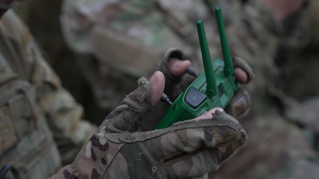
A close up on a Swedish drone pilots controller. At an undisclosed location in the United Kingdom, during training exercises as part of Operation Interflex, Ukrainian military personnel shared their experience in using First Person View (FPV) drones in combat operations, which has been in turn used to feed back into the training programme for Ukrainian soldiers. The way that the Ukrainians had to fight has changed rapidby over the years since Russia’s full scale invasion, meaning training programmes for Ukrainain soldiers had to be constantly updated to keep the pace with new threats in the battlefield.