--SOUNDBITE IN ENGLISH—
Anonymous Dutch diver
“We’re a diving group from the Dutch Navy. And we’re currently on our way to look at some pipelines on the bottom of the sea.”
--SOUNDBITE IN ENGLISH—
Anonymous Dutch diver
“We’re looking to see if any damage is done to the pipes.”
--SOUNDBITE IN ENGLISH—
Lieutenant Commander Sander Klop – Commanding Officer of the HNLMS Schiedam
“Damaging these infrastructures can cripple a society. So I think it’s essential to prevent that.”
--TEXT ON SCREEN—
HOW NATO HELPS SECURE
CRITICAL UNDERSEA INFRASTRUCTURE
GRAPHIC
JEAN-CHARLES ELLERMANN-KINGOMBE
Assistant Secretary General, Cyber and Digital Transformation Division and Special Coordinator for Hybrid Threats
--SOUNDBITE IN ENGLISH—
Jean-Charles Ellermann-Kingombe, Assistant Secretary General, Cyber and Digital Transformation Division and Special Coordinator for Hybrid Threats
“We’re talking about gas pipelines. We’re talking about over one million kilometres of cables. Every day, over 10 trillion US dollars of financial transactions are carried by these cables.
Over 95 per cent of all international internet traffic is carried by those cables. So in many ways, you could say that that they represent the backbone of our modern societies.”
--TEXT ON SCREEN—
OUR UNDERSEA CABLES AND PIPELINES
ARE UNDER THREAT
WITH SEVERAL INCIDENTS
AFFECTING DATA AND ENERGY FLOWS
GRAPHIC
MARK RUTTE, NATO Secretary General
--SOUNDBITE IN ENGLISH—
Mark Rutte – NATO Secretary General
“We have seen damage to a cable connecting Lithuania and Sweden. Another connecting Germany and Finland. And most recently, a number of cables linking Estonia and Finland.”
--TEXT ON SCREEN—
IN DECEMBER 2024,
FINNISH AUTHORITIES SEIZED
THE RUSSIAN TANKER EAGLE S,
WHICH WAS SUSPECTED OF INTENTIONALLY
DRAGGING ITS ANCHOR ACROSS
UNDERSEA CABLES IN THE BALTIC SEA
--SOUNDBITE IN ENGLISH—
Mark Rutter – NATO Secretary General
“Finland has demonstrated that firm action within the law, is possible. Ship captains must understand that potential threats to our infrastructure will have consequences, including possible boarding, impounding and arrests.”
--SOUNDBITE IN ENGLISH—
Jean-Charles Ellerman-Kingombe, Assistant Secretary General, Cyber and Digital Transformation Division and Special Coordinator for Hybrid Threats
“In terms of the recent incidents, there are investigations being undertaken, but more generally, we know of several adversaries, including the Russians, that have disruption of critical infrastructure as an integrated part of their hybrid toolbox, if you wish. A set of instruments with the purpose of destabilising our societies.”
--TEXT ON SCREEN—
NATO HAS RESPONDED TO THREATS BY
INTENSIFYING SEA AND AIR PATROLS
IN THE REGION
GRAPHIC
LT CDR SANDER KLOP, Commanding Officer, HNLMS Schiedam
--SOUNDBITE IN ENGLISH—
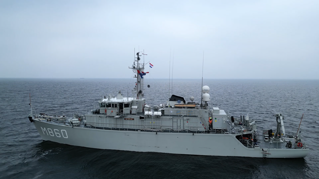
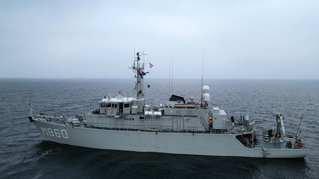
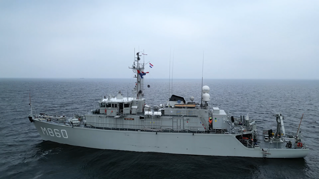
Lieutenant Commander Sander Klop – Commanding Officer of the HNLMS Schiedam
“At this moment, we're on the Netherlands
minehunter Schiedam. We're part of the NATO Mine Countermeasures Group 1 and we're sailing in the Baltic, part of the operation Baltic Sentry.
“Ships that pass by, we look at. If they have any anomalies, we note that and we start
asking them a few questions.
“We can map and look at the underwater infrastructure with our systems. We can map them by sonar and we can identify any damages or anomalies by ROVs (remotely operated vehicles) and/or divers.
“Apart from the Mine Countermeasures Group, the Standing NATO Maritime Group is also in the region. We are supported by maritime patrol aircraft, satellites. So that means ships, drones, aircraft, satellites. It's a big operation.”
--TEXT ON SCREEN—
PATROLS AND PRACTICAL SUPPORT
ARE COORDINATED
BY NATO’S MARITIME COMMAND
WHILE STRATEGIC PLANNING
AND ALLIED COORDINATION TAKE PLACE
AT NATO HEADQUARTERS IN BRUSSELS
--SOUNDBITE IN ENGLISH—
Jean-Charles Ellermann-Kingombe, NATO Assistant Secretary General for Innovation, Hybrid and Cyber
“We’ve established a cell here at Headquarters to coordinate efforts. And we have established a network amongst NATO and Allies and the private sector to share information. We’ve also used this opportunity to introduce a number of new technologies to further enhance our situational awareness.”
--TEXT ON SCREEN—
NATO SCIENTISTS ARE DEVELOPING
NEW TECHNOLOGIES TO PROTECT
VITAL UNDERSEA INFRASTRUCTURE
--TEXT ON SCREEN—
LA SPEZIA
ITALY
--SOUNDBITE IN ENGLISH—
Dr Pilar Caamaño Sobrino, NATO Scientist
“So right now we're going to head out in one of our RIBs (rigid inflatable boats) and I'm going to show you the sensors and the vehicles that we use for the protection of the critical undersea infrastructure.”
GRAPHIC
DR PILAR CAAMAÑO SOBRINO, NATO scientist
--SOUNDBITE IN ENGLISH—
Dr Pilar Caamaño Sobrino, NATO scientist
“We can have sensors that are carried
by the autonomous underwater vehicles. So they are moving. We can also have static sensors
like the ones that are located here underneath this buoy.
“Critical undersea infrastructure protection
operations are very complex. There are multiple sources of data that are collected at one time. The operators have to analyse the data and take decisions on what to do and how to do it. With the tool that we are developing here at the CMRE (NATO Centre for Maritime Research & Experimentation), we first collect data, then we process it, we fuse it and we recreate in a virtual reality environment on which the military operations can explore it. But it’s very realistic. So they have an understanding of what is going on underwater, and they can take better decisions on what to do, how to do it, how to approach a target, for instance.
--TEXT ON SCREEN—
A NEW SYSTEM DEVELOPED BY NATO
SCIENTISTS CALLED ‘MAINSAIL’
USES SENSORS AND AI
TO TRACK THOUSANDS OF SHIPS AND
PREDICT THEIR FUTURE MOVEMENTS
GRAPHIC
DR LEONARDO MILLEFIORI, NATO scientist
--SOUNDBITE IN ENGLISH—
Dr Leonardo Millefiori, NATO scientist
“Let's imagine that these coffee beans are vessels. There are more than 100,000 vessels that every day, they sail all around the world. Keeping track of them all, for the human operator, is nearly impossible. Each of these vessels, at the same time, might be a threat to our undersea infrastructure. And thanks to our AI technology, we are able today to keep track of them all and also promptly alert the operators of possible erratic activities being performed at sea.
GRAPHIC
DR ERIC POULIQUEN, Director, NATO Centre for Maritime Research & Experimentation (CMRE)
--SOUNDBITE IN ENGLISH—
Dr Eric Puliquen – Director, NATO Centre for Maritime Research & Experimentation (CMRE)
“The acts of sabotage that we've seen lately, are perpetrated by civilian ships and cargo ships, and Mainsail is able to raise suspicion on particular trajectories of ships, to pick up anomalies in the maritime domain. This has been actually turned into a toolkit that is very user-friendly for operators in the maritime command of NATO, in order to identify suspicious activities close to critical undersea infrastructures.”
--SOUNDBITE IN ENGLISH—
Jean-Charles Ellermann-Kingombe, Assistant Secretary General, Cyber and Digital Transformation Division and Special Coordinator for Hybrid Threats
“Critical infrastructure, as the name suggests, is absolutely critical for our societies. We need to stay ahead of the game. We need to invest ourselves. We are working with a multitude
of different assets, from seabed to space. Keeping a technological edge is just paramount for our security in all domains. What has happened in the Baltic Sea represents a threat to their critical infrastructure. And therefore, it's only natural that NATO responds timely
and that NATO responds robustly.”