Close
Back


From now on you can download videos from our website
If you would also like to subscribe to the newsletter and receive our latest updates, click on the button below.
Enter the email address you registered with and we will send you a code to reset your password.
The password must be at least 12 characters long, no spaces, include upper/lowercase letters, numbers and symbols.
Click the button to return to the page you were on and log in with your new password.
FROM THIS GALLERY
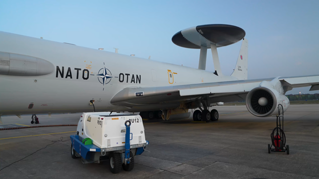


A NATO E-3A Airborne Warning & Control System (AWACS) aircraft sits on the tarmac at NATO Air Base Geilenkirchen, Germany. NATO’s Airborne Warning and Control System (AWACS) launched its first surveillance flight over the Barents Sea on 6 March 2026 in support of the enhanced vigilance activity “Arctic Sentry.” Arctic Sentry brings together exercises, troops and capabilities from several NATO Allies across the Arctic and the High North. By boosting surveillance and sharpening joint readiness, ”Arctic Sentry” helps ensure that NATO and Allies can respond together to challenges in one of the world’s most strategically important regions.
NATO aircrew prepare for take‑off aboard a NATO E‑3A Airborne Warning and Control System (AWACS) aircraft. NATO’s Airborne Warning and Control System (AWACS) launched its first surveillance flight over the Barents Sea on 6 March 2026 in support of the enhanced vigilance activity “Arctic Sentry.” Arctic Sentry brings together exercises, troops and capabilities from several NATO Allies across the Arctic and the High North. By boosting surveillance and sharpening joint readiness, ”Arctic Sentry” helps ensure that NATO and Allies can respond together to challenges in one of the world’s most strategically important regions.
NATO aircrew patrol the skies aboard an E‑3A Airborne Warning and Control System (AWACS) aircraft. NATO’s Airborne Warning and Control System (AWACS) launched its first surveillance flight over the Barents Sea on 6 March 2026 in support of the enhanced vigilance activity “Arctic Sentry.” Arctic Sentry brings together exercises, troops and capabilities from several NATO Allies across the Arctic and the High North. By boosting surveillance and sharpening joint readiness, ”Arctic Sentry” helps ensure that NATO and Allies can respond together to challenges in one of the world’s most strategically important regions.
A Royal Canadian Air Force pilot patrols the skies aboard a NATO E‑3A Airborne Warning and Control System (AWACS) aircraft. NATO’s Airborne Warning and Control System (AWACS) launched its first surveillance flight over the Barents Sea on 6 March 2026 in support of the enhanced vigilance activity “Arctic Sentry.” Arctic Sentry brings together exercises, troops and capabilities from several NATO Allies across the Arctic and the High North. By boosting surveillance and sharpening joint readiness, ”Arctic Sentry” helps ensure that NATO and Allies can respond together to challenges in one of the world’s most strategically important regions.
A United States Air Force pilot patrols the skies aboard a NATO E‑3A Airborne Warning and Control System (AWACS) aircraft. NATO’s Airborne Warning and Control System (AWACS) launched its first surveillance flight over the Barents Sea on 6 March 2026 in support of the enhanced vigilance activity “Arctic Sentry.” Arctic Sentry brings together exercises, troops and capabilities from several NATO Allies across the Arctic and the High North. By boosting surveillance and sharpening joint readiness, ”Arctic Sentry” helps ensure that NATO and Allies can respond together to challenges in one of the world’s most strategically important regions.
Aircrew from Canada, Denmark and Italy monitor the skies from aboard a NATO E‑3A Airborne Warning and Control System (AWACS) aircraft. NATO’s Airborne Warning and Control System (AWACS) launched its first surveillance flight over the Barents Sea on 6 March 2026 in support of the enhanced vigilance activity “Arctic Sentry.” Arctic Sentry brings together exercises, troops and capabilities from several NATO Allies across the Arctic and the High North. By boosting surveillance and sharpening joint readiness, ”Arctic Sentry” helps ensure that NATO and Allies can respond together to challenges in one of the world’s most strategically important regions.
Aircrew from Canada, Denmark and Italy monitor the skies from aboard a NATO E‑3A Airborne Warning and Control System (AWACS) aircraft. NATO’s Airborne Warning and Control System (AWACS) launched its first surveillance flight over the Barents Sea on 6 March 2026 in support of the enhanced vigilance activity “Arctic Sentry.” Arctic Sentry brings together exercises, troops and capabilities from several NATO Allies across the Arctic and the High North. By boosting surveillance and sharpening joint readiness, ”Arctic Sentry” helps ensure that NATO and Allies can respond together to challenges in one of the world’s most strategically important regions.
Aircrew from Canada, Denmark and Italy monitor the skies from aboard a NATO E‑3A Airborne Warning and Control System (AWACS) aircraft. NATO’s Airborne Warning and Control System (AWACS) launched its first surveillance flight over the Barents Sea on 6 March 2026 in support of the enhanced vigilance activity “Arctic Sentry.” Arctic Sentry brings together exercises, troops and capabilities from several NATO Allies across the Arctic and the High North. By boosting surveillance and sharpening joint readiness, ”Arctic Sentry” helps ensure that NATO and Allies can respond together to challenges in one of the world’s most strategically important regions.
A Canadian aircrew member monitors the skies from aboard a NATO E‑3A Airborne Warning and Control System (AWACS) aircraft. NATO’s Airborne Warning and Control System (AWACS) launched its first surveillance flight over the Barents Sea on 6 March 2026 in support of the enhanced vigilance activity “Arctic Sentry.” Arctic Sentry brings together exercises, troops and capabilities from several NATO Allies across the Arctic and the High North. By boosting surveillance and sharpening joint readiness, ”Arctic Sentry” helps ensure that NATO and Allies can respond together to challenges in one of the world’s most strategically important regions.
Aircrew from Belgium, Finland and the United States discuss the mission on board a NATO E‑3A Airborne Warning and Control System (AWACS) aircraft. NATO’s Airborne Warning and Control System (AWACS) launched its first surveillance flight over the Barents Sea on 6 March 2026 in support of the enhanced vigilance activity “Arctic Sentry.” Arctic Sentry brings together exercises, troops and capabilities from several NATO Allies across the Arctic and the High North. By boosting surveillance and sharpening joint readiness, ”Arctic Sentry” helps ensure that NATO and Allies can respond together to challenges in one of the world’s most strategically important regions.
Aircrew from Canada, the Netherlands, Norway and the United States monitor the skies aboard a NATO E‑3A Airborne Warning and Control System (AWACS) aircraft. NATO’s Airborne Warning and Control System (AWACS) launched its first surveillance flight over the Barents Sea on 6 March 2026 in support of the enhanced vigilance activity “Arctic Sentry.” Arctic Sentry brings together exercises, troops and capabilities from several NATO Allies across the Arctic and the High North. By boosting surveillance and sharpening joint readiness, ”Arctic Sentry” helps ensure that NATO and Allies can respond together to challenges in one of the world’s most strategically important regions.
Aircrew from Canada and the United States monitor the skies aboard a NATO E‑3A Airborne Warning and Control System (AWACS) aircraft. NATO’s Airborne Warning and Control System (AWACS) launched its first surveillance flight over the Barents Sea on 6 March 2026 in support of the enhanced vigilance activity “Arctic Sentry.” Arctic Sentry brings together exercises, troops and capabilities from several NATO Allies across the Arctic and the High North. By boosting surveillance and sharpening joint readiness, ”Arctic Sentry” helps ensure that NATO and Allies can respond together to challenges in one of the world’s most strategically important regions.
A Norwegian aircrew member monitors the skies from aboard a NATO E‑3A Airborne Warning and Control System (AWACS) aircraft. NATO’s Airborne Warning and Control System (AWACS) launched its first surveillance flight over the Barents Sea on 6 March 2026 in support of the enhanced vigilance activity “Arctic Sentry.” Arctic Sentry brings together exercises, troops and capabilities from several NATO Allies across the Arctic and the High North. By boosting surveillance and sharpening joint readiness, ”Arctic Sentry” helps ensure that NATO and Allies can respond together to challenges in one of the world’s most strategically important regions.
Aircrew from the Netherlands and Norway work side‑by‑side aboard a NATO E-3A Airborne Warning and Control System (AWACS) aircraft. NATO’s Airborne Warning and Control System (AWACS) launched its first surveillance flight over the Barents Sea on 6 March 2026 in support of the enhanced vigilance activity “Arctic Sentry.” Arctic Sentry brings together exercises, troops and capabilities from several NATO Allies across the Arctic and the High North. By boosting surveillance and sharpening joint readiness, ”Arctic Sentry” helps ensure that NATO and Allies can respond together to challenges in one of the world’s most strategically important regions.
Aircrew from Denmark, Finland and the United States monitor the skies aboard a NATO E‑3A Airborne Warning and Control System (AWACS) aircraft. NATO’s Airborne Warning and Control System (AWACS) launched its first surveillance flight over the Barents Sea on 6 March 2026 in support of the enhanced vigilance activity “Arctic Sentry.” Arctic Sentry brings together exercises, troops and capabilities from several NATO Allies across the Arctic and the High North. By boosting surveillance and sharpening joint readiness, ”Arctic Sentry” helps ensure that NATO and Allies can respond together to challenges in one of the world’s most strategically important regions.
A Turkish crewmember monitors the radar system of their E-3A Airborne Warning and Control System (AWACS) aircraft. NATO’s Airborne Warning and Control System (AWACS) launched its first surveillance flight over the Barents Sea on 6 March 2026 in support of the enhanced vigilance activity “Arctic Sentry.” Arctic Sentry brings together exercises, troops and capabilities from several NATO Allies across the Arctic and the High North. By boosting surveillance and sharpening joint readiness, ”Arctic Sentry” helps ensure that NATO and Allies can respond together to challenges in one of the world’s most strategically important regions.
A Canadian aircrew member smiles to the camera aboard a NATO E‑3A Airborne Warning and Control System (AWACS) aircraft. NATO’s Airborne Warning and Control System (AWACS) launched its first surveillance flight over the Barents Sea on 6 March 2026 in support of the enhanced vigilance activity “Arctic Sentry.” Arctic Sentry brings together exercises, troops and capabilities from several NATO Allies across the Arctic and the High North. By boosting surveillance and sharpening joint readiness, ”Arctic Sentry” helps ensure that NATO and Allies can respond together to challenges in one of the world’s most strategically important regions.
A Finnish aircrew member looks toward the camera aboard a NATO E‑3A Airborne Warning and Control System (AWACS) aircraft. NATO’s Airborne Warning and Control System (AWACS) launched its first surveillance flight over the Barents Sea on 6 March 2026 in support of the enhanced vigilance activity “Arctic Sentry.” Arctic Sentry brings together exercises, troops and capabilities from several NATO Allies across the Arctic and the High North. By boosting surveillance and sharpening joint readiness, ”Arctic Sentry” helps ensure that NATO and Allies can respond together to challenges in one of the world’s most strategically important regions.
A Danish aircrew member poses for a photo aboard a NATO E‑3A Airborne Warning and Control System (AWACS) aircraft. NATO’s Airborne Warning and Control System (AWACS) launched its first surveillance flight over the Barents Sea on 6 March 2026 in support of the enhanced vigilance activity “Arctic Sentry.” Arctic Sentry brings together exercises, troops and capabilities from several NATO Allies across the Arctic and the High North. By boosting surveillance and sharpening joint readiness, ”Arctic Sentry” helps ensure that NATO and Allies can respond together to challenges in one of the world’s most strategically important regions.
A United States aircrew member smiles to the camera aboard a NATO E‑3A Airborne Warning and Control System (AWACS) aircraft. NATO’s Airborne Warning and Control System (AWACS) launched its first surveillance flight over the Barents Sea on 6 March 2026 in support of the enhanced vigilance activity “Arctic Sentry.” Arctic Sentry brings together exercises, troops and capabilities from several NATO Allies across the Arctic and the High North. By boosting surveillance and sharpening joint readiness, ”Arctic Sentry” helps ensure that NATO and Allies can respond together to challenges in one of the world’s most strategically important regions.
A Belgian aircrew member looks towards the camera aboard a NATO E‑3A Airborne Warning and Control System (AWACS) aircraft. NATO’s Airborne Warning and Control System (AWACS) launched its first surveillance flight over the Barents Sea on 6 March 2026 in support of the enhanced vigilance activity “Arctic Sentry.” Arctic Sentry brings together exercises, troops and capabilities from several NATO Allies across the Arctic and the High North. By boosting surveillance and sharpening joint readiness, ”Arctic Sentry” helps ensure that NATO and Allies can respond together to challenges in one of the world’s most strategically important regions.
A United States Air Force pilot prepares to land a NATO E‑3A Airborne Warning and Control System (AWACS) aircraft. NATO’s Airborne Warning and Control System (AWACS) launched its first surveillance flight over the Barents Sea on 6 March 2026 in support of the enhanced vigilance activity “Arctic Sentry.” Arctic Sentry brings together exercises, troops and capabilities from several NATO Allies across the Arctic and the High North. By boosting surveillance and sharpening joint readiness, ”Arctic Sentry” helps ensure that NATO and Allies can respond together to challenges in one of the world’s most strategically important regions.
A United States Air Force flight engineer smiles to the camera aboard a NATO E‑3A Airborne Warning and Control System (AWACS) aircraft. NATO’s Airborne Warning and Control System (AWACS) launched its first surveillance flight over the Barents Sea on 6 March 2026 in support of the enhanced vigilance activity “Arctic Sentry.” Arctic Sentry brings together exercises, troops and capabilities from several NATO Allies across the Arctic and the High North. By boosting surveillance and sharpening joint readiness, ”Arctic Sentry” helps ensure that NATO and Allies can respond together to challenges in one of the world’s most strategically important regions.
A United States Air Force flight engineer conduct post‑flight checks on a NATO E‑3A Airborne Warning and Control System (AWACS) aircraft. NATO’s Airborne Warning and Control System (AWACS) launched its first surveillance flight over the Barents Sea on 6 March 2026 in support of the enhanced vigilance activity “Arctic Sentry.” Arctic Sentry brings together exercises, troops and capabilities from several NATO Allies across the Arctic and the High North. By boosting surveillance and sharpening joint readiness, ”Arctic Sentry” helps ensure that NATO and Allies can respond together to challenges in one of the world’s most strategically important regions.
A Royal Canadian Air Force pilot looks towards the camera aboard a NATO E‑3A Airborne Warning and Control System (AWACS) aircraft. NATO’s Airborne Warning and Control System (AWACS) launched its first surveillance flight over the Barents Sea on 6 March 2026 in support of the enhanced vigilance activity “Arctic Sentry.” Arctic Sentry brings together exercises, troops and capabilities from several NATO Allies across the Arctic and the High North. By boosting surveillance and sharpening joint readiness, ”Arctic Sentry” helps ensure that NATO and Allies can respond together to challenges in one of the world’s most strategically important regions.