
Close
Back


From now on you can download videos from our website
If you would also like to subscribe to the newsletter and receive our latest updates, click on the button below.
Enter the email address you registered with and we will send you a code to reset your password.
The password must be at least 12 characters long, no spaces, include upper/lowercase letters, numbers and symbols.
Click the button to return to the page you were on and log in with your new password.
25 October 2019
2 MIN READ
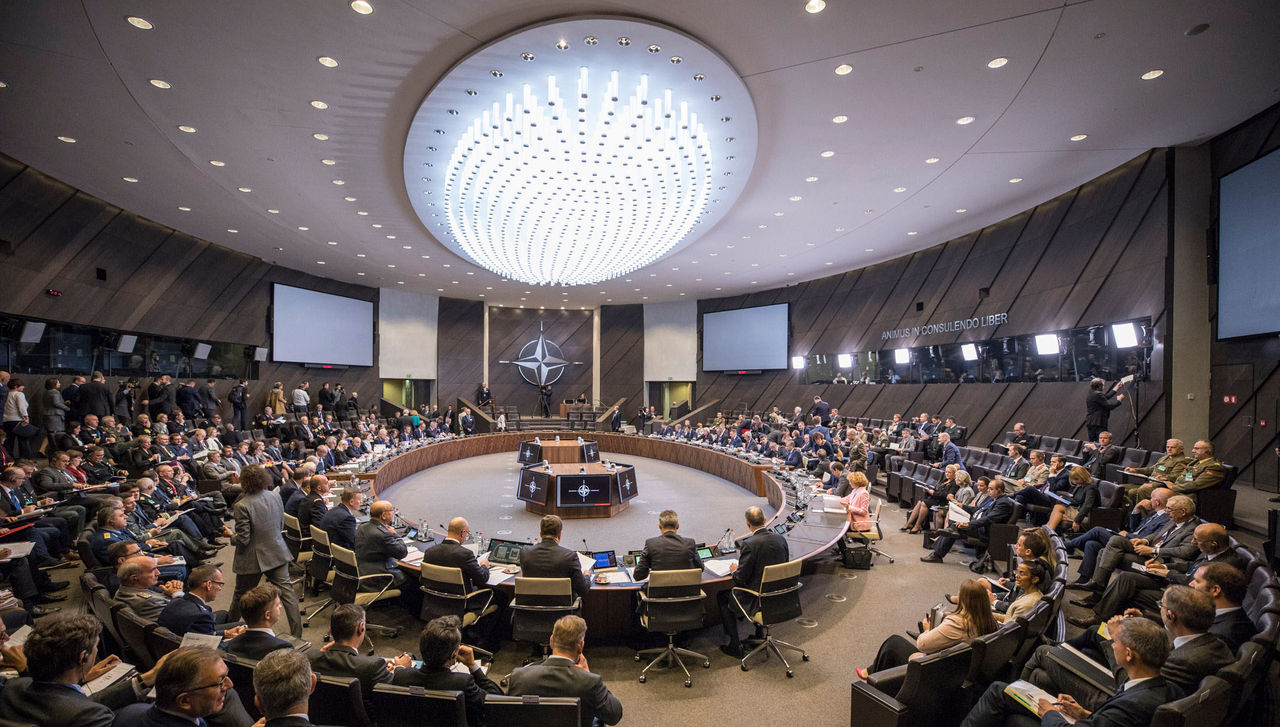
NATO Defence Ministers wrapped up two days of discussions in Brussels on Friday (25 October 2019) to prepare for the meeting of Allied leaders in London. Ministers addressed diverse issues, including the situation in northeast Syria, progress towards fairer burden sharing, NATO missions and operations, and the Alliance’s commitment to Afghanistan.
Allies agreed on the need for a political solution to the conflict in Syria, and the importance of safeguarding the gains made in the fight against ISIS. NATO Secretary General Jens Stoltenberg welcomed the German proposal for a safe zone and increased international involvement in northeast Syria. “It is important that we continue exploring all means to achieve a sustainable solution on the ground,” he said.
Ministers also addressed NATO’s missions and operations, from the Western Balkans to the Middle East, and progress in increasing the readiness of NATO forces. “Ministers welcomed that we are now able to move planes across Europe with priority handling – something we call Rapid Air Mobility,” said the Secretary General. Allied aircraft supporting NATO missions will be given a NATO call sign, and receive priority handling by Air Traffic Control in Europe.
Together with the European Union, Finland and Sweden, Allies discussed NATO’s response to hybrid threats, and work to increase national resilience. Ministers agreed an update to NATO’s baseline requirement for civilian telecommunications, including 5G. These requirements include the need for thorough risk and vulnerability assessments, including to identify and mitigate cyber threats, as well as the consequences of foreign ownership, control or direct investment. “This is important because next generation telecommunications will affect every aspect of society, from transportation to healthcare, as well as our military operations” said the Secretary General.
On Friday, Allies addressed NATO’s progress towards fairer burden sharing. There is a clear positive trend, and 2019 is the fifth consecutive year of increased defence spending across European Allies and Canada. “By the end of next year, those Allies will have added a cumulative total of one hundred billion dollars, but we still need to do more,” said the Secretary General.
Afghanistan was also high on the agenda, with a meeting of all nations contributing to NATO’s Resolute Support Mission. NATO remains committed to Afghanistan, and continues to support the Afghan security forces with training and funding. “This helps make the Afghan forces stronger, so they can fight international terrorism and create the conditions for peace,” said the Secretary General. Ministers also discussed the presidential election in Afghanistan and prospects for the peace process. “NATO supported the peace talks earlier this year, and I would welcome them being resumed,” said the Secretary General. He added that in order to reach a credible peace deal, the Taliban need to make real compromises.