
Close
Back


From now on you can download videos from our website
If you would also like to subscribe to the newsletter and receive our latest updates, click on the button below.
Enter the email address you registered with and we will send you a code to reset your password.
The password must be at least 12 characters long, no spaces, include upper/lowercase letters, numbers and symbols.
Click the button to return to the page you were on and log in with your new password.
04 April 2006
1 MIN READ
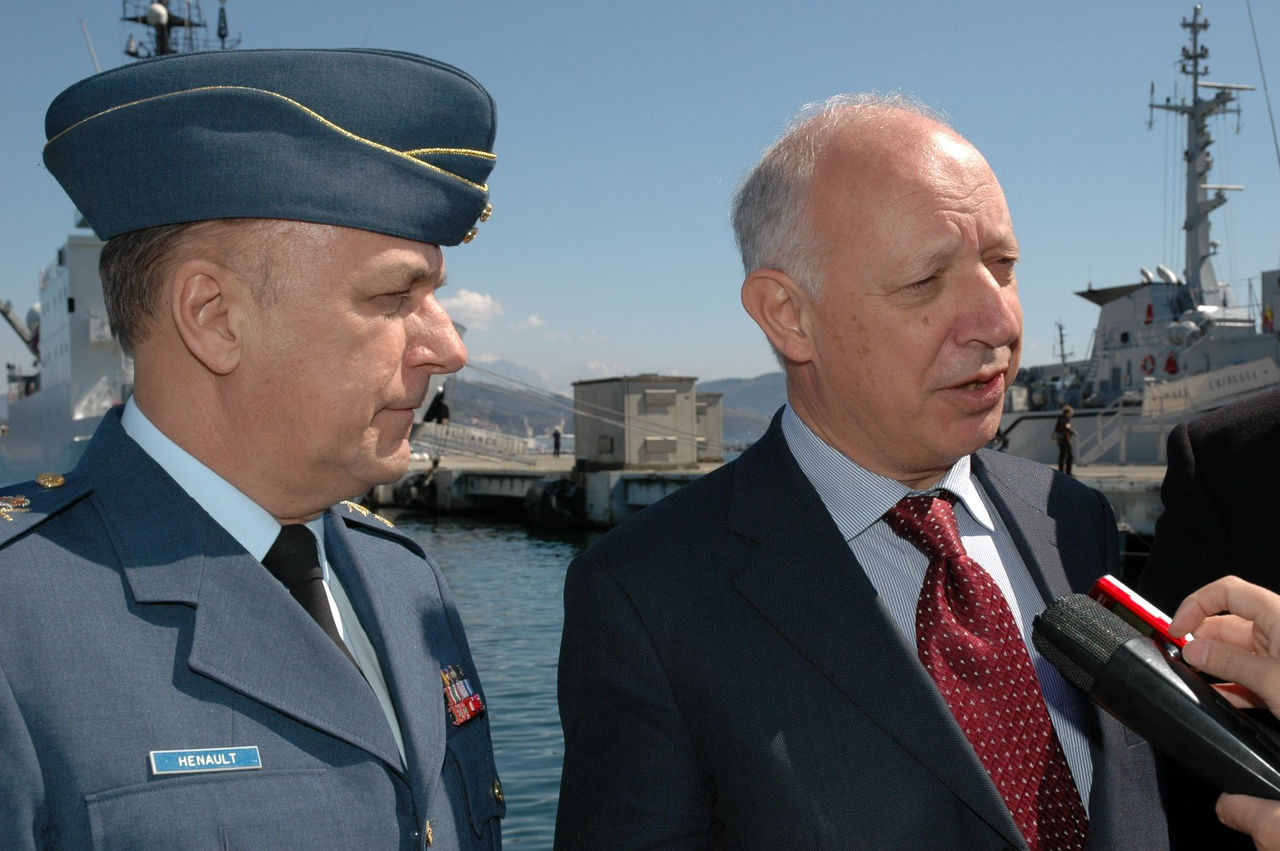
New technologies for defending harbours against terrorist attacks were demonstrated to Alliance decision-makers during a visit to NATO’s Undersea Research Centre in La Spezia, Italy, 4 April.
The North Atlantic Council, made up of the Permanent Representatives of the 26 NATO member countries, travelled to La Spezia to witness a simulated attack against a naval station.
“The presence here today of the North Atlantic Council reflects the importance of the work that the NATO Undersea Research Center is undertaking in meeting new security challenges,” said NATO Deputy Secretary General, Ambassador Alessandro Minuto Rizzo.
The mock attack put to the test some of the new technologies being developed by NATO to protect harbours against possible terrorist attacks.
These include sensor-nets, electro-optical detectors, rapid reaction capabilities and unmanned underwater vehicles.
The technologies are being developed as part of NATO’s Defence Against Terrorism Programme of Work.
Italy is leading the work on the protection of harbours and ships, with support from the NATO Underwater Research Centre.
A total of ten cutting-edge counter-terrorist technologies are being developed under Defence Against Terrorism programme.
During the visit, Ambassadors were briefed on the work of the Centre, which is where the Alliance ’s scientists develop new ways of addressing underwater threats, such as submarines and mines, and where they research other aspects of maritime warfare.
“Issues such as port protection, undersea reconnaissance, and expeditionary operations support, are all critical to an Alliance that is transforming to meet new security challenges in new ways and in new places,” said the Deputy Secretary General.
The Centre houses the only two NATO-owned ships: the NATO research vessel “Alliance” which conducts underwater acoustic (sonar) research on the high seas and the research vessel “Leonardo” that provides a coastal research platform.