Close
Back


From now on you can download videos from our website
If you would also like to subscribe to the newsletter and receive our latest updates, click on the button below.
Enter the email address you registered with and we will send you a code to reset your password.
The password must be at least 12 characters long, no spaces, include upper/lowercase letters, numbers and symbols.
Click the button to return to the page you were on and log in with your new password.
Speakers included Volodymyr Zelenskyy, President of Ukraine; Roberta Metsola, President of the European Parliament; Roger Wicker, US Senator and Chairman of the Senate Committee on Armed Services. Moderated by Christiane Amanpour, Cable News Network.
Christiane Amanpour (Moderator)
Secretary General, what can President Zelenskyy and Ukrainian people, and as he said, Europe, expect right now for the defence of that land and your land? What can they get right now?
NATO Secretary General Mark Rutte
Can I, before I answer the question, just share with you two things I saw myself last week in Kyiv? I was with a small team of colleagues from NATO.
First of all, I saw, you saw one of the pictures here, of the impact of five missiles taking out one of these huge heating plants. And we do not always realise in this part of Europe that when it comes to Kyiv and the big cities, they are heated centrally. So, what the Russians did with five missiles, take out a heating plant responsible for heating the homes of a quarter of a million people. Their plants will be down at least for two months. That means that these people, and it was minus 25 degrees last week in Kyiv during night, and minus 15 degrees during day, that they are living in those conditions. When you speak with the people, they are telling me, ‘hey, keep on supporting us. We will not give in.’ It makes them almost stronger despite the terrible difficulty they are facing.
Then I was the next day in Chernihiv. And Chernihiv was occupied for four to six weeks directly after February ’22. And I spoke with people who were kept in the basement of a school the size of the first three rows of this room, 150 people. There were only chairs they could sit on. Ten people died in that room. They were not able to bury them. This is the Russians. This is the lack of decency, of humanity. For six weeks, these people were kept there. I looked in the eyes of these two people who showed me around there. They told me, ‘we are resilient. We will never give in, but tell this story to other people what the Russians did here.’
And others of us have been in Bucha and other places around Kyiv. This was in Chernihiv, about a two-hour drive from Kyiv. And then I met Patron. And Patron is a dog. And the dog is responsible, and he's a sort of hero of Ukraine now because he sniffs when people are taking rubble away, and there is a risk of new explosions coming up. And he is excellent at this. And I agree with you, the untold story of this war is the heroes, from the firefighters, from the ambulance services, from all these people. Of course, the soldiers, they are amazing. But sometimes we forget about the police and the firefighters and all the other civilian people who are helping to take out this rubble, etc. And this dog, I even looked the dog in the eye, and he told me he will never give in.
Christiane Amanpour (Moderator)
What did you tell the dog that you were going to give Ukraine now?
NATO Secretary General Mark Rutte
And here is the story. For Ukraine to stay strong in this fight, one, we have to realise the Russians are not winning this. As you said, they lost 65,000 people in December and in January. They are not winning this. They make very small gains in Donetsk and other places, so small that it's almost not relevant. But they lose all these people. If there is a dictator in Moscow willing to do that, (if) we are really working with somebody who is willing to do that, to get so many of his own people killed in that war. We have to take that seriously, because this is crazy behaviour at every level.
So what we need to do here in this room in all our positions — the politicians and everybody who can influence this — is to make sure that these people who are staunch, who are defending themselves, who will never give up, that they have the offensive stuff they need. So that is all the missiles, etc, to hit whatever they need to hit in Russia and, of course, the ammunition. But particularly also to take out the missiles coming into Ukraine, because this is not hitting the front line. This is hitting the cities, the innocent civilians, the civilian infrastructure. Only to create chaos and panic, so that the soldiers on the front line are thinking of their families back in Kyiv, thinking ‘oh, maybe we should go back to Kyiv, because my family is now living in terrible conditions.’ This is the only reason to do that.
And we have that. The US is still supplying massive amounts of this stuff into Ukraine. This is the PURL programme, paid for by Canada and European Allies, that will cost this year, 15 billion dollars, 12 billion euros. It’s crucial that that money is there. And then, of course, the Europeans and the Canadians doing all the bilateral stuff. And please use what SACEUR, the Supreme Allied Commander, has drawn up together with the Ukrainians, the list of stuff they need. Don't give bilateral stuff outside that list. Because it is nice, it gives you nice pictures and photographs in the newspapers. But we know exactly what they need. We have, thanks to Jens Stoltenberg, this whole structure was set up under his Secretary General-ship — Wiesbaden, the Command there. And it is working excellently. So please use that list, the Comprehensive Ukraine Requirement List. And then PURL, which is all the stuff the US is supplying. We need to do this. Keep them strong in the fight. They will do it, but they need our support.
Christiane Amanpour (Moderator)
And the second part of that, the other side of that coin is putting enough pain on Putin, as you have said and as others have said, to actually get serious about a serious negotiation.
NATO Secretary General Mark Rutte
And that's exactly what Rubio said today. It is testing him: is he serious, Putin, about all of this? And he is again sending this historian next week to do the talks in Geneva, so he will again lecture the Ukrainians about how the Rusʹ from Sweden or whatever...
Christiane Amanpour (Moderator)
Secretary General, can I ask you, even the Chinese Foreign Minister as he was talking and addressing today, did the whole Russian trope about having to talk about the historical reasons and the preconditions and this and that for a ceasefire. What do you see as the vital security guarantees that need to be in place? And so far, Russia has said no to even an international monitoring force of Europeans. So what do you see is a realistic security guarantee?
NATO Secretary General Mark Rutte
Well, let's first of all — answering to Wang Yi, to the Chinese [remarks] — conclude together that there was absolutely no reason whatsoever for the Russians to invade Ukraine. Not in 2014 with Crimea, not the full-scale onslaught on Ukraine starting late February 2022. So this absolutely, absolutely not true.
Then when it comes to security guarantees, the first thing which is crucial is that NATO came back together. The last couple of days, there has been a huge shift in mindset within NATO, where the Europeans are now taking more of a leadership role in NATO, where the Europeans take more responsibility for their own defence. And this is making us stronger, because it anchors the United States stronger in the NATO Alliance. It answers a request from them. And for Ukraine to stay strong, it is important that the 32 NATO Allies are stronger together. So I really believe NATO is stronger now than it was ever since the fall of the Berlin Wall.
And we are now ready also to help Ukraine, not as an Alliance, we will do that as individual Allies. And this brings me to the security guarantees. We need security guarantees at three levels. Level one is the Ukrainian Armed Forces. They have to be so strong and so well trained. Of course, they are already battle-hardened that they can first of all, of course, defend themselves. Then we need, and this is the leadership of Macron and Starmer within Europe, the Coalition of the Willing, many other countries participating in Europe and Canada. And also, by the way, more and more the US getting involved, I will come to that.
But the Coalition of the Willing, nations in NATO but also outside NATO, working together to make sure that they will contribute whatever is necessary, to make sure that Putin will never, ever to try again invade Ukraine after a peace deal or a long-term cease fire. So, no repeat of Budapest ’94, no repeat of Minsk 2014, 2015. And then the third element is the Americans. It was a crucial moment when the American President Trump said, in August, ‘I want to be part of that. I want to be participating.’ And then we articulated — the Ukrainians and the Americans and the Coalition of the Willing — what that will be. And this is exactly as the President said, as Volodymyr said in January, we had a meeting in Paris, very successful, with the Americans, where I would say 95, 96, 97% of the security guarantees now done.
So, this is crucial, because that means that when that peace deal is there, we can make sure collectively — with Ukrainian Armed Forces, the first line of defence — that the Russians will not attack again. But obviously, to do that, you need Putin to play ball. What I am seeing — what the Americans are doing consistently since February under President Trump's leadership, Marco Rubio, Steve Witkoff, Jared Kushner — is they are testing the Russians to see whether they are serious. We can have as much criticism as you want on the present American government, but I am going to defend them there.
Christiane Amanpour (Moderator)
But, how long do you test? This has been the deadliest year for Ukraine.
NATO Secretary General Mark Rutte
Here's the thing. If we agree that only the American President was able to break the deadlock with Putin, I think it was only him because he is the leader of the mightiest nation on earth, a quarter of the world's economy, the mightiest military on Earth. He did that in February. He broke the deadlock and no one expected this to end soon. It is an extremely difficult situation we are dealing with. And the most important issue here is not Zelenskyy or the Ukrainian team – they are willing to play ball. They want this to end as soon as possible. Nobody wants prolong this. So, it is the Russians who have to play ball. And this is exactly why the Lindsey Graham-Blumenthal law now, or whatever you call it in the US law, sorry, the sanctions bill you have now in the Senate is so important.
But what the President did himself putting sanctions on Rosneft and Lukoil. What he did with the secondary sanctions on India and China when it comes to oil delivery, still oil buying from Russia. This is all important. This is putting pressure on the Russians. The Europeans doing that with their sanction packages. One problem: China is the main sanction circumventor in the world and therefore, the main contributor to Russia to the war effort, of course, together with North Korea and Iran and Belarus. But China is playing that role. We should not be naive.
Christiane Amanpour (Moderator)
After the Davos speech, after Prime Minister Carney talked about, you know, a rupture and having to have a new arrangement, you said to your members, ‘if you think that we can manage our own security without the United States, you're dreaming.’ Is that your position now, or do you think there does need to be some kind of moving away…
NATO Secretary General Mark Rutte
What I am seeing is a total unity of vision, coming together in two steps. Step one was the Summit in The Hague, where we agreed to spend 5% on defence, 3.5% on core defence, that for the first time in history will equalise what the Europeans are spending with what the Americans are spending. What I'm hearing from the Americans, everybody in America understands why NATO is important, not only for Europe or Canada, but also for the safety and collective security of the United States itself. They are completely committed to Article Five.
There is one big expectation that the Europeans would step up, spend more, and that happened in The Hague. What then happened over the last couple of weeks — and I saw the combination point of this with the Defence Ministers this week with Bridge Colby, the main policy guy in the Pentagon speaking there, the Under Secretary of War — what I saw there is this unity of vision, saying Europe will gradually take more responsibility for its own defence. Europe will take more of a leadership role within NATO, but completely with the US anchored in NATO, having a strong conventional and, of course, nuclear presence in Europe going forward.
But acknowledging collectively that United States has more to take care of than Europe, also the Indo-Pacific, also their own hemisphere. And that's only logical. And we need that. And that's why I was speaking today, yesterday with the Defence Minister of Japan, the Foreign Minister of Japan, good to see you today. I was on the phone with the President of Korea this week. I will meet the Australians and the New Zealanders here, because there is that strong connection and cooperation between NATO and the Indo-Pacific. It's only right for the US to also pivot more there.
But there will be, going forward, a strong presence here in Europe of the United States, both nuclear and conventional. But it is totally logic. This is one of the richest, richest places in the world, Europe, we have huge economies, that we take more care of our own defence, take more leadership there. And that is the reason why in NATO, and this started a couple of years ago, that now the discussion has been finalised where the Joint Force Commands will over time be led by Europeans. And the Component Commands, so AIRCOM, MARCOM and LANDCOM, will be led by the Americans and the Supreme Allied Commander being an American going forward. So, this is crucial. NATO, absolutely, today stronger than ever since the fall of the Berlin Wall.


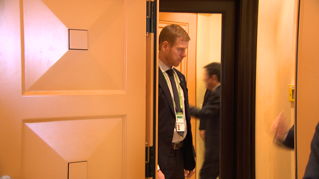
![[from left to right] Markus Söder, Minister-President of Bavaria and NATO Secretary General Mark Rutte](https://s7g10.scene7.com/is/image/ncia/20260213_trip-sg-msc_0021:16x9?fmt=webp-alpha&qlt=80 "NATO Secretary General attends the Munich Security Conference")
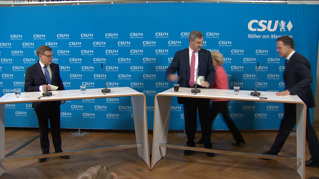
![[from left to right] Ursula von der Leyen, President of the European Commission, Markus Söder, Minister-President of Bavaria and NATO Secretary General Mark Rutte](https://s7g10.scene7.com/is/image/ncia/20260213_trip-sg-msc_0025:16x9?fmt=webp-alpha&qlt=80 "NATO Secretary General attends the Munich Security Conference")
![[from left to right] Ursula von der Leyen, President of the European Commission, Markus Söder, Minister-President of Bavaria, NATO Secretary General Mark Ruttee, Ulf Kristersson, Prime Minister of Sweden and Roger Wicker, US Senator, Chairman of the Senate Committee on Armed Services](https://s7g10.scene7.com/is/image/ncia/20260213_trip-sg-msc_0029:16x9?fmt=webp-alpha&qlt=80 "NATO Secretary General attends the Munich Security Conference")
![[from left to right] Ursula von der Leyen, President of the European Commission, Markus Söder, Minister-President of Bavaria, NATO Secretary General Mark Ruttee, Ulf Kristersson, Prime Minister of Sweden and Roger Wicker, US Senator, Chairman of the Senate Committee on Armed Services](https://s7g10.scene7.com/is/image/ncia/20260213_trip-sg-msc_0030:16x9?fmt=webp-alpha&qlt=80 "NATO Secretary General attends the Munich Security Conference")


Joint press statements by NATO Secretary General Mark Rutte, Ursula von der Leyen, President of the European Commission, Johann Wadephul, Minister for Foreign Affairs of Germany and Markus Söder, Minister-President of Bavaria
Joint press statements by NATO Secretary General Mark Rutte, Ursula von der Leyen, President of the European Commission, Johann Wadephul, Minister for Foreign Affairs of Germany and Markus Söder, Minister-President of Bavaria
Joint press statements by NATO Secretary General Mark Rutte, Ursula von der Leyen, President of the European Commission, Johann Wadephul, Minister for Foreign Affairs of Germany and Markus Söder, Minister-President of Bavaria
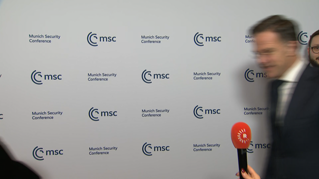
NATO Secretary General Mark Rutte at the Munich Security Conference
[from left to right] Markus Söder, Minister-President of Bavaria and NATO Secretary General Mark Rutte
[from left to right] Ursula von der Leyen, President of the European Commission, Markus Söder, Minister-President of Bavaria and NATO Secretary General Mark Rutte
[from left to right] Ursula von der Leyen, President of the European Commission, Markus Söder, Minister-President of Bavaria, NATO Secretary General Mark Ruttee, Ulf Kristersson, Prime Minister of Sweden and Roger Wicker, US Senator, Chairman of the Senate Committee on Armed Services
[from left to right] Ursula von der Leyen, President of the European Commission, Markus Söder, Minister-President of Bavaria, NATO Secretary General Mark Ruttee, Ulf Kristersson, Prime Minister of Sweden and Roger Wicker, US Senator, Chairman of the Senate Committee on Armed Services
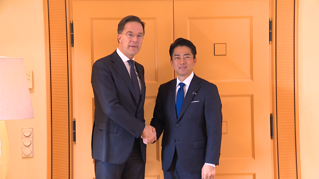
NATO Secretary General Mark Rutte and Shinjirō Koizumi, Minister of Defence of Japan, at the Munich Security Conference
NATO Secretary General Mark Rutte and Shinjirō Koizumi, Minister of Defence of Japan, at the Munich Security Conference
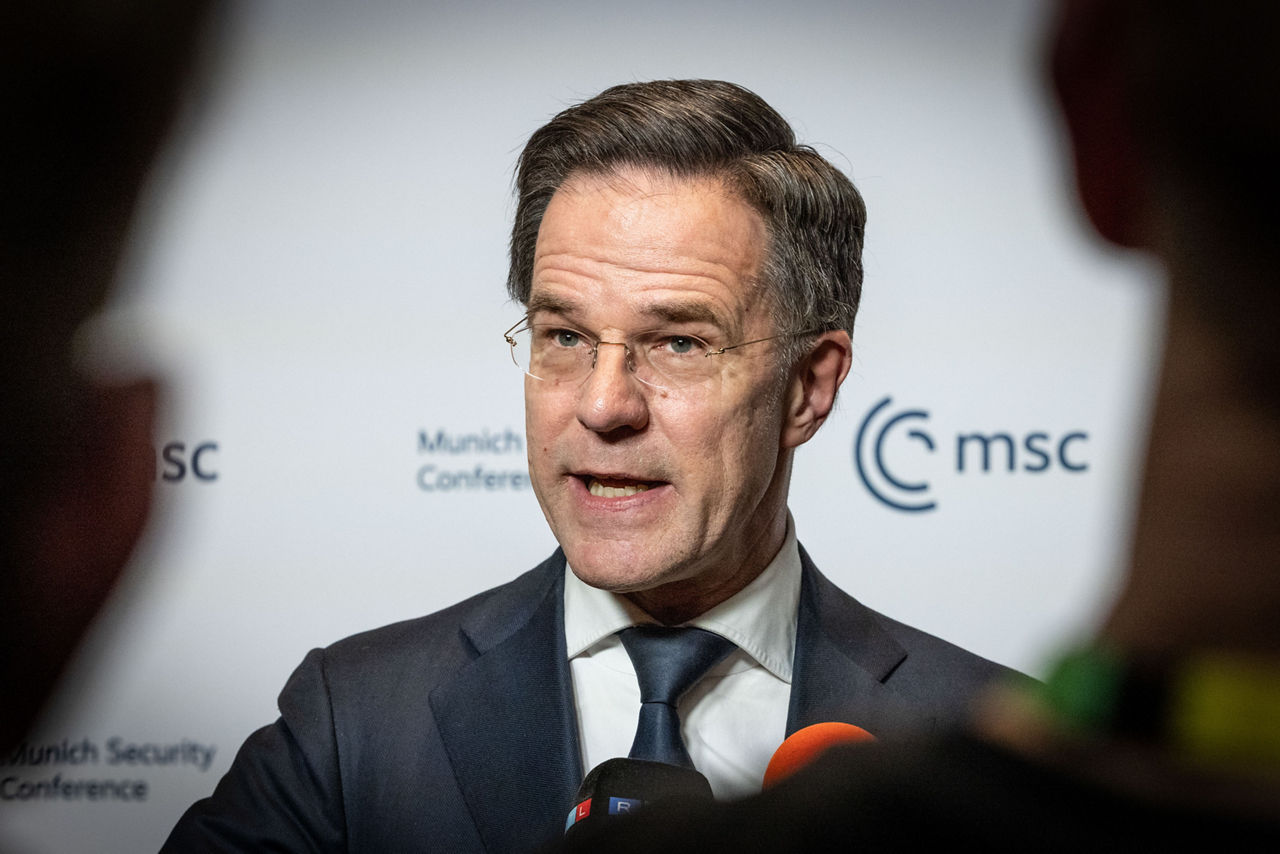
Doorstep by the NATO Secretary General Mark Rutte at the Munich Security Conference
Doorstep by the NATO Secretary General Mark Rutte at the Munich Security Conference
Doorstep by the NATO Secretary General Mark Rutte at the Munich Security Conference
Doorstep by the NATO Secretary General Mark Rutte at the Munich Security Conference
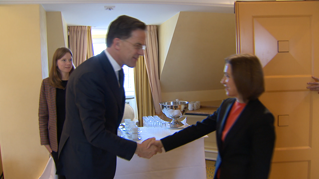
NATO Secretary General Mark Rutte meets with Judith Collins, Minister of Defence of New Zealand
NATO Secretary General Mark Rutte meets with Judith Collins, Minister of Defence of New Zealand
NATO Secretary General Mark Rutte meets with Maia Sandu, President of Moldova
NATO Secretary General Mark Rutte meets with Maia Sandu, President of Moldova
NATO Secretary General Mark Rutte at the meeting in Berlin format
NATO Secretary General Mark Rutte at the meeting in Berlin format
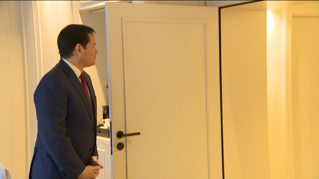
NATO Secretary General Mark Rutte and US Secretary of State Marco Rubio
NATO Secretary General Mark Rutte and US Secretary of State Marco Rubio
NATO Secretary General Mark Rutte and US Secretary of State Marco Rubio
NATO Secretary General Mark Rutte and US Secretary of State Marco Rubio
NATO Secretary General Mark Rutte and Dick Schoof, Prime Minister of the Netherlands
NATO Secretary General Mark Rutte
NATO Secretary General Mark Rutte
NATO Secretary General Mark Rutte
NATO Secretary General Mark Rutte
NATO Secretary General Mark Rutte and EU High Representative/Vice-President Kaja Kallas
NATO Secretary General Mark Rutte and Alexander Stubb, President of Finland
NATO Secretary General Mark Rutte meets with Lana Nusseibeh, Minister of Foreign Affairs of the United Arab Emirates
NATO Secretary General Mark Rutte meets with Toshimitsu Motegi, Minister of Foreign Affairs of Japan
NATO Secretary General Mark Rutte and NATO Deputy Secretary General Radmila Shekerinska meet with Toshimitsu Motegi, Minister of Foreign Affairs of Japan
NATO Secretary General Mark Rutte meets with Toshimitsu Motegi, Minister of Foreign Affairs of Japan
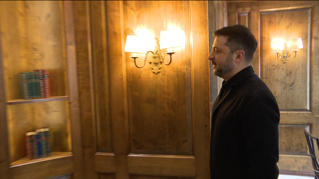
NATO Secretary General Mark Rutte meets with Volodymyr Zelenskyy, President of Ukraine, at the Munich Security Conference
NATO Secretary General Mark Rutte meets with Volodymyr Zelenskyy, President of Ukraine, at the Munich Security Conference
NATO Secretary General Mark Rutte meets with Volodymyr Zelenskyy, President of Ukraine, at the Munich Security Conference
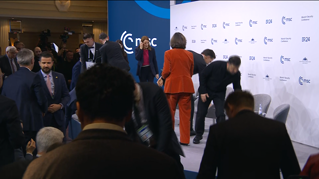
NATO Secretary General Mark Rutte participates in Munich Security Conference panel with Roger Wicker, US Senator and Chairman of the Senate Committee on Armed Services; Roberta Metsola, President of the European Parliament; and Volodymyr Zelenskyy, President of Ukraine
NATO Secretary General Mark Rutte participates in Munich Security Conference panel with Roger Wicker, US Senator and Chairman of the Senate Committee on Armed Services; Roberta Metsola, President of the European Parliament; and Volodymyr Zelenskyy, President of Ukraine
NATO Secretary General Mark Rutte participates in Munich Security Conference panel with Roger Wicker, US Senator and Chairman of the Senate Committee on Armed Services; Roberta Metsola, President of the European Parliament; and Volodymyr Zelenskyy, President of Ukraine
NATO Secretary General Mark Rutte participates in Munich Security Conference panel with Roger Wicker, US Senator and Chairman of the Senate Committee on Armed Services; Roberta Metsola, President of the European Parliament; and Volodymyr Zelenskyy, President of Ukraine
NATO Secretary General Mark Rutte participates in panel: “Coalition of the Able? Securing Long-Term Support for Ukraine” at the Munich Security Conference
NATO Secretary General Mark Rutte participates in Munich Security Conference panel with Roger Wicker, US Senator and Chairman of the Senate Committee on Armed Services; Roberta Metsola, President of the European Parliament; and Volodymyr Zelenskyy, President of Ukraine
NATO Secretary General Mark Rutte participates in panel: “Coalition of the Able? Securing Long-Term Support for Ukraine” at the Munich Security Conference. Opening remarks by Volodymyr Zelenskyy, President of Ukraine.
NATO Secretary General Mark Rutte meets with Richard Marles, Deputy Prime Minister and Minister of Defence of Australia, at the Munich Security Conference
NATO Secretary General Mark Rutte meets with Richard Marles, Deputy Prime Minister and Minister of Defence of Australia, at the Munich Security Conference
NATO Secretary General Mark Rutte and Deputy Secretary General Radmila Shekerinska meet with the United States congressional delegation of Senators
NATO Secretary General Mark Rutte and Deputy Secretary General Radmila Shekerinska meet with the United States congressional delegation of Senators
NATO Secretary General attends the Munich Security Conference