
Close
Back


From now on you can download videos from our website
If you would also like to subscribe to the newsletter and receive our latest updates, click on the button below.
Enter the email address you registered with and we will send you a code to reset your password.
The password must be at least 12 characters long, no spaces, include upper/lowercase letters, numbers and symbols.
Click the button to return to the page you were on and log in with your new password.
13 February 2026
6 MIN READ
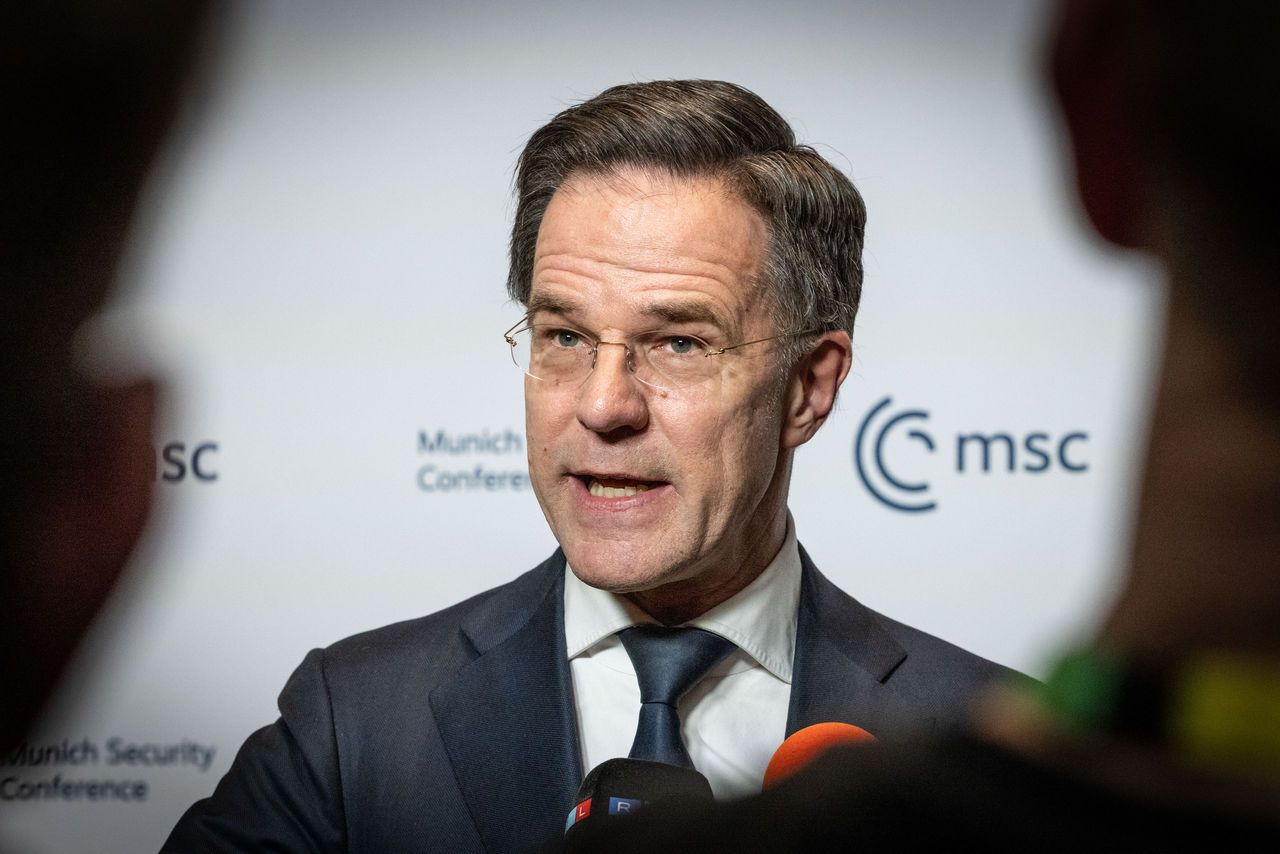
Good to see you all. And I’m happy to be back in Munich at this important conference.
As you know, yesterday we had the Defence Ministers session with NATO, and there was a real shift in mindset. As you know, we are investing more in NATO, all over NATO territory, the Europeans now, all – and Canada – on 2%, and we agreed, of course, in The Hague, at the successful Summit, to reach the 5%.
But what I was also seeing yesterday is this notion of Europe really stepping up, taking more of a leadership role within NATO, and also taking more responsibility for its own defence. And I think this will only strengthen NATO. I'm convinced it anchors the United States even more in NATO than it was already because of this dealing with this big irritant, which has been there for so many decades, of Europeans spending less than the Americans, and we are now dealing with this. So, this will anchor them in NATO. They are totally committed. Also, again yesterday, both nuclear and conventional, to the Alliance, and I think that is very important.
Of course, we will also discuss Ukraine, it was discussed yesterday, as it will be discussed today. One: good news, more money coming in to support Ukraine in the war effort, but we still need more. Particularly, we need interceptors. We need the ammunition to make sure Ukraine can stay strong in the fight.
What I will also be doing today and tomorrow is make clear that the Russians are not winning this, as some are thinking. This so-called Russian bear is not there. It is basically the stilted speed of a garden snail what we are seeing in Ukraine, this is how the Russians are moving inside Ukraine, very slow. Staggering losses, tens of thousands a month. 35,000 deaths in December, 30,000 deaths in January. So, these are the facts, and therefore we have to keep Ukraine strong, because what we see is that they make the best use of our support.
So, with that, do you have any questions?
Question
Yes, I have, Mr Rutte. Thank you very much. ISIS is threat for the world and for the Europeans. Will you continue working with the Peshmerga and the Syrian Democratic Forces?
NATO Secretary General Mark Rutte
Sorry, that is not on my agenda today or tomorrow.
Question
What do you expect from US Secretary Rubio from his speech?
NATO Secretary General Mark Rutte
Marco Rubio is a good friend. And he will, no doubt, continue pressing Europeans to keep on taking more of a leadership role in NATO, make it more European-led, and therefore, also making clear; it's my expectation that it will only help for the US to be even more anchored inside NATO. But of course, I'm not writing his speech, but I've every confidence in his speech.
Question
Do you think that Europe can be independent from the United States? And if yes, when?
NATO Secretary General Mark Rutte
Listen, I think we all agree in NATO that we should stick together, the US and European and Canadian NATO. I think we all agree on that. But having said that, we also all agree that NATO should be more European-led. Europeans should take more responsibility for their own defence. And the good news is they are doing it. There's the extra defence spending. We have seen, for example, Germany doubling his defence spending, 2021 compared to 2029. They will go to over 150 billion. A clear example of Europe stepping up. The Germans are increasing their presence in Lithuania. Again, Europe stepping up. PURL [Prioritised Ukraine Requirements List], Europeans and Canadians buying from the US essential gear for Ukraine. Europeans stepping up. So, we will stick together with a United States anchored more than ever inside NATO, because they know that what they have asked for decades, Europeans and Canada taking more care of the collective defence, particularly spending the same, at least as they're spending, is now happening, not only because the US is asking for it but also because we need, it because of the Russian threat.
Question
Elbridge Colby said that Europe needs to take primary responsibility for its own conventional defence. How quickly does that need to happen? How long does Europe have?
NATO Secretary General Mark Rutte
What I'm seeing at the moment is NATO more and more European-led, and the Europeans really stepping up to take care of their own defence, but with a strong US presence going forward, both nuclear and conventional. And we have all the plans in place, as you know, to make sure over the coming years, with the huge investments now taking place – as I said. The Germans, doubling their defence spending, the new Dutch Government committing to reach as fast as possible the 5%, including the 3.5% core defence spending, what is happening in Poland. I could mention all the Allies. Canada back, really stepping up. So we will, over the coming years, get more and more. We will more and more see a NATO more European-led, but at the same time, the US absolutely anchored in the organisation.
Question
The deadline?
NATO Secretary General Mark Rutte
We will do this step-by-step, in close conjunction with United States, based on the defence planning process we have.
Question
Can Putin [inaudible] NATO countries, and when it can be?
NATO Secretary General Mark Rutte
Well, let me first of all say that there is a US-led peace process. I think that's crucial, and led by the American President and, of course, Marco Rubio, Steve Witkoff, Jared Kushner, they're doing an excellent job. This is not easy. It will take time. And what you will see, of course, first of all, they always coordinate with NATO Allies, so we know what's cooking, what's happening. That's important. Of course, they work closely together with Ukrainians and wherever helpful, you will see others participate, no doubt. But the most important thing is that whatever happens there, it is in close coordination, done.
Question
Secretary General, please, according to the Ukrainian intelligence, Russian ballistic missile Oreshnik is already in Belarus. What NATO are planning to do with this, and will you allow Ukraine to strike this Oreshnik on the territory of Belarus?
NATO Secretary General Mark Rutte
Well, again, this is reason why I'm saying here today and tomorrow - this is my main priority - yes, it's good news that Europeans and Canada are helping Ukraine more, but we need to do even more. Because when it comes to the interceptors to take out missiles, when it comes to the anti-drones, we need the counter drone technology. Of course, Ukrainians having it, but making sure they have access to as massive amount of that as possible. Working with the Ukrainian defence industrial base, but also making use of all the cooperation and bilateral cooperation with NATO Allies in Europe and Canada, but also making use of this essential gear coming out of the US, including, of course, PURL, which is interceptors and everything else we need, lethal and non-lethal, to keep Ukraine in the fight, which only the US can provide, paid for by Allies and partners. So, all of this is important.


![[from left to right] Markus Söder, Minister-President of Bavaria and NATO Secretary General Mark Rutte](https://s7g10.scene7.com/is/image/ncia/20260213_trip-sg-msc_0021:16x9?fmt=webp-alpha&qlt=80 "NATO Secretary General attends the Munich Security Conference")
![[from left to right] Ursula von der Leyen, President of the European Commission, Markus Söder, Minister-President of Bavaria and NATO Secretary General Mark Rutte](https://s7g10.scene7.com/is/image/ncia/20260213_trip-sg-msc_0025:16x9?fmt=webp-alpha&qlt=80 "NATO Secretary General attends the Munich Security Conference")
![[from left to right] Ursula von der Leyen, President of the European Commission, Markus Söder, Minister-President of Bavaria, NATO Secretary General Mark Ruttee, Ulf Kristersson, Prime Minister of Sweden and Roger Wicker, US Senator, Chairman of the Senate Committee on Armed Services](https://s7g10.scene7.com/is/image/ncia/20260213_trip-sg-msc_0029:16x9?fmt=webp-alpha&qlt=80 "NATO Secretary General attends the Munich Security Conference")
![[from left to right] Ursula von der Leyen, President of the European Commission, Markus Söder, Minister-President of Bavaria, NATO Secretary General Mark Ruttee, Ulf Kristersson, Prime Minister of Sweden and Roger Wicker, US Senator, Chairman of the Senate Committee on Armed Services](https://s7g10.scene7.com/is/image/ncia/20260213_trip-sg-msc_0030:16x9?fmt=webp-alpha&qlt=80 "NATO Secretary General attends the Munich Security Conference")


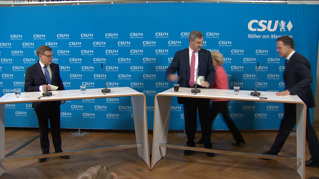
Joint press statements by NATO Secretary General Mark Rutte, Ursula von der Leyen, President of the European Commission, Johann Wadephul, Minister for Foreign Affairs of Germany and Markus Söder, Minister-President of Bavaria
Joint press statements by NATO Secretary General Mark Rutte, Ursula von der Leyen, President of the European Commission, Johann Wadephul, Minister for Foreign Affairs of Germany and Markus Söder, Minister-President of Bavaria
Joint press statements by NATO Secretary General Mark Rutte, Ursula von der Leyen, President of the European Commission, Johann Wadephul, Minister for Foreign Affairs of Germany and Markus Söder, Minister-President of Bavaria
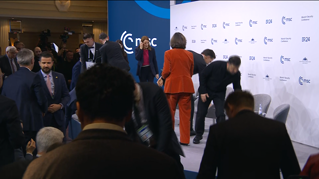
NATO Secretary General Mark Rutte at the Munich Security Conference
[from left to right] Markus Söder, Minister-President of Bavaria and NATO Secretary General Mark Rutte
[from left to right] Ursula von der Leyen, President of the European Commission, Markus Söder, Minister-President of Bavaria and NATO Secretary General Mark Rutte
[from left to right] Ursula von der Leyen, President of the European Commission, Markus Söder, Minister-President of Bavaria, NATO Secretary General Mark Ruttee, Ulf Kristersson, Prime Minister of Sweden and Roger Wicker, US Senator, Chairman of the Senate Committee on Armed Services
[from left to right] Ursula von der Leyen, President of the European Commission, Markus Söder, Minister-President of Bavaria, NATO Secretary General Mark Ruttee, Ulf Kristersson, Prime Minister of Sweden and Roger Wicker, US Senator, Chairman of the Senate Committee on Armed Services
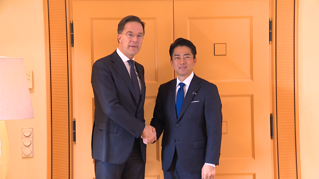
NATO Secretary General Mark Rutte and Shinjirō Koizumi, Minister of Defence of Japan, at the Munich Security Conference
NATO Secretary General Mark Rutte and Shinjirō Koizumi, Minister of Defence of Japan, at the Munich Security Conference
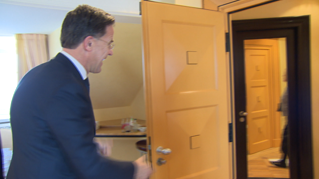
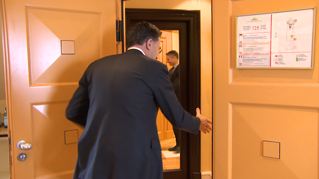
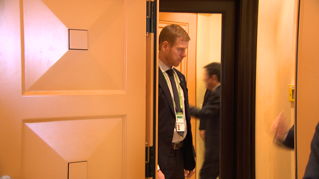
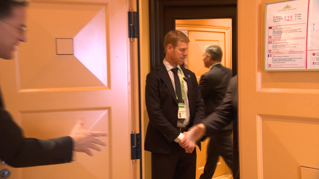
Doorstep by the NATO Secretary General Mark Rutte at the Munich Security Conference
Doorstep by the NATO Secretary General Mark Rutte at the Munich Security Conference
Doorstep by the NATO Secretary General Mark Rutte at the Munich Security Conference
Doorstep by the NATO Secretary General Mark Rutte at the Munich Security Conference
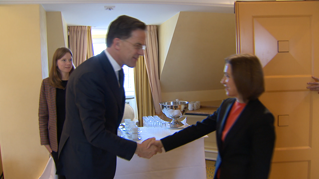
NATO Secretary General Mark Rutte meets with Judith Collins, Minister of Defence of New Zealand
NATO Secretary General Mark Rutte meets with Judith Collins, Minister of Defence of New Zealand
NATO Secretary General Mark Rutte meets with Maia Sandu, President of Moldova
NATO Secretary General Mark Rutte meets with Maia Sandu, President of Moldova
NATO Secretary General Mark Rutte at the meeting in Berlin format
NATO Secretary General Mark Rutte at the meeting in Berlin format
NATO Secretary General Mark Rutte and US Secretary of State Marco Rubio
NATO Secretary General Mark Rutte and US Secretary of State Marco Rubio
NATO Secretary General Mark Rutte and US Secretary of State Marco Rubio
NATO Secretary General Mark Rutte and US Secretary of State Marco Rubio
NATO Secretary General Mark Rutte and Dick Schoof, Prime Minister of the Netherlands
NATO Secretary General Mark Rutte
NATO Secretary General Mark Rutte
NATO Secretary General Mark Rutte
NATO Secretary General Mark Rutte
NATO Secretary General Mark Rutte and EU High Representative/Vice-President Kaja Kallas
NATO Secretary General Mark Rutte and Alexander Stubb, President of Finland
NATO Secretary General Mark Rutte meets with Lana Nusseibeh, Minister of Foreign Affairs of the United Arab Emirates
NATO Secretary General Mark Rutte meets with Toshimitsu Motegi, Minister of Foreign Affairs of Japan
NATO Secretary General Mark Rutte and NATO Deputy Secretary General Radmila Shekerinska meet with Toshimitsu Motegi, Minister of Foreign Affairs of Japan
NATO Secretary General Mark Rutte meets with Toshimitsu Motegi, Minister of Foreign Affairs of Japan
NATO Secretary General Mark Rutte meets with Volodymyr Zelenskyy, President of Ukraine, at the Munich Security Conference
NATO Secretary General Mark Rutte meets with Volodymyr Zelenskyy, President of Ukraine, at the Munich Security Conference
NATO Secretary General Mark Rutte meets with Volodymyr Zelenskyy, President of Ukraine, at the Munich Security Conference
NATO Secretary General Mark Rutte participates in Munich Security Conference panel with Roger Wicker, US Senator and Chairman of the Senate Committee on Armed Services; Roberta Metsola, President of the European Parliament; and Volodymyr Zelenskyy, President of Ukraine
NATO Secretary General Mark Rutte participates in Munich Security Conference panel with Roger Wicker, US Senator and Chairman of the Senate Committee on Armed Services; Roberta Metsola, President of the European Parliament; and Volodymyr Zelenskyy, President of Ukraine
NATO Secretary General Mark Rutte participates in Munich Security Conference panel with Roger Wicker, US Senator and Chairman of the Senate Committee on Armed Services; Roberta Metsola, President of the European Parliament; and Volodymyr Zelenskyy, President of Ukraine
NATO Secretary General Mark Rutte participates in Munich Security Conference panel with Roger Wicker, US Senator and Chairman of the Senate Committee on Armed Services; Roberta Metsola, President of the European Parliament; and Volodymyr Zelenskyy, President of Ukraine
NATO Secretary General Mark Rutte participates in panel: “Coalition of the Able? Securing Long-Term Support for Ukraine” at the Munich Security Conference
NATO Secretary General Mark Rutte participates in Munich Security Conference panel with Roger Wicker, US Senator and Chairman of the Senate Committee on Armed Services; Roberta Metsola, President of the European Parliament; and Volodymyr Zelenskyy, President of Ukraine
NATO Secretary General Mark Rutte participates in panel: “Coalition of the Able? Securing Long-Term Support for Ukraine” at the Munich Security Conference. Opening remarks by Volodymyr Zelenskyy, President of Ukraine.
NATO Secretary General Mark Rutte meets with Richard Marles, Deputy Prime Minister and Minister of Defence of Australia, at the Munich Security Conference
NATO Secretary General Mark Rutte meets with Richard Marles, Deputy Prime Minister and Minister of Defence of Australia, at the Munich Security Conference
NATO Secretary General Mark Rutte and Deputy Secretary General Radmila Shekerinska meet with the United States congressional delegation of Senators
NATO Secretary General Mark Rutte and Deputy Secretary General Radmila Shekerinska meet with the United States congressional delegation of Senators
NATO Secretary General attends the Munich Security Conference
12 February 2026