
Close
Back


From now on you can download videos from our website
If you would also like to subscribe to the newsletter and receive our latest updates, click on the button below.
Enter the email address you registered with and we will send you a code to reset your password.
The password must be at least 12 characters long, no spaces, include upper/lowercase letters, numbers and symbols.
Click the button to return to the page you were on and log in with your new password.
26 January 2026
2 MIN READ
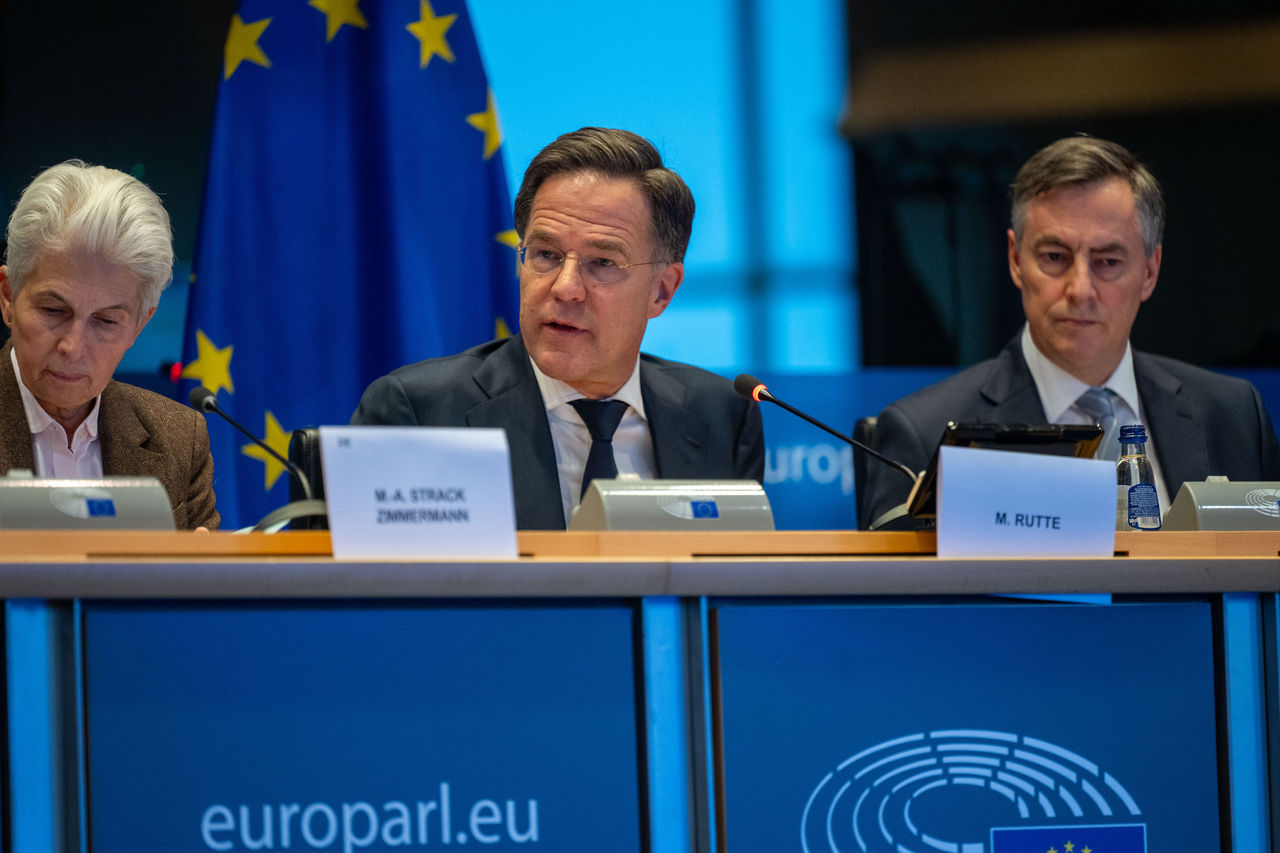
On Monday 26 January, NATO Secretary General Mark Rutte took part in an exchange of views with Members of the European Parliament’s Committees on Security and Defence (SEDE) and Foreign Affairs (AFET). The meeting was held in association with the European Parliament’s Delegation for relations with the NATO Parliamentary Assembly.
Mr Rutte outlined efforts to provide military and humanitarian support to Ukraine, including through initiatives such as the Prioritised Ukraine Requirements List (PURL). As discussions to secure a just and lasting peace for Ukraine continue, Mr Rutte also emphasised the significant impact of Russia’s persistent attacks on Ukrainian energy infrastructure in the midst of a harsh winter.
The Secretary General described how NATO Allies are responding to security challenges by ramping up defence investment, innovation and production. “It's fair and appropriate that Europe and Canada take more responsibility for their own security, and the good news is they do,” he said. In this vein, he affirmed that “a more capable European defence is crucial,” welcoming EU efforts to support the major increases in investment and industry needed. He emphasised that the work of NATO and the EU on defence must be complementary, recalling that the contributions and capabilities of NATO’s non-EU Allies are indispensable for collective defence.
Mr Rutte went on to highlight the tremendous value of close cooperation between NATO and the EU, whether enhancing military mobility, boosting defence industry, or ensuring Ukraine has the support it needs to defend itself today and secure a prosperous future. “My argument will be, let's be practical, let's be realistic when it comes to our security. We need to leverage our respective strength…that's the only way to keep Europe safe,” he concluded.


![[from left to right] David McAllister, Member of the European Parliament, NATO Secretary General Mark Rutte and Marie-Agnes Strack-Zimmermann, Member of the European Parliament](https://s7g10.scene7.com/is/image/ncia/20260126_trip-sg-ep_0065:16x9?fmt=webp-alpha&qlt=80 "NATO Secretary General addresses the European Parliament")
NATO Secretary General Mark Rutte meets with Roberta Metsola, President of the European Parliament
NATO Secretary General Mark Rutte addresses the European Parliament´s Committee on Foreign Affairs (AFET) and Committee on Security and Defence (SEDE) in Brussels
NATO Secretary General Mark Rutte addresses the European Parliament´s Committee on Foreign Affairs (AFET) and Committee on Security and Defence (SEDE) in Brussels
NATO Secretary General Mark Rutte addresses the European Parliament´s Committee on Foreign Affairs (AFET) and Committee on Security and Defence (SEDE) in Brussels
NATO Secretary General Mark Rutte addresses the European Parliament´s Committee on Foreign Affairs (AFET) and Committee on Security and Defence (SEDE) in Brussels
[from left to right] David McAllister, Member of the European Parliament, NATO Secretary General Mark Rutte and Marie-Agnes Strack-Zimmermann, Member of the European Parliament