
Close
Back


From now on you can download videos from our website
If you would also like to subscribe to the newsletter and receive our latest updates, click on the button below.
Enter the email address you registered with and we will send you a code to reset your password.
The password must be at least 12 characters long, no spaces, include upper/lowercase letters, numbers and symbols.
Click the button to return to the page you were on and log in with your new password.
16 December 2025
2 MIN READ
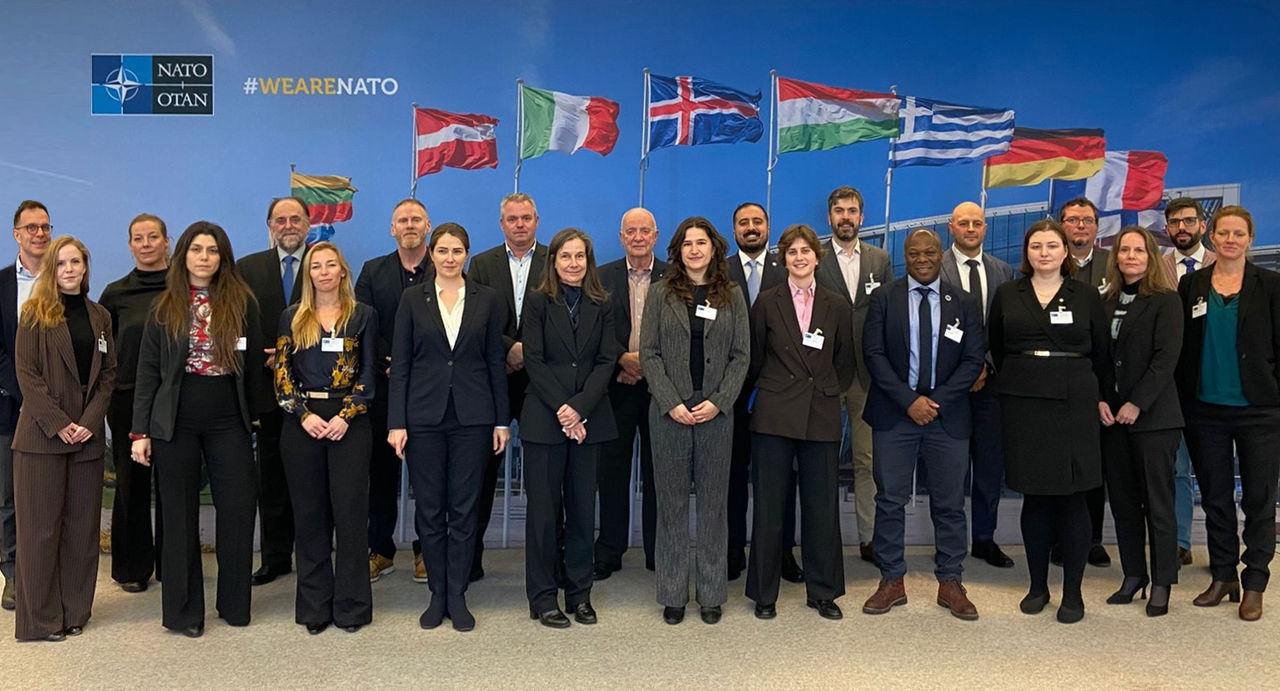
On 27 and 28 November 2025, experts from NATO, other international organisations, law enforcement services, think tanks and civil society organisations gathered at NATO Headquarters in Brussels for a roundtable event supported by the Government of Sweden to discuss the relationship between weak governance and terrorism.
The NATO 2022 Strategic Concept underscores the link between terrorism and weak governance, pointing to the ability of terrorist networks to exploit conflict and fragile state institutions to recruit, mobilise and expand their foothold.
Strengthening good governance and countering terrorism in all its forms remain key commitments for NATO Allies and partners. At NATO, two specialised teams of experts work on these interlinking challenges. NATO’s Building Integrity (BI) policy supports NATO Allies and partners to build effective, transparent and accountable security and defence institutions. In tandem, the Alliance’s counter-terrorism (CT) work focuses on sharing intelligence, developing new technologies to respond to emerging threats and enhancing cooperation with other international actors.
The aim of the event was to exchange expertise from these two disciplines and support the development of integrated training programmes and policy recommendations that encompass state-of-the-art knowledge from both the BI and CT communities of practice.
Speaking at the opening of the event, Christophe Lhomme, Head of Delivery in the Defence and Security Cooperation Directorate in NATO’s Operations Division, explained that NATO has identified the development of a BI-CT capacity-building solution as a clear requirement relevant to NATO Allies and partners. He welcomed the ongoing efforts to ensure that the implementation of the BI and CT policies is integrated even closer.
During the three panels, the participants addressed the relationship between weak governance and transnational terrorism in the context of combatting the funding of terrorism and the management of border security. They also identified closer cooperation with the private sector and civil society, as well as new and emerging technologies, as areas that need further exploring in the context of BI-CT synergies.
At the closing of the expert roundtable, Gabriele Cascone, Head of Counterterrorism in NATO’s Operations Division, noted that many of the experts had highlighted that terrorist networks routinely use corruption and weak governance to obtain illicit funds, delegitimise state security institutions and crisis management operations, as well as to smuggle arms and ammunition to attack citizens and security forces. He called for more attention to overcome working in silos when identifying ways to tackle specific challenges linking BI and CT.
Based on input from the experts brought together, and continued dialogue with them, NATO will now proceed to develop proposals for concrete training programmes and look at policy recommendations that recognise the connection between countering transnational terrorism and strengthening security institutions in NATO member and partner countries.