
Close
Back


From now on you can download videos from our website
If you would also like to subscribe to the newsletter and receive our latest updates, click on the button below.
Enter the email address you registered with and we will send you a code to reset your password.
The password must be at least 12 characters long, no spaces, include upper/lowercase letters, numbers and symbols.
Click the button to return to the page you were on and log in with your new password.
12 March 2021
1 MIN READ
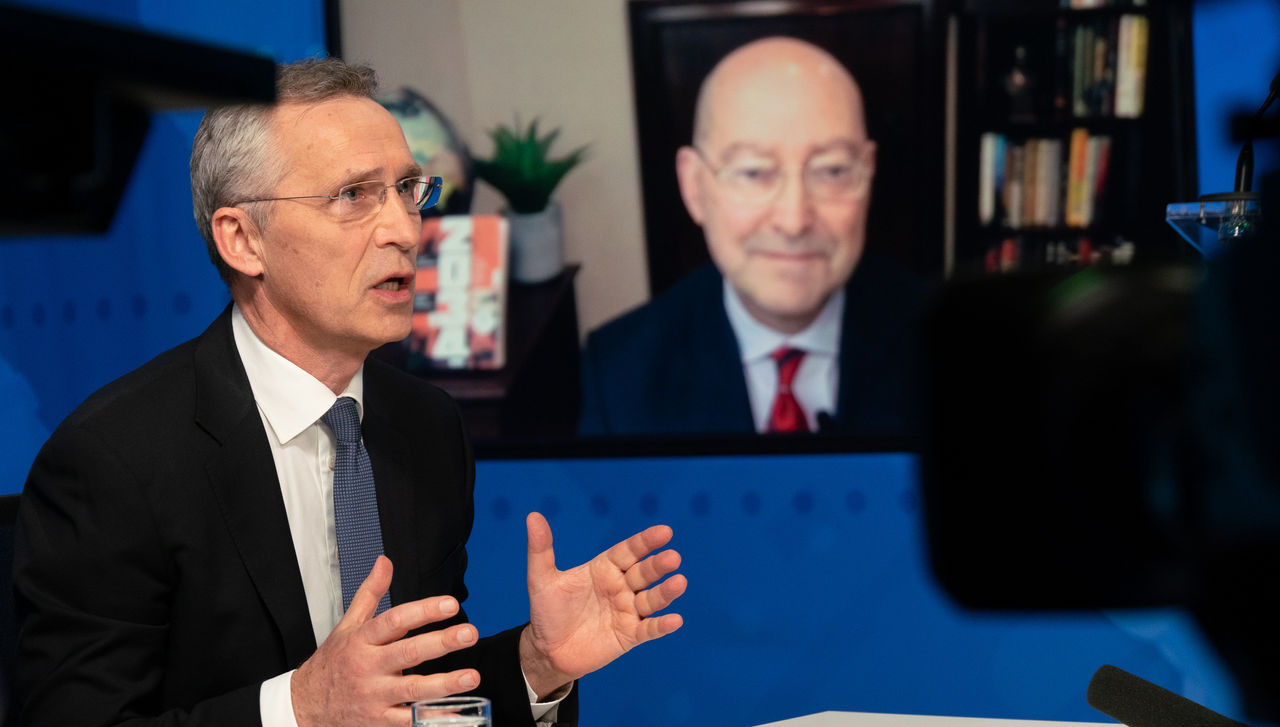
Secretary General Jens Stoltenberg set out the NATO 2030 initiative to future-proof the Alliance as part of the Council on Foreign Relations’ “Morse Lecture” series on Thursday (11 March 2021). In a discussion moderated by former NATO Supreme Allied Commander James Stavridis, the Secretary General underlined the importance of Europe and North America standing together “in strategic solidarity” to face shared challenges.
The Secretary General stressed that NATO must strengthen collective defence, step up transatlantic consultations, and stand up for the international rules based order – which he warned “is being challenged by authoritarian powers, including China.” Mr. Stoltenberg also said he believes “this is the time to develop a new Strategic Concept for NATO”, as the strategic environment has changed significantly since the last one was agreed in 2010.
Speaking of the need to broaden the security agenda, the Secretary General focused on climate change, arguing that NATO should “become the leading international organization when it comes to understanding, adapting and mitigating the impact of climate change on our security”. He also said NATO should raise its level of ambition on resilience, and innovation in cutting-edge technology “to remain competitive in a more competitive world”.