
Close
Back


From now on you can download videos from our website
If you would also like to subscribe to the newsletter and receive our latest updates, click on the button below.
Enter the email address you registered with and we will send you a code to reset your password.
The password must be at least 12 characters long, no spaces, include upper/lowercase letters, numbers and symbols.
Click the button to return to the page you were on and log in with your new password.
26 October 2016
1 MIN READ
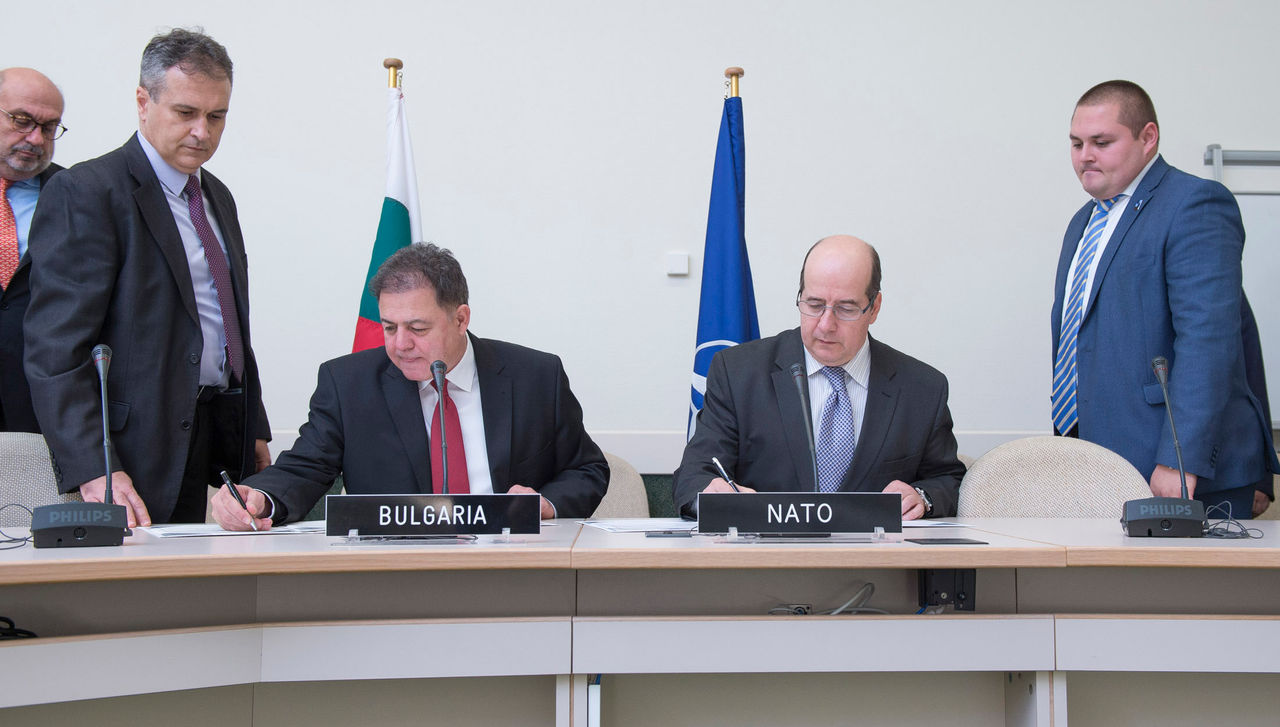
Bulgaria and NATO will boost their cooperation on cyber defence. A new Memorandum of Understanding, signed during NATO Defence Ministers’ meeting in October 2016, will facilitate information-sharing on cyber threats and best practices, improve the prevention of cyber incidents and increase Bulgaria’s resilience to cyber threats. Furthermore, the new arrangement will facilitate assistance between NATO and Bulgaria’s cyber defence authorities in case of need.
The Memorandum was signed at NATO Headquarters by the Bulgarian Minister of Defence Nikolay Nenchev and NATO Assistant Secretary General Ambassador Sorin Ducaru in his capacity as the Chairman of the Cyber Defence Management Board (CDMB).
As the Alliance looks to the future, cyber threats and attacks will continue to become more common, sophisticated, and potentially damaging. While NATO’s primary responsibility is to protect its own networks, NATO also facilitates co-operation on cyber defence including through multinational projects, education, training, and exercises and information exchange, in support of national cyber defence efforts. At the Warsaw Summit in July, Allied Heads of State and Government adopted a common pledge to strengthen and enhance the cyber defences of national networks and infrastructures, as a matter of priority.