
Close
Back


From now on you can download videos from our website
If you would also like to subscribe to the newsletter and receive our latest updates, click on the button below.
Enter the email address you registered with and we will send you a code to reset your password.
The password must be at least 12 characters long, no spaces, include upper/lowercase letters, numbers and symbols.
Click the button to return to the page you were on and log in with your new password.
23 February 2010
2 MIN READ
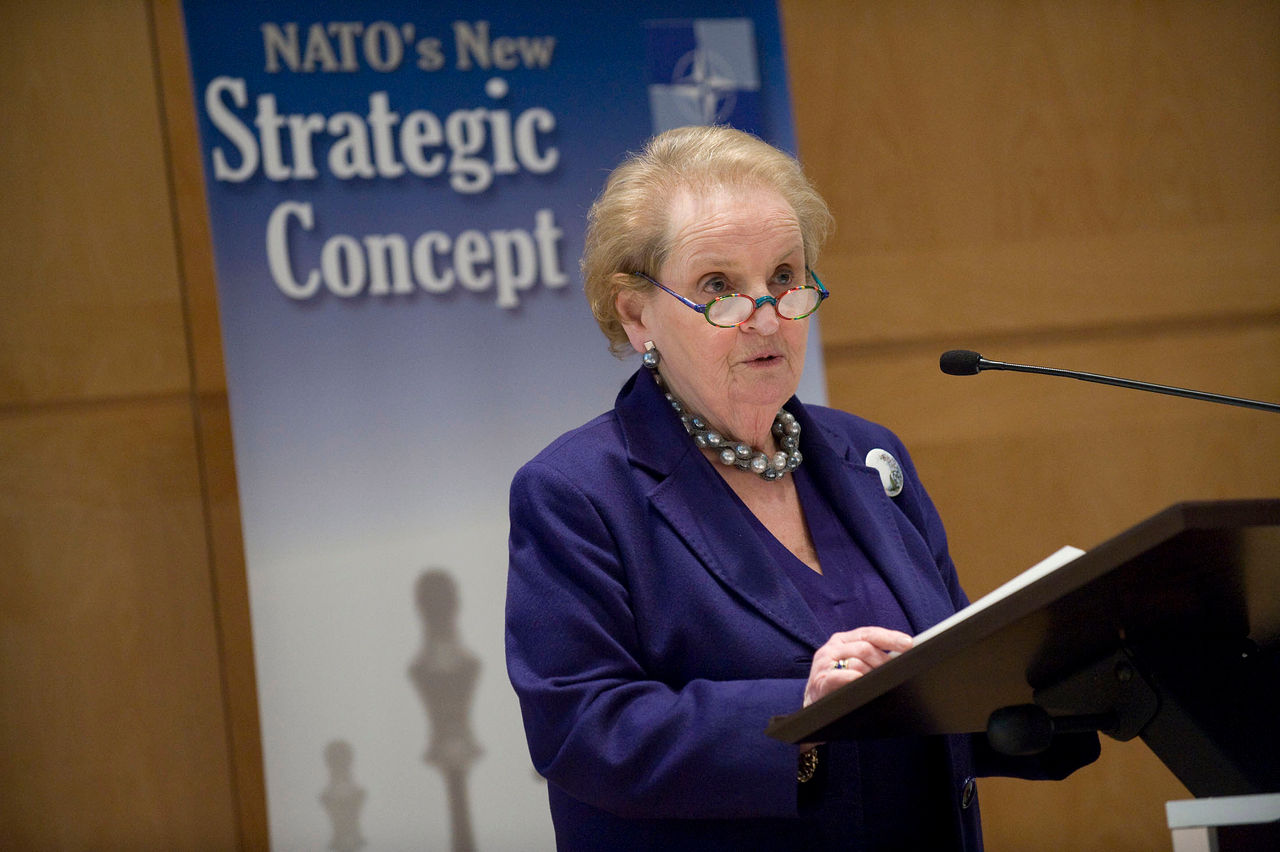
On 23 February, the fourth and last seminar on NATO’s new Strategic Concept took place in Washington, DC, focusing on how NATO needs to change. The event looked closely at the North Atlantic Treaty’s Article 5 on collective defence as well as the need to adapt the Alliance’s capabilities to new challenges, particularly under tight economic conditions.
NATO Secretary General Anders Fogh Rasmussen, US Secretary of State Hillary Rodham Clinton, and US Secretary of Defense Robert Gates addressed the seminar, which was chaired by the head of the Group of Experts on the new Strategic Concept, Dr Madeleine Albright.
In her speech on the eve of the event, State Secretary Clinton said: “This Alliance has endured because of the skill of our diplomats, the strength of our soldiers, and – most importantly – the power of its founding principles.”
“Once again, we face a new strategic landscape. New technologies, new adversaries, and new ideologies threaten our security. And once again, there is little certainty about the future. But I believe that the original tenets of NATO’s mission – defending our nations, strengthening transatlantic ties, and fostering European integration – still hold.”
In his opening remarks, Secretary General Rasmussen said that transformation is about improving NATO’s working methods and preparing for the future. “We must face new challenges. Terrorism, proliferation, cyber security or even climate change will oblige us to seek new ways of operating. And in a time of financial and budget constraints, we need to maximise our efficiency within limited resources.”
“We need to reform the three fundamental elements of our modus operandi: the way we do our traditional business, the way we address new threats and last but definitely not least, our structure and organisation.”
In her closing remarks, Dr Albright said that NATO must adapt to the changing times: “NATO can neither slow the pace of change nor ameliorate the quick-silver quality of modern events. But if Allies are truly dedicated to their shared tasks, it can be a reliable and predictable means for coping effectively with unpredictable threats.”
“NATO’s Strategic Concept matters because NATO matters. And NATO matters because freedom will surely need defenders in the next decade and for generations to come,” she concluded.
The seminar was hosted by Allied Command Transformation and the National Defense University and supported by the Atlantic Council, the German Marshall Fund of the United States, the Centre for Strategic and International Studies, and the SAIS Center for Transatlantic Relations.