
Close
Back


From now on you can download videos from our website
If you would also like to subscribe to the newsletter and receive our latest updates, click on the button below.
Enter the email address you registered with and we will send you a code to reset your password.
The password must be at least 12 characters long, no spaces, include upper/lowercase letters, numbers and symbols.
Click the button to return to the page you were on and log in with your new password.
28 May 2008
3 MIN READ
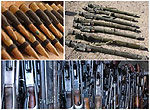
Euro-Atlantic Partnership Council countries and the Organization for Security and Co-operation in Europe are co-sponsoring an international conference, which is supported by the United Nations, at NATO Headquarters. The conference focuses on strengthening the role of regional organizations in addressing the global threat posed by the proliferation, illicit trade and use of small arms and light weapons (SALW).
Approximately 100 experts representing over 30 regional, international and non-governmental organizations from around the world are meeting at NATO Headquarters from 28 to 30 May. They are exchanging views on how to further cooperation and promote best practices between regional organizations in implementing the UN Programme of Action to Prevent, Combat and Eradicate the Illicit Trade in SALW in All its Aspects.
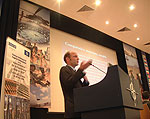
“At least 300,000 lives are lost each year to gun violence, one million people are injured, and countless more traumatised. An estimated sixty per cent of small arms and light weapons are thought to be in the hands of civilians,” said Aurelia Bouchez, NATO’s Deputy Assistant Secretary General for Regional, Economic and Security Affairs, opening the meeting.
She stressed the need for the broadest possible cooperation between nations and organizations to meet this multifaceted, fluid and transnational challenge. “NATO is determined to continue to play its part in that effort, reaching out to other international actors, and enhancing security for all,” she said.
In this respect, the conference is a demonstration of the Comprehensive Approach that NATO has been advocating for some time – “an approach that brings together civil and military efforts, and where nations and organizations complement each other in the most effective manner.”
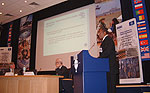
The UN Programme of Action, which was agreed in 2001, sets out a comprehensive set of measures to be achieved at the national, regional and global levels. A number of countries have expressed an interest in strengthening regional implementation.
The conference at NATO is aimed at preparing for discussion of this issue at the upcoming Biennial Meeting of States on the UN Programme of Action, which will take place in New York from 14 to 18 July.
Regional initiatives are crucial in complementing and strengthening the implementation of the UN Programme of Action. They allow regions to address SALW problems according to their particular needs, helping countries improve laws, regulations and export controls as well as assisting in the destruction of large numbers of surplus SALW.
Activities at the regional level can also act as a catalyst for global action. This conference could do so too, by examining how the implementation of the UN Programme of Action has promoted security and stability in regions around the world and by encouraging synergies of effort among regional organizations.
Panel discussions and work group meetings will focus on a number of key issues related to SALW including:
NATO is directly confronted with the problem of the proliferation of SALW in its different theatres of operation, such as Afghanistan and Kosovo. They pose a direct threat to the soldiers and have a devastating impact on stabilizing efforts.
The Allies are working with non-member countries and other international organizations to support the implementation of the UN Programme of Action.
The Euro-Atlantic Partnership Council’s Ad Hoc Working Group on Small Arms and Light Weapons and Mine Action focuses on advocacy issues and the exchange of information in this area.
Individual Allies and partner countries also contribute to the destruction of excess stockpiles of arms and munitions through Partnership for Peace Trust Fund projects.