Close
Back


From now on you can download videos from our website
If you would also like to subscribe to the newsletter and receive our latest updates, click on the button below.
Enter the email address you registered with and we will send you a code to reset your password.
The password must be at least 12 characters long, no spaces, include upper/lowercase letters, numbers and symbols.
Click the button to return to the page you were on and log in with your new password.
FROM THIS GALLERY
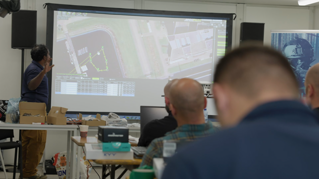


3D-printed drone boats await testing at Den Helder Naval Base in the Netherlands during Exercise Bold Machina 25 while safety divers standing by. Held by NATO’s Allied Special Operations Command (SOFCOM), exercise Bold Machina 25 is a series of experimental trials intended to test out emerging technologies in special operations held at sea.
A drone boat navigates in the harbour of the Den Helder Naval Base in the Netherlands during Exercise Bold Machina 25. Held by NATO’s Allied Special Operations Command (SOFCOM), exercise Bold Machina 25 is a series of experimental trials intended to test out emerging technologies in special operations held at sea.
A drone boat navigates in the harbour of the Den Helder Naval Base in the Netherlands during Exercise Bold Machina 25 while safety divers look on. Held by NATO’s Allied Special Operations Command (SOFCOM), exercise Bold Machina 25 is a series of experimental trials intended to test out emerging technologies in special operations held at sea.
A Polish Army special operations soldier trials a 3D-printed drone boat at Den Helder Naval Base in the Netherlands during Exercise Bold Machina 25 while safety divers look on. Held by NATO’s Allied Special Operations Command (SOFCOM), exercise Bold Machina 25 is a series of experimental trials intended to test out emerging technologies in special operations held at sea.
3D-printed drone boats float in the harbour at Den Helder Naval Base in the Netherlands during Exercise Bold Machina 25. Held by NATO’s Allied Special Operations Command (SOFCOM), exercise Bold Machina 25 is a series of experimental trials intended to test out emerging technologies in special operations held at sea.