
Close
Back


From now on you can download videos from our website
If you would also like to subscribe to the newsletter and receive our latest updates, click on the button below.
Enter the email address you registered with and we will send you a code to reset your password.
The password must be at least 12 characters long, no spaces, include upper/lowercase letters, numbers and symbols.
Click the button to return to the page you were on and log in with your new password.
07 December 2023
1 MIN READ
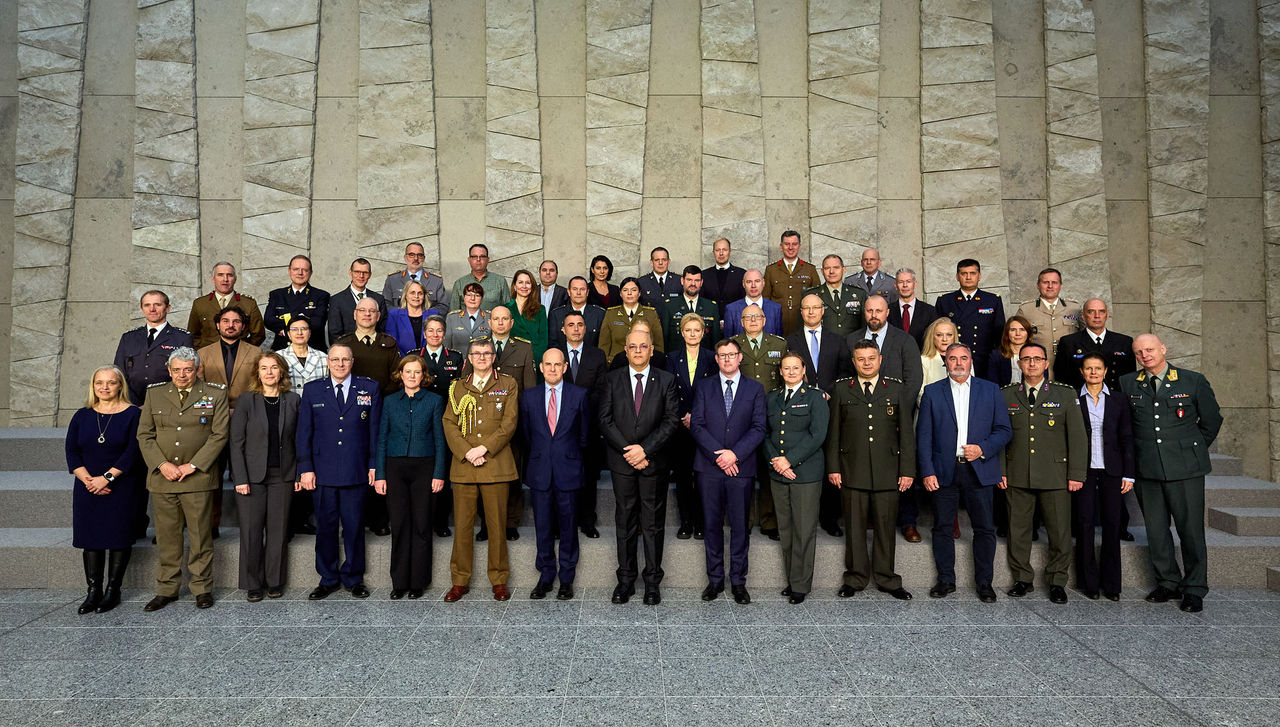
On Thursday (7 December 2023), the Committee of the Chiefs of Military Medical Services (COMEDS) met with senior officials from national health authorities under the auspices of NATO’s Joint Health Group (JHG) to discuss the evolving requirements for medical support in the context of a changing strategic environment.
Opening the meeting, Angus Lapsley, Assistant Secretary General for Defence Policy and Planning, urged Allies to learn from both the COVID-19 pandemic and Russia’s war of aggression against Ukraine to improve military medical planning and civil-military cooperation. The Chair of the Joint Health Group, Dr. Raed Arafat, Romania’s Head of Emergency Services, said: “With the changed strategic context, especially the Russian war of aggression against Ukraine, there is greater urgency for a more robust approach to preparedness and planning for contingencies other than pandemics and to fundamentally improve the resilience of our health sector”.
The experts discussed how medical planning and preparedness need to adapt to ensure effective medical support is aligned with NATO’s collective defence requirements. The meeting covered a wide range of issues including mass casualty planning and preparedness; security of supply arrangements for blood, blood products, and medical countermeasures; and patient evacuation and transfer.
The Chair of COMEDS, Major General Tim Hodgetts, the United Kingdom’s Surgeon General, extended his thanks to Allies for participating in this first-ever gathering. “The meeting provided a unique opportunity for dialogue and to establish relationships between senior civil and military leaders in healthcare, raised collective awareness of the challenges, and started to build mutual understanding in areas where civil-military cooperation will be required”, he concluded.
The Joint Health Group (JHG) reports to NATO’s Resilience Committee and is composed of national representatives and subject-matter experts from Allied authorities responsible for health preparedness and planning. The Committee of the Chiefs of Military Medical Services (COMEDS), comprised of Allied Surgeon Generals, advises the NATO Military Committee on all medical matters.