
Close
Back


From now on you can download videos from our website
If you would also like to subscribe to the newsletter and receive our latest updates, click on the button below.
Enter the email address you registered with and we will send you a code to reset your password.
The password must be at least 12 characters long, no spaces, include upper/lowercase letters, numbers and symbols.
Click the button to return to the page you were on and log in with your new password.
28 September 2023
1 MIN READ
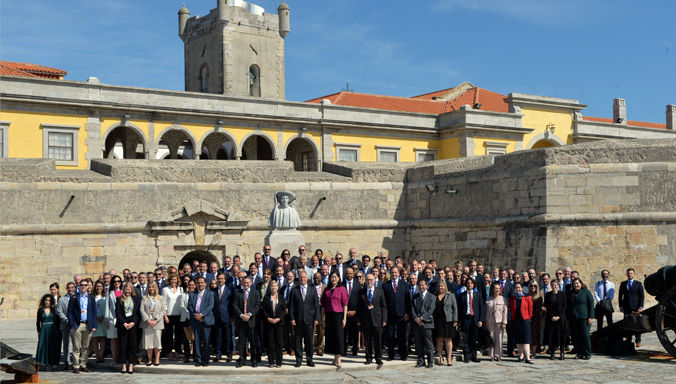
NATO’s annual Nuclear Policy Symposium kicked off in Lisbon, Portugal, on Wednesday (27 September 2023). Held annually since 1992, the Symposium brings together experts, diplomats and senior officials, to discuss some of the biggest nuclear challenges facing the Alliance. Participants will also hear perspectives from Indo-Pacific partners.
Among the topics for discussion are Russia’s irresponsible nuclear rhetoric and signaling, the implications of Russia’s nuclear doctrine for Euro-Atlantic security, and the implications of developments in the Indo-Pacific region for NATO Allies.
“While we continue to focus on deterring the very real and reckless nuclear threats from Russia, we can’t lose sight of other global nuclear challenges,” said Jessica Cox, NATO’s Director of Nuclear Policy, adding that China’s rapid and opaque nuclear expansion is also cause for concern.
At the NATO Summit in Vilnius, Allied leaders reiterated that the fundamental purpose of NATO’s nuclear capability is to preserve peace, prevent coercion and deter aggression. After the Cold War, NATO greatly reduced its nuclear arsenal in Europe. NATO supports the goal of a world without nuclear weapons, but will remain a nuclear Alliance as long as nuclear weapons exist.