
Close
Back


From now on you can download videos from our website
If you would also like to subscribe to the newsletter and receive our latest updates, click on the button below.
Enter the email address you registered with and we will send you a code to reset your password.
The password must be at least 12 characters long, no spaces, include upper/lowercase letters, numbers and symbols.
Click the button to return to the page you were on and log in with your new password.
03 May 2023
2 MIN READ
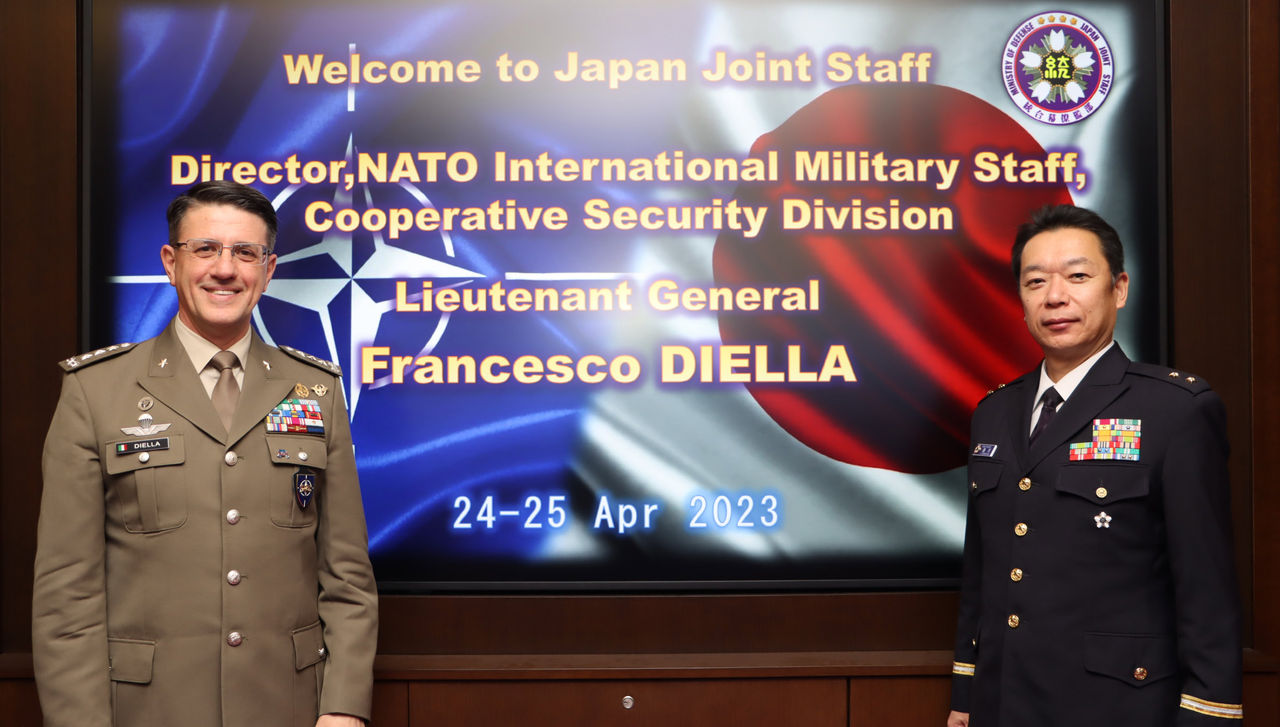
From 24 to 26 April 2023, a military delegation from NATO’s Cooperative Security Division (CS), led by its Director, Lieutenant General Francesco Diella travelled to Japan to meet with senior military representatives to discuss the current military cooperation and opportunities to foster a stronger partnership.
On the first day, the NATO delegation met with its Japanese counterparts, led by Major General Minamikawa Nobutaka. It was an opportunity for both delegations to provide a series of briefings in areas of mutual interest, such as defence planning, international cooperation, international policy planning, exercises and training and as well as recent developments in the global and regional security environments.
"These are our first military staff talks in Japan after the pandemic and I have seen firsthand that what happens in Europe matters to you, just as what happens in the Indo-Pacific region matters to NATO. Your support to Ukraine has been significant, demonstrating your engagement as a security provider on a global scale. Our security is deeply interconnected and so must be our cooperation, which is rooted in our shared values, and our shared vision – of a free, peaceful and prosperous world", highlighted Lieutenant General Diella.
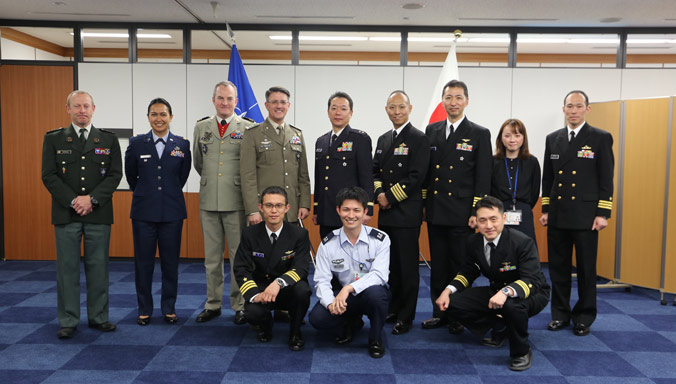
The staff discussions were followed by a meeting with General Yoshihide Yoshida, Chief of Staff of the Joint Staff of the Japanese Self-Defence Forces, where NATO representatives voiced the Alliance’s openness to increase the military cooperation between NATO and Japan. "In recent years, NATO and Japan have taken our partnership to the next level, including on cyber defence. Japan participates in the NATO Centre of Excellence on cyber security in Tallinn. And Japanese cyber experts recently trained with NATO Allies in Cyber Coalition, the world’s largest cyber defence exercise. We have the potential to do more together, especially with the increase in hybrid threats", added Lieutenant General Diella.
The NATO delegation also visited the Peacekeeping and Training Centre, which provides specialized UN Peacekeeping Operations training to Japanese Self-Defense Forces. "In this challenging security environment, it is important to contribute to global security, work with like-minded partners and bolster our own defence capabilities. NATO is doing this and so is Japan. Japan’s new National Security Strategy and National Defence Strategy, clearly, acknowledge the complex security environment and provide a strong response, with rapid advances in modern technologies. We look forward to pursuing our dialogue on defence matters, innovation and new technologies", underscored the NATO’s Cooperative Security Division Director.
The visit concluded with a meeting with Ambassador Taksøe-Jensen, Head of the Danish Embassy in Japan and NATO Contact Point Embassy (CPE). CPEs are a valuable tool that contributes to NATO’s outreach efforts with Partners. In every partner country, an embassy of one or more NATO Allies serve as a contact point and operates as a channel for disseminating information about the role and policies of the Alliance.