
Close
Back


From now on you can download videos from our website
If you would also like to subscribe to the newsletter and receive our latest updates, click on the button below.
Enter the email address you registered with and we will send you a code to reset your password.
The password must be at least 12 characters long, no spaces, include upper/lowercase letters, numbers and symbols.
Click the button to return to the page you were on and log in with your new password.
26 April 2023
1 MIN READ
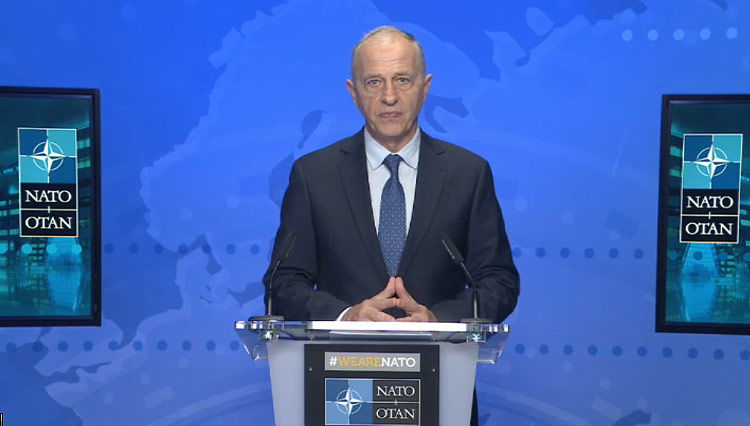
NATO Deputy Secretary General Mircea Geoană virtually addressed the 2023 NATO Resilience Symposium in Riga, Latvia, on Wednesday (26 April), emphasizing the significance of resilience as a fundamental aspect of NATO's deterrence and defence.
The Deputy Secretary General emphasized that the Alliance's commitment to resilience remains steadfast in the face of Russia's war against Ukraine. Mr. Geoană praised the resilience of Ukraine, which has withstood Russia's aggression since 2014. “When President Putin first ordered his tanks to roll cross the border, he expected Kyiv to fall within days and the rest of the country to follow in a matter of weeks. He was wrong. He underestimated the resilience of Ukraine and the Ukrainian people,” he said, adding that building resilience is essential in preventing and recovering from attacks, thus reducing their likelihood of occurring in the first place.
The Deputy Secretary General highlighted recent actions taken by NATO, including the establishment of a senior Resilience Committee, the first annual meeting of Senior National Officials responsible for national resilience, and the launch of a process to develop collective resilience objectives. This framework enables Allies to address their individual needs while also tackling strategic vulnerabilities and gaps, strengthening the collective resilience of the Alliance.
In conclusion, the Deputy Secretary General called on participants at the symposium to reflect “on the lessons from Ukraine’s resilience, including its resistance, which can inform our own preparedness.”
The NATO Resilience Symposium aims to foster discussions on topics such as critical infrastructure security, supply chain security, emerging technologies, and societal resilience.