
Close
Back


From now on you can download videos from our website
If you would also like to subscribe to the newsletter and receive our latest updates, click on the button below.
Enter the email address you registered with and we will send you a code to reset your password.
The password must be at least 12 characters long, no spaces, include upper/lowercase letters, numbers and symbols.
Click the button to return to the page you were on and log in with your new password.
30 November 2022
1 MIN READ
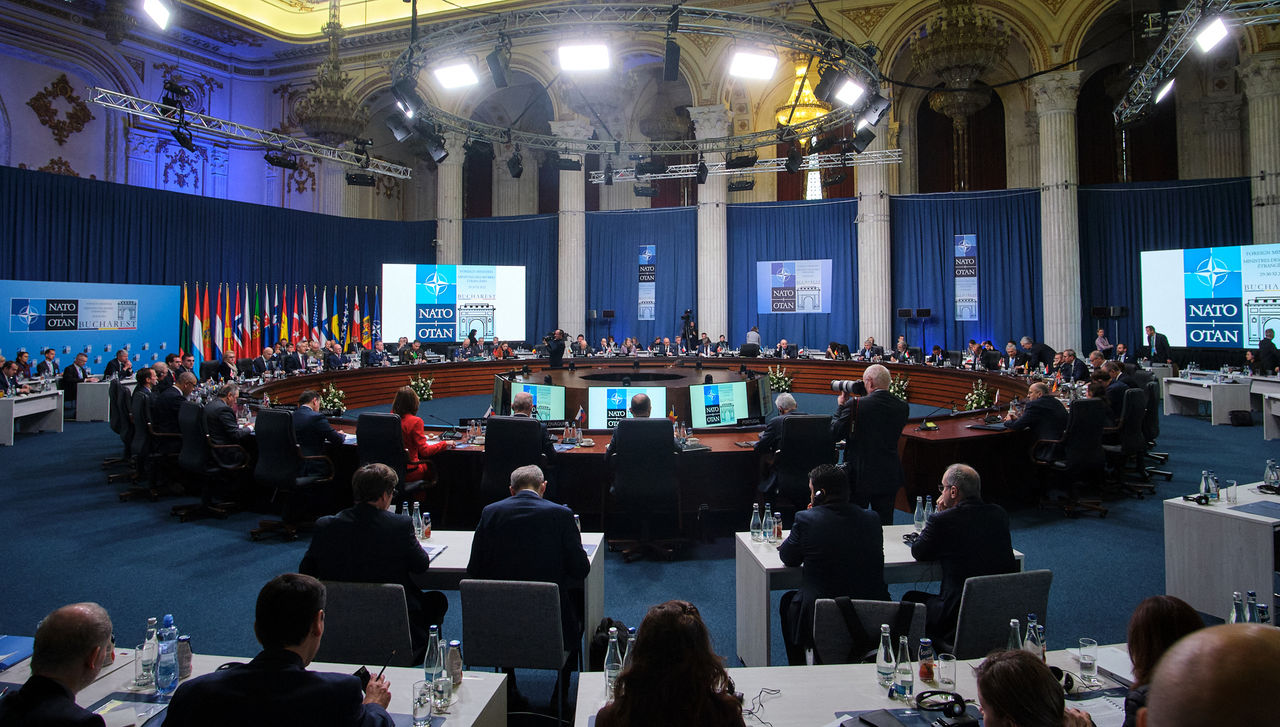
NATO foreign ministers ended two days of meetings in Bucharest on Wednesday (30 November 2022), with meetings focused on the long-term challenges posed by China, as well as on support for partners facing Russian pressure. “NATO is an Alliance of Europe and North America, but the challenges we face are global, and we must address them together in NATO,” said Secretary General Jens Stoltenberg.
Foreign ministers considered China’s ambitious military developments, its technological advances, and its growing cyber and hybrid activities. They also stressed the importance of meeting NATO’s resilience guidelines, maintaining NATO’s technological edge, and continuing to strengthen cooperation with partners in the Indo-Pacific region and with the European Union. Mr Stoltenberg said that the war in Ukraine demonstrated a dangerous dependency on Russian gas, and that "this should also lead us to assess our dependencies on other authoritarian regimes, not least China, for our supply chains, technology, or infrastructure." He added: we will continue, of course, to trade and engage economically with China, but we have to be aware of our dependencies, reduce our vulnerabilities, and manage the risks." Ministers also discussed terrorism, and agreed to continue efforts to counter this grave threat.
The Foreign Ministers of Bosnia and Herzegovina, Georgia and Moldova joined the final session of the ministerial. NATO Allies agreed to step up tailored support to these three partners, including on capacity-building, reform, and training to improve their security and defence institutions.
On Tuesday, NATO Foreign Ministers met with Ukrainian Foreign Minister Dmytro Kuleba to address Ukraine’s most urgent needs, as well as longer-term support. Allies agreed that continued military support for Ukraine is essential – in particular, additional air defences. Allies also announced additional contributions to NATO’s Comprehensive Assistance Package, which is providing Ukraine with non-lethal aid, including fuel and generators.
Allies were joined by Finland and Sweden for all sessions at the ministerial, their first meeting of NATO foreign ministers as invitees to the Alliance.