
Close
Back


From now on you can download videos from our website
If you would also like to subscribe to the newsletter and receive our latest updates, click on the button below.
Enter the email address you registered with and we will send you a code to reset your password.
The password must be at least 12 characters long, no spaces, include upper/lowercase letters, numbers and symbols.
Click the button to return to the page you were on and log in with your new password.
13 October 2022
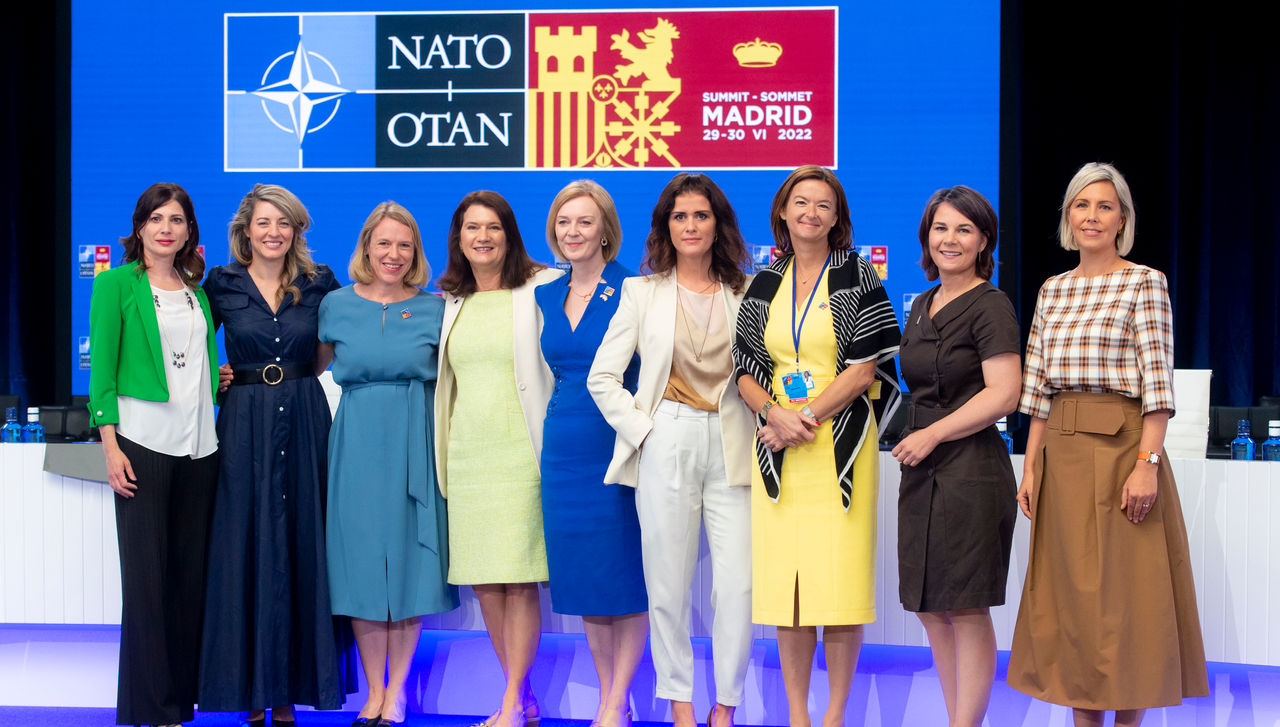
With the NATO defence ministers meeting this week, it is the perfect opportunity to reflect on the 2022 NATO Summit and where we need to go from there.
On 30 June 2022, the Secretary General’s Special Representative for Women, Peace and Security Irene Fellin met with women ministers of defence and foreign affairs at the Madrid Summit to discuss women’s perspectives on Russia’s war of aggression against Ukraine and emerging issues relevant to NATO. She welcomed a record number of women ministers from Allied countries and close partner Sweden in a roundtable conversation where they captured key takeaways to inspire the next generation of leaders. German Minister of Foreign Affairs Annalena Baerbock was one of many who emphasised the importance of women networking. “As long as we have not reached [gender] parity, this connection is imperative.”
Russia’s war of aggression against Ukraine remained central to their discussion. Ministers shared their concern about the widespread use of conflict-related sexual violence as a weapon of war, such as the systematic rape of women and the need for enhanced accountability for this crime. “Let 2022 be the year that we speak out loudly and collectively about these issues,” said the United Kingdom’s former Secretary of State for Foreign, Commonwealth and Development Affairs and Minister for Women and Equalities Elizabeth Truss. Tanja Fajon, Slovenia’s Foreign Minister, encouraged women to “stand together in solidarity alongside Ukrainian women and women around the world” at this challenging time.
Several ministers highlighted that cyber attacks and cyber space – including disinformation – weaponise ideas and often target women. As disinformation campaigns continue to shape NATO’s strategic environment, all agreed that applying a gender lens while assessing their intent and impact will be essential.
Albanian Minister of Foreign Affairs Olta Xhaçka assured that “there is no more disruptive or transformative idea than Women, Peace and Security at the centre of our thinking”. It is indeed of upmost importance to bring Women, Peace and Security to the core of the political agenda. Inclusive leadership is the only key for a successful and comprehensive implementation of the Women, Peace and Security agenda.