
Close
Back


From now on you can download videos from our website
If you would also like to subscribe to the newsletter and receive our latest updates, click on the button below.
Enter the email address you registered with and we will send you a code to reset your password.
The password must be at least 12 characters long, no spaces, include upper/lowercase letters, numbers and symbols.
Click the button to return to the page you were on and log in with your new password.
07 September 2022
1 MIN READ
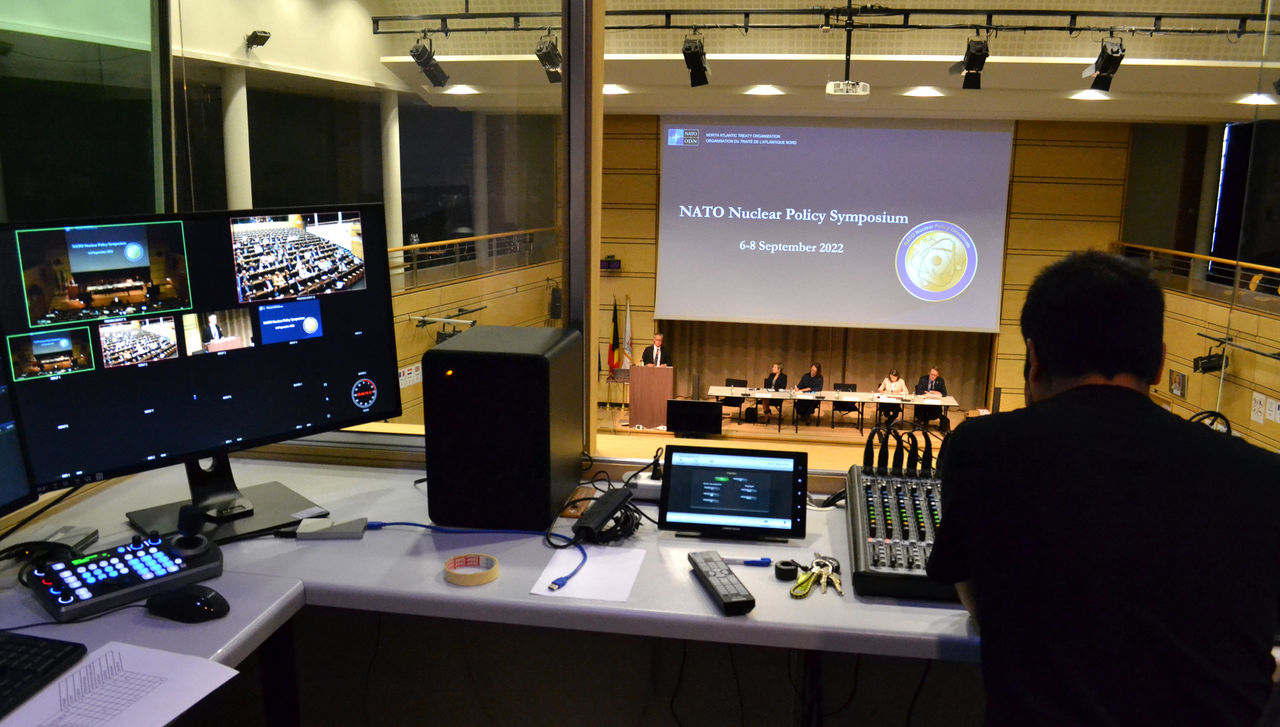
NATO’s annual Nuclear Policy Symposium got underway in Brussels on Wednesday (7 September 2022) with discussions on issues including Russia’s nuclear threats and weapons development, China’s rapid nuclear build-up and strategic arms control.
“This symposium takes place at a critical time for NATO as the Alliance responds to a fundamentally changed security environment” said Jessica Cox, NATO’s Director of Nuclear Policy, who chairs the two-day event. “We face a Russia that is increasing its nuclear capabilities, breaching its arms control commitments and fielding new and novel missile systems.” She added that Russia has also made irresponsible and dangerous nuclear threats as part of its brutal war against Ukraine. Concerns over the status of the Zaporizhzhia nuclear power plant are also expected to be discussed.
Held annually since 1992, the Symposium brings together experts, diplomats and senior officials mainly from across the NATO Alliance. Also on the agenda are China’s rapid expansion of its nuclear arsenal, ongoing concerns over Iran’s nuclear program, and North Korea’s unprecedented missile launches in 2022. “NATO must continue to adapt to this security environment,” said Ms Cox.
At the NATO Summit in June, Allied leaders reiterated that “the fundamental purpose of NATO’s nuclear capability is to preserve peace, prevent coercion and deter aggression”. After the Cold War, NATO greatly reduced its nuclear arsenal in Europe and the Alliance supports the goal of a world without nuclear weapons. At the same time, Allies have agreed that NATO will remain a nuclear Alliance as long as nuclear weapons exist.