
Close
Back


From now on you can download videos from our website
If you would also like to subscribe to the newsletter and receive our latest updates, click on the button below.
Enter the email address you registered with and we will send you a code to reset your password.
The password must be at least 12 characters long, no spaces, include upper/lowercase letters, numbers and symbols.
Click the button to return to the page you were on and log in with your new password.
05 September 2022
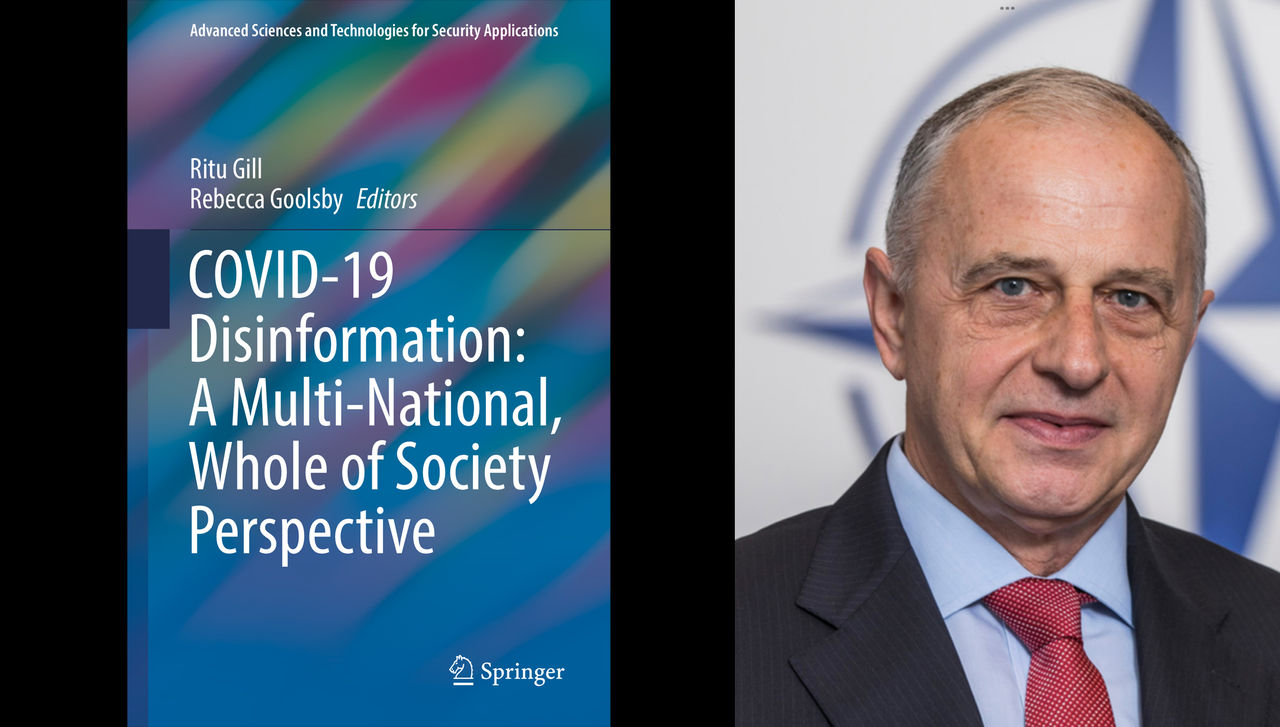
Cognitive conflict and the scourge of disinformation are now ubiquitous across the international security environment, as countries including Russia and China are conducting disinformation campaigns – especially against the backdrop of the second illegal Russian invasion of Ukraine and of the COVID-19 global pandemic. It is in this context that NATO’s Deputy Secretary General Mircea Geoană has welcomed the publication of a book by NATO scientists on disinformation and how to defend against it, notably through the lessons learned in countering the COVID-19 infodemic.
The NATO Deputy Secretary General spoke about how COVID-19 has shown us the extent through which disinformation and propaganda can be used to sow distrust, undermine science, and threaten lives and our shared security. “This book shows the ability of the network of scientists who work in the NATO Science and Technology Organization to react rapidly and with agility and bring their expertise to bear on new crises in innovative ways. They shared their knowledge on COVID-19 disinformation to strengthen the Alliance and its partners against this threat, just as they are now doing to support NATO’s wider resetting of its defence and deterrence,” Deputy Secretary General Geoană said.
The book is the outcome of the activities carried out by the Human Factors and Medicine Panel of the NATO Science and Technology Organization and is part of the Organization’s wider efforts to support Allied and partner countries and help NATO maintain cognitive superiority and strengthen layered resilience.
In the book, scientists in the NATO Science and Technology Organization write about their work on topics such as the impact of emerging and disruptive technologies on COVID-19 disinformation, approaches to the detection and mitigation of COVID-19 disinformation, and how to defend against such actions. The book is available in hard copy and online at: https://link.springer.com/book/10.1007/978-3-030-94825-2