
Close
Back


From now on you can download videos from our website
If you would also like to subscribe to the newsletter and receive our latest updates, click on the button below.
Enter the email address you registered with and we will send you a code to reset your password.
The password must be at least 12 characters long, no spaces, include upper/lowercase letters, numbers and symbols.
Click the button to return to the page you were on and log in with your new password.
08 June 2022
1 MIN READ
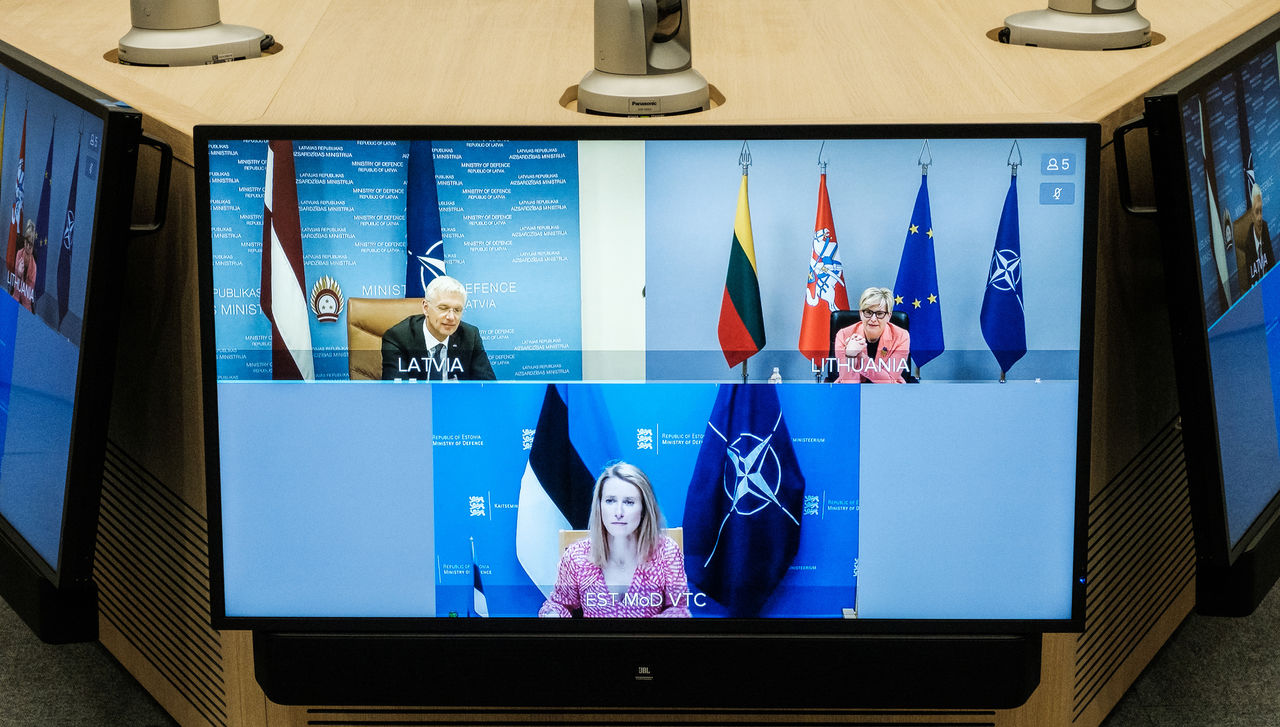
On Wednesday (8 June 2022), NATO Secretary General Jens Stoltenberg participated in a conference call with Estonian Prime Minister Kaja Kallas, Latvian Prime Minster Arturs Krišjānis Kariņš and Lithuanian Prime Minister Ingrida Šimonytė.
The Secretary General and the Prime Ministers discussed the significant strengthening of NATO’s defence and deterrence posture in the eastern part of the Alliance. Since Russia’s invasion of Ukraine, NATO has responded quickly, increasing the readiness of Alliance forces, deploying units of the NATO Response Force, and doubling the number of multinational battlegroups to eight. There are now 40,000 troops under direct NATO command, mainly in the eastern part of the Alliance, including in Estonia, Latvia and Lithuania. At the NATO Summit in Madrid later this month, leaders will adapt the Alliance’s posture for the longer term, to reflect the new security reality.
The Secretary General commended the Baltic countries’ continued contributions to the Alliance, including national commitments to surpass 2.5% of their GDP on defence spending. He also welcomed their strong support to Ukraine in response to Russia’s invasion, including significant military and humanitarian aid.